
General Relativity Basics
Imagine you are standing on a giant rubber sheet while holding a heavy bowling ball. If you place the heavy ball in the center, the sheet curves downward and creates a deep valley. Any smaller marbles you roll across this sheet will naturally follow the curve toward the heavy center. This simple scene perfectly captures how massive objects shape the space around them through the force of gravity. Einstein realized that space is not just an empty stage for objects to exist upon. Instead, space and time are joined together in a flexible fabric that bends under weight. When an object has significant mass, it warps the very geometry of the universe itself. This warping effect is what we experience every single day as the constant pull of gravity.
The Geometry of Curved Space
Gravity acts like a heavy weight pressing down on a trampoline to change its shape. Because the fabric of space is flexible, objects with mass force that fabric to curve inward. Light and matter moving through space must follow these curves instead of traveling in straight lines. Think of this as a car driving along a curved mountain road rather than a straight path. The car follows the road because the path itself is bent by the mountain terrain. In the same way, planets orbit stars because they are traveling along the curved space created by the star. This curvature is the fundamental reason why large objects attract smaller ones in our vast universe.
Key term: Spacetime — the four-dimensional fabric that combines three dimensions of space with the single dimension of time.
Gravity and the Flow of Time
Space and time are linked so closely that warping one inevitably affects the flow of the other. When space curves near a massive object, time itself begins to stretch and move more slowly. You can imagine this like a clock slowing down as it enters a thick, viscous liquid. The closer you are to a massive object, the more intense the gravitational pull becomes for you. This intensity causes time to tick at a different rate compared to someone in open space. This phenomenon is known as gravitational time dilation, and it is a proven reality of our physics. We must account for this shift to ensure our technology functions with perfect accuracy across the globe.
| Location | Gravity Level | Time Flow Rate |
|---|---|---|
| Deep Space | Extremely Low | Standard Speed |
| Earth Surface | Moderate | Slightly Slower |
| Black Hole | Immense | Near Stillness |
We can observe how gravity changes the speed of time through these specific comparisons:
- Clocks located far away from heavy masses experience time at the fastest possible rate available.
- Clocks positioned near a planet surface feel the drag of gravity and tick slightly slower.
- Clocks orbiting near a supermassive object experience extreme stretching that makes every second last longer.
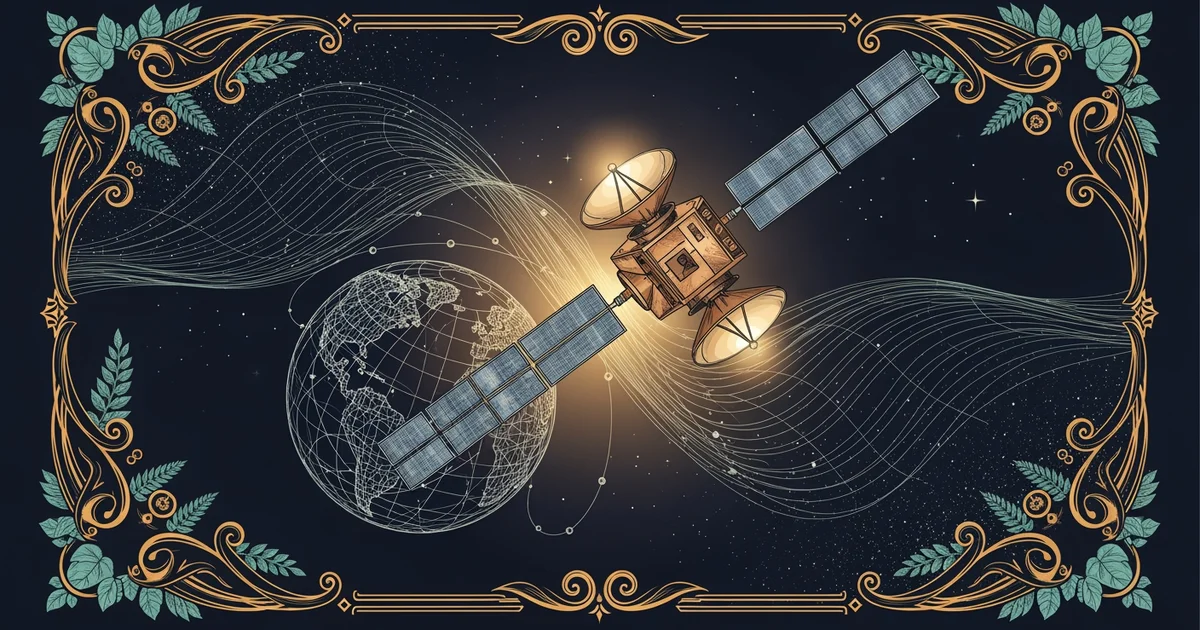
These differences are tiny, but they are essential for modern systems like global positioning satellites to work. If we ignored these shifts, the data sent to your phone would become inaccurate within minutes. The satellites must constantly adjust their internal clocks to match the time experienced on the ground. By understanding this relationship, scientists can keep our navigation systems aligned with the reality of our planet. This requires precise calculations that account for both the speed of the satellites and the gravity.
Massive objects warp the fabric of spacetime, which causes time to flow at different speeds depending on gravitational intensity.
The next Station introduces satellite velocity factors, which determine how movement through space affects the passage of time.