
Gravitational Potential Differences
Imagine you are standing on a tall mountain peak while a friend waits at the ocean shore. A clock placed on that mountain peak will tick slightly faster than the clock resting down at the beach. This strange phenomenon happens because gravity is stronger closer to the center of the Earth. You might think time passes at the same rate everywhere, but the universe operates on a different set of rules. This difference in time flow is a direct result of how gravity warps space and time around massive objects like our planet.
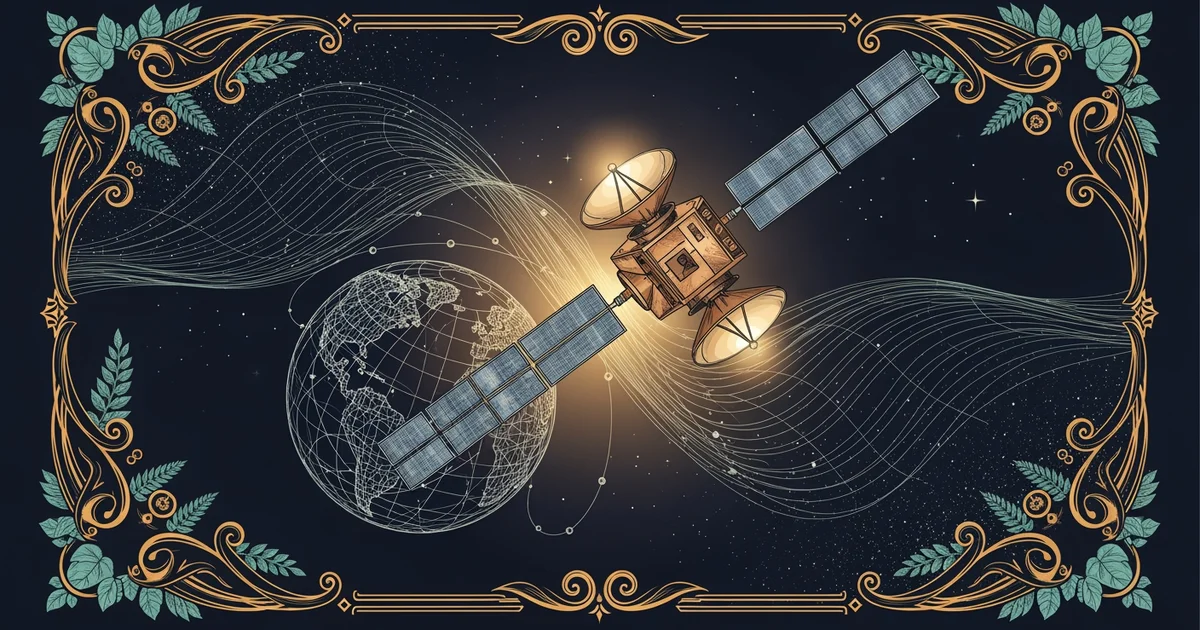
Understanding Gravitational Time Dilation
Gravity does not just pull on objects; it actually stretches the fabric of time itself. This effect is known as gravitational time dilation, and it remains a vital factor for modern technology. When a clock sits in a region with weaker gravity, it experiences less time-stretching than a clock in a stronger gravitational field. The Earth is a massive object, so it creates a deep gravitational well that affects everything near it. Clocks closer to the ground, where gravity is most intense, must tick slower to account for this distortion. This is not a mechanical error within the clocks themselves, but a fundamental property of the universe.
Think of this process like an economic exchange rate between two different countries. If you travel from a region with high gravity to one with low gravity, your personal time currency changes its value relative to the surface. Just as you gain more purchasing power when moving to a country with a weaker currency, your clock gains more time per second when moving away from the mass of the Earth. A satellite orbiting high above the atmosphere lives in a different time zone than you do on the ground. It experiences gravity as a much weaker force, which allows its internal clock to run faster than your watch.
Comparing Clock Rates at Different Altitudes
To keep global systems accurate, engineers must calculate these tiny differences with extreme precision every single day. If we ignored this effect, the timing signals sent from space would drift away from our ground-based measurements. The discrepancy is small, but it accumulates quickly enough to ruin the accuracy of digital navigation systems. We can compare how these different locations influence the rate of time for a standard clock:
- Earth Surface: The strong gravitational pull here forces time to move at its slowest relative rate.
- Low Earth Orbit: At this altitude, the gravitational field is weaker, so time flows slightly faster than on the surface.
- Deep Space: Far away from any massive bodies, gravity becomes negligible and time flows at its maximum natural speed.
Key term: Gravitational potential — the measure of the work required to move an object from a point in space to infinity.
This gravitational potential determines how much the local clock will be affected by the mass of the Earth. The following table illustrates how altitude affects the passage of time relative to an observer on the ground:
| Location | Gravity Strength | Time Flow Rate |
|---|---|---|
| Sea Level | Highest | Slowest |
| GPS Orbit | Moderate | Faster |
| Deep Space | Negligible | Fastest |
Because the satellite moves through a region of higher gravitational potential, its clock drifts forward compared to our clocks on the ground. We must constantly apply mathematical corrections to ensure the satellite remains synchronized with the surface. Without these adjustments, the information sent to your devices would lose its reliability within minutes. Every piece of data relies on this precise timing to function correctly in our modern world.
Time flows at different rates depending on your distance from a massive body because gravity warps the structure of space and time.
The next Station introduces Combining Relativity Effects, which determines how velocity and gravity work together to keep your navigation data accurate.