
Thermal Bridge Mitigation
Imagine wearing a heavy winter coat in the snow but leaving the front zipper wide open. Even the thickest insulation cannot stop the icy wind from reaching your skin through that single gap. Buildings face this same problem when structural components create a direct path for heat to escape. This phenomenon is known as a thermal bridge, acting like a highway for energy to bypass your insulation. Without addressing these hidden leaks, even the best walls will fail to keep a home comfortable while using almost zero energy.
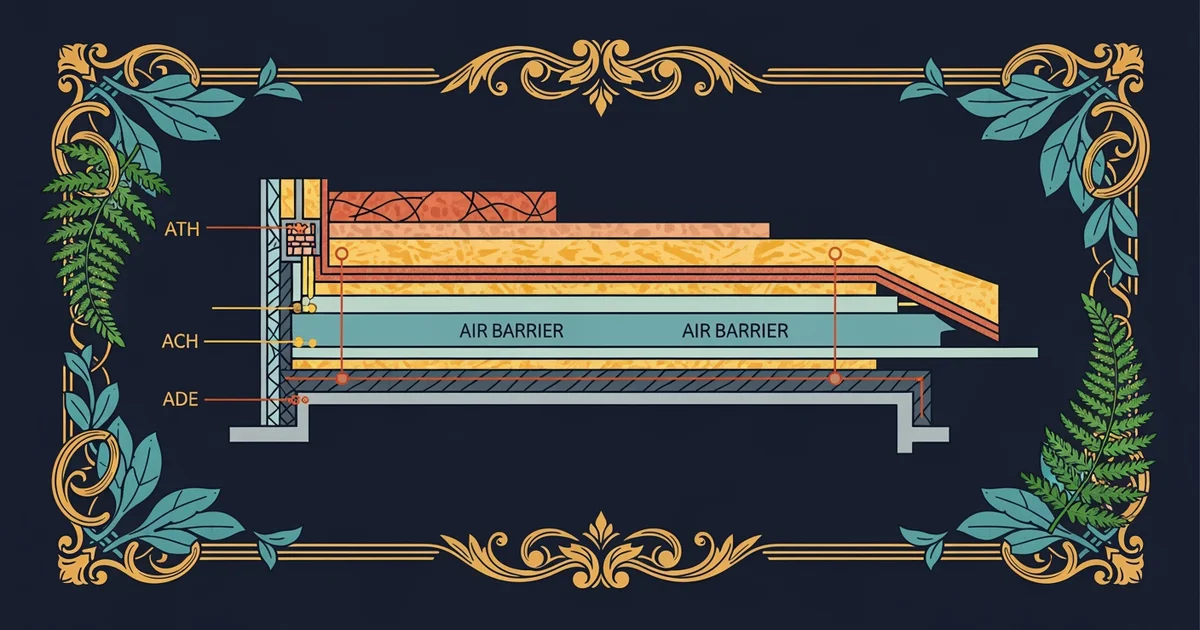
Identifying Conductive Heat Paths
A thermal bridge occurs whenever a highly conductive material creates a continuous path through an insulated building envelope. Wood studs, steel beams, and concrete slabs often act as these invisible leaks because they conduct heat much faster than insulation materials. Think of these structural elements like metal spoons sitting in a hot cup of coffee. The handle of the spoon gets hot quickly because the metal transfers heat from the liquid to your hand. Similarly, your home’s framing transfers heat from the warm interior to the cold exterior air.
Key term: Thermal bridge — a localized area of a building envelope where heat flows more rapidly than through surrounding materials.
When architects design high-performance homes, they must account for how these materials connect. A common mistake involves using standard framing techniques that ignore the conductive properties of wood or steel. If you place a stud directly against the outer wall, you create a direct bridge that bypasses your insulation layers. To prevent this, designers often use specific strategies to break the path of heat. These methods ensure that the thermal resistance of the wall remains consistent across the entire surface area of the building.
Strategies for Mitigating Heat Loss
To stop these conductive paths, builders must implement techniques that interrupt the flow of energy. One effective method involves adding a continuous layer of rigid insulation over the exterior of the structural frame. This extra layer acts like a thick blanket that covers the entire house, preventing heat from reaching the framing members in the first place. By wrapping the building in this protective shell, you effectively neutralize the conductive nature of the studs and beams. This approach is essential for achieving the high levels of energy efficiency required for modern construction.
| Strategy | Mechanism | Effectiveness |
|---|---|---|
| Exterior Insulation | Adds a continuous thermal break | Very High |
| Advanced Framing | Reduces total wood volume | Moderate |
| Thermal Breaks | Inserts low-conductivity material | High |
Builders often choose between these methods based on their specific project requirements and budget constraints. Advanced framing reduces the amount of wood used in corners and intersections, which minimizes the number of potential bridges. Meanwhile, placing a thermal break between concrete slabs and walls prevents heat from leaking through the foundation. These choices ensure that the building envelope remains robust and energy-efficient throughout its entire lifespan.
When we analyze these details, we see that every connection point matters for the final result. If a single bridge remains, the overall performance of the wall drops significantly, wasting precious energy. By carefully planning how structural components meet, we can design buildings that maintain perfect comfort levels for occupants. This careful attention to detail separates standard construction from the high-performance standards required for a sustainable future. Every structural choice must prioritize the continuity of the insulation layer above all other factors.
Eliminating thermal bridges requires creating a continuous barrier that prevents heat from bypassing insulation through highly conductive structural materials.
The next Station introduces high-performance windows, which determine how glass assemblies manage thermal transfer in a similar way to wall framing.