
Energy Efficiency History
Imagine you are trying to keep a leaky bucket full of water while the faucet is turned off. You might try to patch the holes, but the water will eventually drain away because the system lacks a way to hold its contents. Buildings work in a similar way when they lack proper insulation and air sealing. We often treat energy as an infinite resource, but history shows that our approach to building design has shifted from wastefulness to extreme precision. By looking back, we can understand why modern homes now prioritize conservation over simple construction.
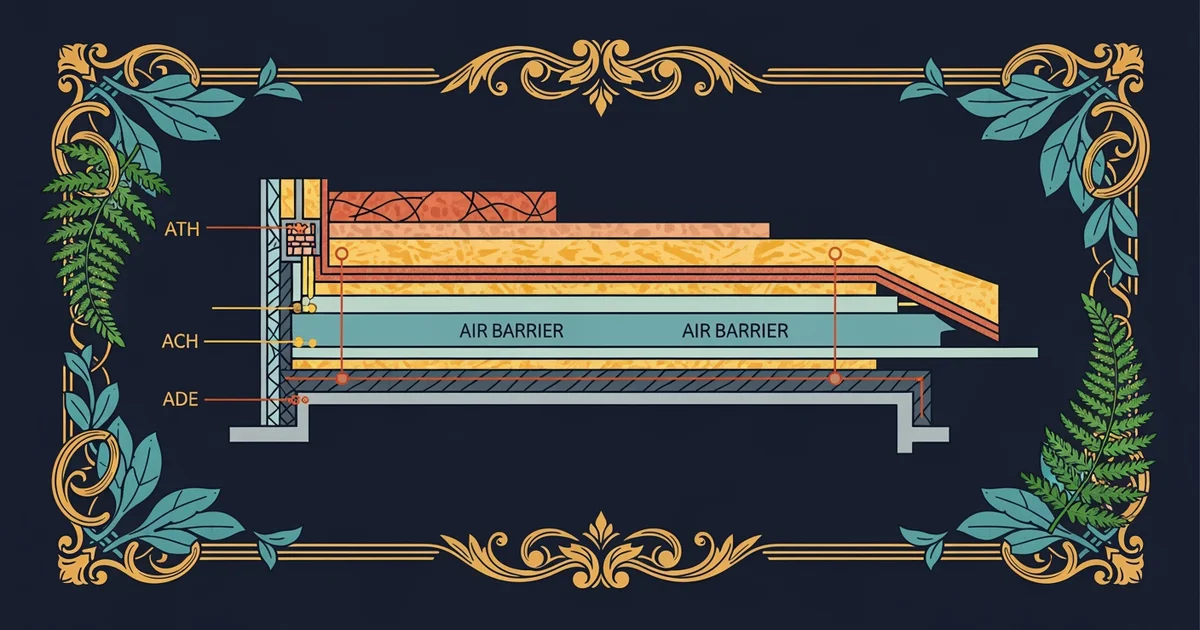
The Evolution of Building Efficiency
Early builders focused primarily on shelter and basic warmth without much thought for energy conservation. People used heavy materials like stone or thick timber to trap heat, but these structures often leaked air through cracks and gaps. As industrial methods grew, builders began to prioritize speed and low costs instead of long-term efficiency. This shift led to homes that relied heavily on mechanical heating systems to overcome poor insulation levels. We essentially built houses that were like sieves, forcing heaters to work constantly to maintain a stable interior temperature.
Key term: Energy efficiency — the practice of reducing the amount of energy required to provide products and services like heat or light.
Following the energy crises of the twentieth century, the global perspective on building design changed rapidly. Architects and engineers started to realize that the most effective way to save energy was to stop wasting it in the first place. They began testing new materials and techniques to create a tighter building envelope that prevented heat from escaping. This period marked a transition toward valuing the building structure itself as the primary tool for comfort. Instead of buying bigger heaters, designers started investing in better walls, windows, and roofs to trap warmth inside.
Comparing Historical Approaches
To understand this shift, we can look at how different building eras approached the challenge of thermal regulation. The following table highlights the changing priorities in home construction over the last century:
| Era | Primary Goal | Strategy | Energy Impact |
|---|---|---|---|
| Early 1900s | Basic Shelter | Thermal mass | High waste |
| Mid 1900s | Rapid Growth | Mechanical heat | Very high waste |
| Late 1900s | Conservation | Improved seals | Moderate waste |
| Modern Era | Performance | Super-insulation | Near zero |
This transition shows that we moved from passive reliance on thick walls to active engineering of airtight systems. We now understand that a house acts as a thermal envelope that must be carefully managed to maintain comfort. When we treat the home as a sealed container, we can reach a point where the energy needed for heating becomes almost nonexistent. This realization is the foundation for all modern high-performance building standards currently in use today.
Efficiency improvements have followed a clear path toward better technology and smarter design choices over time:
- Improved insulation materials now prevent heat transfer more effectively than the traditional materials used in older homes.
- Advanced window technology uses multiple layers of glass to stop heat from escaping through the coldest parts of the house.
- Precision air sealing techniques ensure that no cold air enters the home through gaps in the doors or walls.
By focusing on these specific areas, designers have successfully turned the home into a self-sustaining system. We no longer need to rely on massive, energy-hungry machines to stay comfortable throughout the winter months. Instead, we use the building itself to hold onto the energy we already have. This history of improvement proves that thoughtful design can solve the complex problem of comfort without requiring huge amounts of power. We are now at a stage where the building does most of the heavy lifting for us.
Modern building efficiency focuses on sealing the structure to retain heat rather than relying on heavy mechanical systems to compensate for energy loss.
Now that we understand the history of building efficiency, we will explore the specific techniques used to create super-insulated structures.