
HVAC System Fundamentals
Imagine walking into a massive office building on a sweltering summer afternoon where the air feels crisp, cool, and perfectly still. You likely do not think about the complex machinery hidden behind the walls that maintains this comfort while the sun beats down on the roof. This invisible engine is the HVAC system, which stands for heating, ventilation, and air conditioning. It serves as the mechanical lungs and heart of any modern structure by managing the internal climate to keep people safe. Without these systems, buildings would become dangerous ovens in the summer or freezing chambers during the middle of winter.
The Anatomy of Climate Control
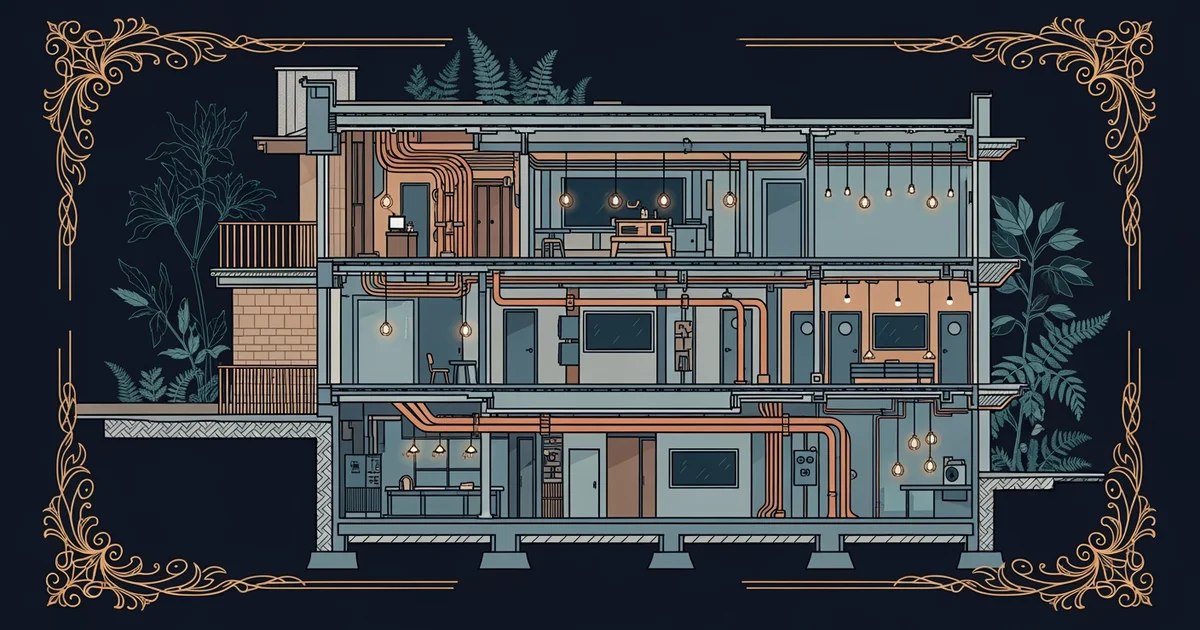
To understand how these systems function, think of an HVAC setup like a massive, building-wide version of a human circulatory system. Just as your heart pumps blood to regulate body temperature, the air handling unit acts as the central pump for the entire building. This unit pulls in fresh air from outside, filters out dust or debris, and then pushes it through a vast network of metal ducts. These ducts act like arteries, carrying conditioned air to every single room or floor in the structure. If the ducts are blocked or the central fan fails, the entire building loses its ability to breathe or maintain a stable temperature.
Key term: Air Handling Unit — the central mechanical device that processes and distributes air throughout a building to maintain thermal comfort.
Inside this central unit, several critical components work together to modify the air before it reaches your desk or living space. First, the intake vent draws in air, which then passes through a filter to remove particles that might cause health issues. Next, the air moves across heating or cooling coils that change the temperature based on the thermostat setting. Finally, a large blower motor pushes this treated air into the ductwork, ensuring that the pressure remains constant across the entire building layout. This process repeats continuously to ensure that the air remains fresh and safe for everyone inside the facility.
Understanding Component Roles
Because buildings vary in size and design, the specific components of an HVAC system must be tailored to the unique needs of the structure. A small office building might use a simple rooftop unit, while a skyscraper requires a complex network of chillers and boilers located in the basement. Regardless of the scale, every system relies on a few fundamental parts to function effectively. The table below compares the primary functions of these essential parts to help you identify what keeps the air moving and comfortable.
| Component | Primary Function | Operational Result |
|---|---|---|
| Filter | Remove impurities | Cleaner indoor air |
| Coils | Adjust temperature | Thermal comfort |
| Blower | Move air volume | Consistent airflow |
| Thermostat | Signal changes | System activation |
These components work in a strict sequence to ensure efficiency and occupant safety. When the thermostat detects that the temperature has drifted away from the set point, it sends an electrical signal to the blower and the coils. The blower starts pulling air through the filters, which prevents dirt from clogging the delicate heating or cooling elements. Once the air passes over the active coils, it reaches the desired temperature and travels through the ducts to the rest of the building. This cycle continues until the thermostat confirms that the target climate has been achieved, at which point the system enters a standby mode to save energy.
Maintaining these systems requires a deep understanding of how each part interacts with the others. If one part, such as the filter, becomes clogged, the entire system must work harder to push air through, leading to higher energy bills and potential mechanical failure. Regular maintenance ensures that these components remain clean and functional, which protects the long-term investment in the building infrastructure. By monitoring these simple mechanical interactions, facility managers can prevent major breakdowns before they occur, keeping the building environment safe and functional for all users every single day.
Modern buildings rely on an integrated mechanical system to filter, heat, and move air through a network of ducts to maintain a stable, safe, and comfortable indoor environment for all occupants.
The next Station introduces Building Envelope Integrity, which determines how effectively the HVAC system maintains the internal temperature against outside weather conditions.