
Capitalism and Environment
A factory owner decides to dump chemical waste into a nearby river to save money on disposal fees. While this choice helps the company balance its budget, the local community suffers as the water becomes toxic and unsafe for daily use.
Market Dynamics and Environmental Impact
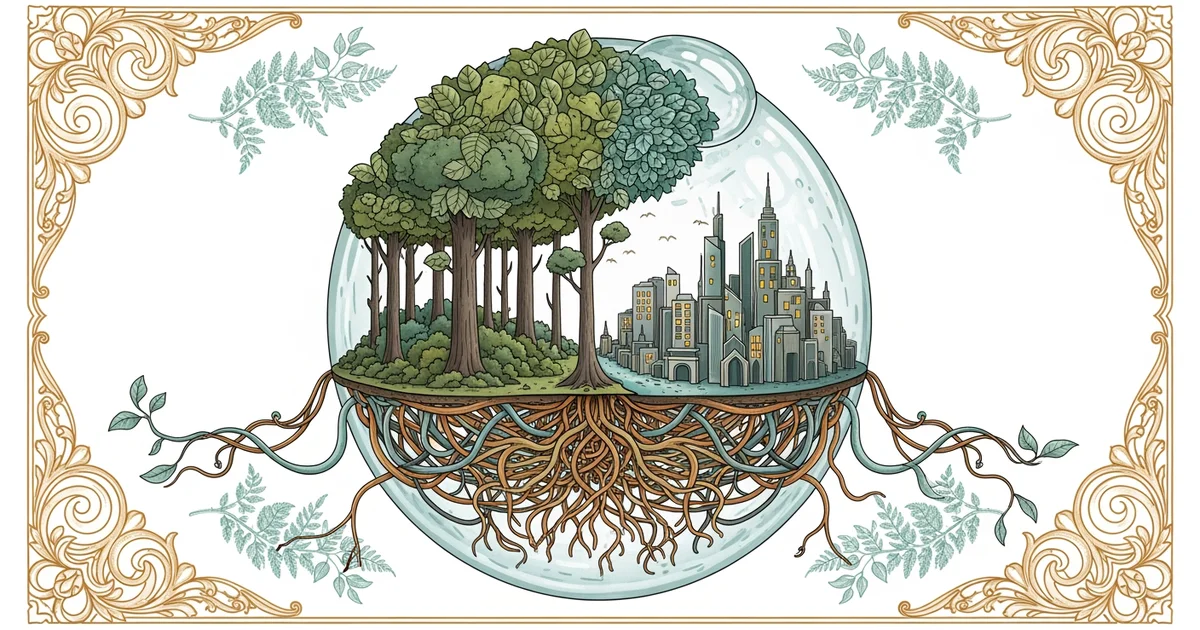
Modern market systems rely on the constant pursuit of economic growth to maintain stability and prosperity for all participants. Companies often prioritize lowering production costs to remain competitive within a crowded global marketplace. This drive for efficiency can lead to the exploitation of natural resources without considering long-term environmental costs. When businesses view nature as a free input for production, they often ignore the physical limits of our planet. This dynamic creates a tension between the need for profit and the necessity of keeping ecosystems healthy. If a company does not pay for the damage it causes, the public eventually carries the burden of that ecological harm. This cycle of production and consumption often accelerates the depletion of resources faster than they can naturally recover.
Key term: Externalities — the unintended side effects of economic activity that impact third parties who were not part of the original transaction.
To understand this concept, consider a crowded community garden where everyone wants to grow the largest possible crop for themselves. If one person uses excessive water to boost their own yield, the soil dries out for everyone else in the shared space. The individual gains a temporary advantage, but the entire garden suffers from the resulting lack of moisture. Our global environment acts like this shared garden, where individual economic actions ripple outward to affect the collective health of the planet. Just like the gardener, businesses often focus on immediate output while the long-term health of the shared space declines.
Growth Patterns and Resource Depletion
Market economies are built on the assumption that growth can continue indefinitely on a planet with finite resources. This structural requirement for expansion forces companies to constantly extract more materials and generate more waste to satisfy shareholders. The following list outlines how these growth patterns lead to specific types of environmental degradation in our current systems:
- Habitat loss occurs when corporations clear large areas of land to build infrastructure, which removes the natural homes that many species need to survive and reproduce.
- Chemical pollution accumulates in our air and water supplies because companies often find it cheaper to release waste than to treat it before disposal.
- Resource exhaustion happens when industries harvest materials like timber or minerals at a rate that exceeds the natural ability of the environment to replace them.
When we analyze these outcomes, it becomes clear that the structure of our economy determines how we interact with the natural world. Many political systems attempt to manage these outcomes through regulations that force companies to account for their environmental footprints. These policies aim to bridge the gap between private profit and public well-being by assigning costs to pollution. However, the tension between rapid economic expansion and environmental stability remains a central challenge for modern societies. Balancing these competing needs requires a shift in how we value nature within our economic models.
Economic systems that prioritize infinite growth often create negative side effects by ignoring the true cost of using natural resources.
The next Station introduces environmental inequality, which determines how these economic impacts are distributed across different human populations.