
Social Construction of Nature
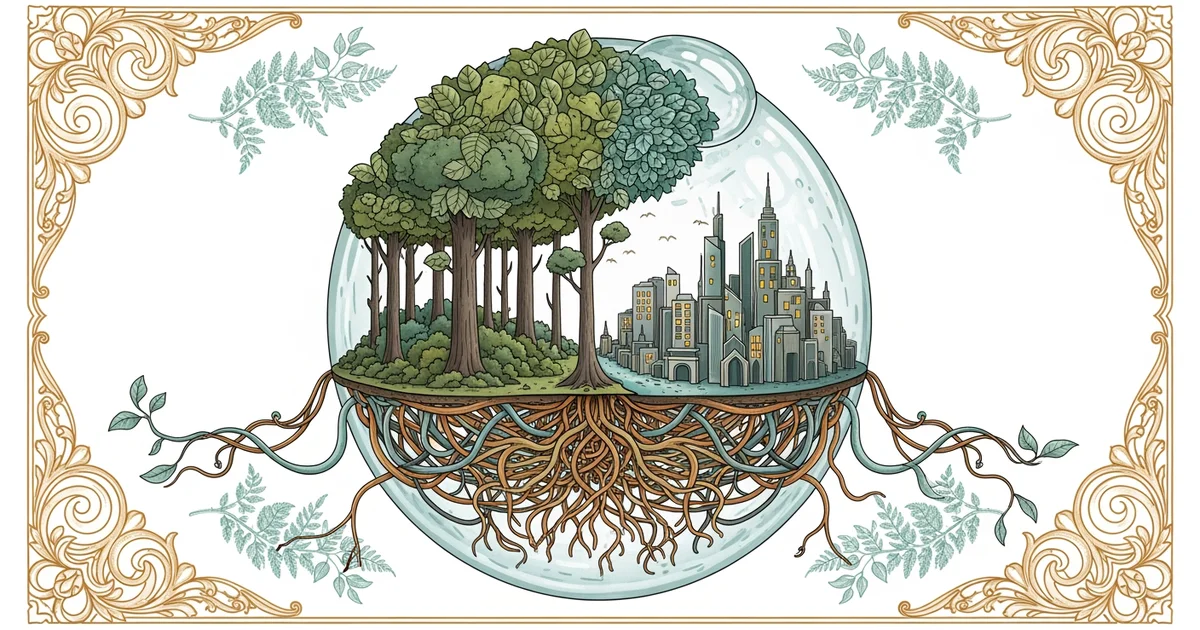
Imagine you are walking through a dense forest where every tree represents a specific cultural value. You might see a tall oak and think of it as a resource for building houses. Another person might look at that same oak and see a sacred monument deserving of total protection. This difference shows that nature is not just a collection of biological facts. Instead, our world is shaped by the stories we tell about the environment around us. We often treat the natural world as if it exists outside of human influence. However, our definitions of nature change depending on the society we live in today.
Understanding Cultural Perspectives
Sociologists argue that the Social Construction of Nature is the primary lens through which humans view the planet. This concept suggests that what we call natural is actually a product of human history and social belief systems. Think of this process like the way a currency gets its value in an economy. A piece of paper has no inherent worth until a society agrees that it represents wealth. In the same way, a mountain or a river only gains its meaning through the cultural labels we assign to it. We do not experience the world as a blank slate because our upbringing filters every single observation we make.
Key term: Social Construction of Nature — the process by which human culture and social groups define what is considered natural or wild.
These cultural narratives dictate how we interact with the land on a daily basis. If a culture views nature as a machine to be managed, they will prioritize efficiency and resource extraction above all else. If another culture views nature as a living partner, they will prioritize balance and long-term sustainability instead. These two approaches lead to vastly different political outcomes for the planet. We must recognize that these definitions are not fixed truths found in science books. They are flexible ideas that shift whenever our social priorities change over time.
The Impact of Human Narratives
When we look at environmental issues, we are usually looking at a conflict between competing social constructions. One group might define a wetland as a site for potential urban expansion to support a growing population. Another group might define that same wetland as a vital ecosystem that protects the region from flooding. Both groups are using the same physical space to justify their political goals. The following table illustrates how different social lenses change our perception of the exact same physical environment:
| Environment | Construction A | Construction B | Construction C |
|---|---|---|---|
| Forest | Timber supply | Carbon sink | Sacred space |
| River | Power source | Waste conduit | Wildlife home |
| Desert | Empty land | Solar site | Fragile habitat |
These constructions are not just personal opinions held by individuals in a community. They are deeply embedded in our legal systems, our economic policies, and our educational structures. When we debate environmental policy, we are often arguing about which construction should take priority in our laws. We might believe we are arguing about scientific facts, but we are actually debating the values we want to uphold. Recognizing this distinction helps us understand why environmental conflicts are so difficult to resolve in the political arena. Every choice we make regarding the planet reflects the story we have chosen to believe about nature.
By deconstructing these narratives, we gain the power to reshape our relationship with the earth. We can choose to move away from views that treat nature as an endless supply of goods. We can move toward views that emphasize our connection to the systems that sustain us. This shift in perspective is the first step toward creating more responsible and sustainable human systems. Our choices today will define the environment for future generations who inherit these social stories. We must act with care as we write the next chapter of this ongoing human narrative.
Human societies define the environment through cultural stories that dictate how we value and manage the physical world around us.
The next Station introduces Capitalism and Environment, which determines how these social constructions translate into economic actions.