
The Ecological Footprint
Imagine you are checking your bank account balance after a long week of spending money. You realize that you have spent more than you actually earned during that same time period. This scenario is exactly how we must view our planet and its limited natural resources today. Every human choice involves a cost that nature must pay back to us eventually. We often forget that the earth acts like a bank account with a finite supply of assets. When we consume more than the planet can replenish, we fall into a deep ecological debt. This concept helps us see how our daily habits impact the global environment.
Understanding Resource Consumption
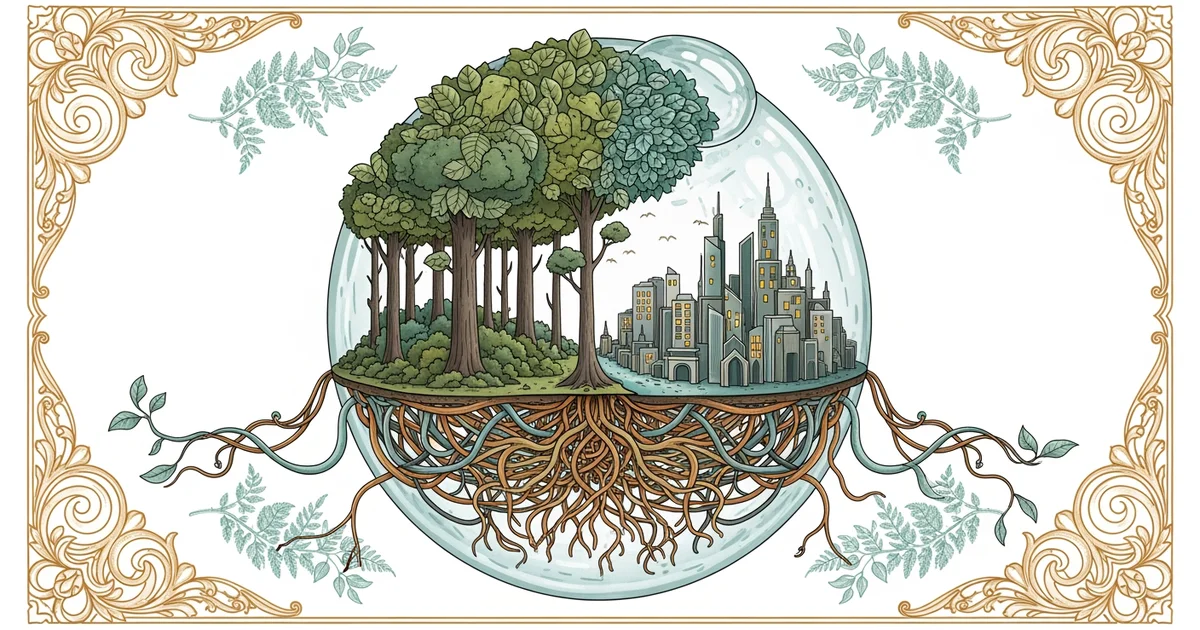
Sociologists use the ecological footprint to measure the total impact of our modern lifestyles on earth. This metric tracks how much land and water area a population needs to produce its resources. It also calculates the space required to absorb the waste generated by our human activities. If you think of the earth as a house, the footprint represents the total space your family occupies. When the footprint exceeds the available land, we are essentially living beyond our sustainable means. This creates a situation where the environment cannot recover from the massive demands we place upon it.
Key term: Ecological footprint — a quantitative measure of the land and water area required to support human consumption and waste disposal.
Many factors contribute to the size of this footprint in our society today. We must look at how our social systems encourage high levels of consumption every day. Our choices are not just individual actions but are shaped by the infrastructure around us. For example, living in a city that lacks public transit forces a higher footprint. You must rely on personal vehicles which consume more fossil fuels than shared options. This shows that our social environment dictates the size of our personal impact on nature.
Analyzing Global Resource Patterns
To better understand how different regions compare, we can look at how various nations manage their resources. Some countries have a much larger footprint due to industrial habits and high energy consumption. Other nations maintain a smaller footprint by relying on local food and renewable energy. The following table illustrates how different consumption patterns impact the total environmental demand of a country:
| Region Type | Primary Driver | Resource Demand | Environmental Impact |
|---|---|---|---|
| Industrial | Manufacturing | Extremely High | High Waste Output |
| Developing | Agriculture | Moderate Level | Low Waste Output |
| Sustainable | Conservation | Low Efficiency | Minimal Footprint |
This data shows that industrialization often leads to higher resource usage across the board. We see that the way a society organizes its production directly changes its environmental footprint. When we prioritize rapid growth, we often sacrifice the long-term health of our ecosystems. This is a common tension in modern politics where economic goals often conflict with environmental needs. We must ask ourselves if our current path is viable for the next few generations.
We can break down the components of our footprint into several distinct categories of daily human life:
- Food production requires massive amounts of land for grazing livestock and growing crops for global distribution.
- Shelter and housing demand significant energy for heating and cooling while using raw materials for construction.
- Transportation systems necessitate large networks of roads and fuel supplies that increase our total carbon output.
- Goods and services include everything from clothing to electronics which all require energy during their manufacturing.
Each of these categories represents a choice we make as members of a global society. By tracking these areas, we can start to see where we might reduce our total demand. Small changes in how we travel or eat can lead to large shifts over time. Sociological research suggests that collective behavior changes are more effective than individual actions alone. When groups advocate for better policy, they change the systems that drive our high consumption habits. This creates a cycle where social change leads to a smaller and more sustainable footprint for everyone involved.
The ecological footprint serves as a vital tool for visualizing how human consumption patterns must align with the finite capacity of our natural environment.
Now that we have measured our physical impact, we will examine how our social beliefs shape the way we perceive and value the natural world.