
Historical Social Context
Imagine you are walking through a local park and notice the contrast between the manicured grass and the wild, untamed forest edge nearby. This simple visual difference reflects centuries of human debate about whether nature exists to serve our needs or if we must protect it as a sacred, independent entity. Understanding these shifts in perspective helps us see why today's environmental policies often feel like a tug-of-war between economic growth and conservation. We have moved from viewing the earth as a limitless resource to seeing it as a fragile system that requires careful management to survive.
The Shift in Human Perspective
For most of human history, people viewed the natural world as a vast, inexhaustible supply of materials waiting for human use. Early societies often saw forests, rivers, and mountains as obstacles to overcome or as raw ingredients for building homes and feeding families. This mindset treated nature like a massive, free grocery store where the shelves never went empty no matter how much we took. As populations grew and technologies improved, this perspective became the standard way to justify rapid expansion and resource extraction across the globe. We did not worry about the long-term impact because the world seemed far too large for human activity to cause any lasting damage.
Key term: Anthropocentrism — a belief system that places human needs and interests at the center of all moral and practical considerations.
This way of thinking changed significantly as the industrial age progressed and the physical consequences of our actions became impossible to ignore. People began to realize that resources like clean water and healthy soil were not infinite, but rather finite goods that could be depleted through neglect. This realization mirrors the transition from a family living off a large inheritance to a family that must earn a steady paycheck to survive. We had to stop acting like owners of an endless supply and start acting like stewards of a limited budget. This shift forced societies to reconsider how they valued the environment beyond its immediate utility for human comfort.
Evolution of Environmental Values
Societies have developed different ways to organize these competing views on nature and its role in our daily lives. These frameworks help us understand how different groups prioritize development versus protection in their political and social decision-making processes. The following table highlights how our perceptions have evolved through different stages of historical development regarding our relationship with the surrounding natural world.
| Stage | Primary Focus | View of Nature | Goal of Society |
|---|---|---|---|
| Pre-Industrial | Survival | Obstacle | Local stability |
| Industrial | Expansion | Resource | Economic growth |
| Modern | Sustainability | System | Global balance |
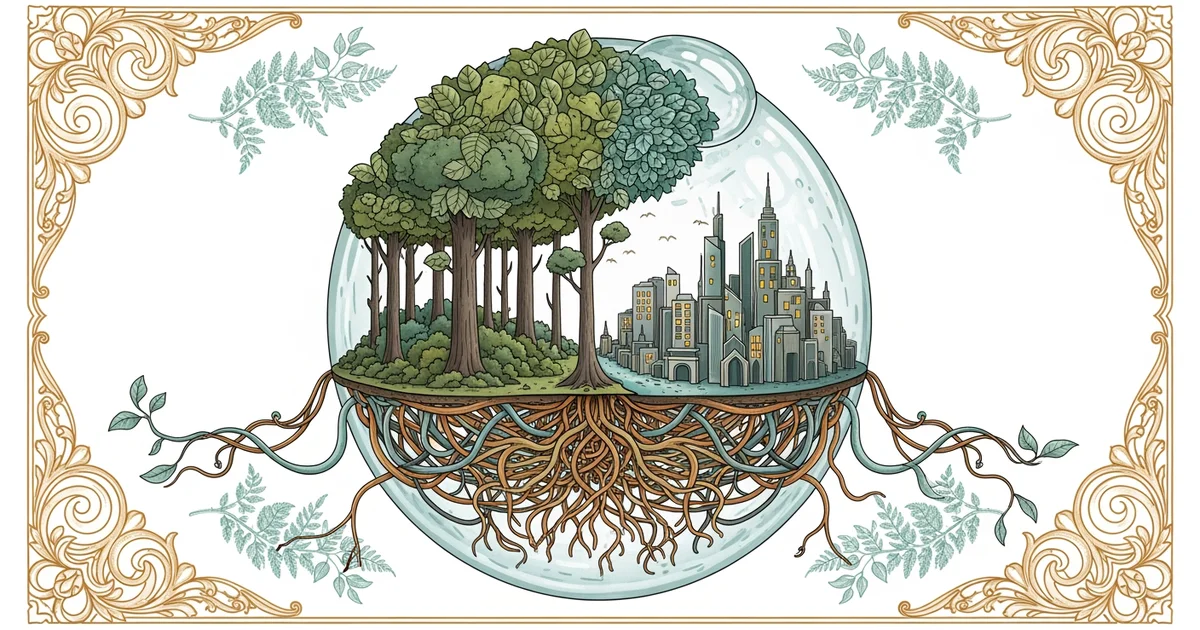
As we moved into the modern era, the focus shifted toward understanding the complex networks that sustain life on our planet. We now recognize that human systems are deeply embedded within ecological systems, meaning that harming one inevitably damages the other. This interconnectedness means that our social choices act like links in a chain, where one weak link can threaten the integrity of the entire structure. We no longer treat nature as a distant backdrop, but as a primary partner in the success of our social and economic future.
- Initial recognition of human impact requires us to track how our past choices created current environmental challenges.
- Active participation in policy shifts allows communities to move from passive consumption to conscious, sustainable management of resources.
- Continuous evaluation of our social systems ensures that we do not repeat the mistakes of previous generations who ignored ecological limits.
By tracing these historical paths, we gain the tools to make better decisions for the future of our shared home. We can see that our current problems are not just technical, but are deeply rooted in how we have historically valued the earth. Changing these values is the first step toward a more stable and healthy relationship with the planet that supports us all.
Human history shows a clear transition from viewing the earth as an infinite resource to recognizing it as a delicate, interconnected system that requires careful stewardship.
Next, we will explore how we measure the specific impact of our daily habits on this fragile system through the concept of the ecological footprint.