
The Illusion of the Present
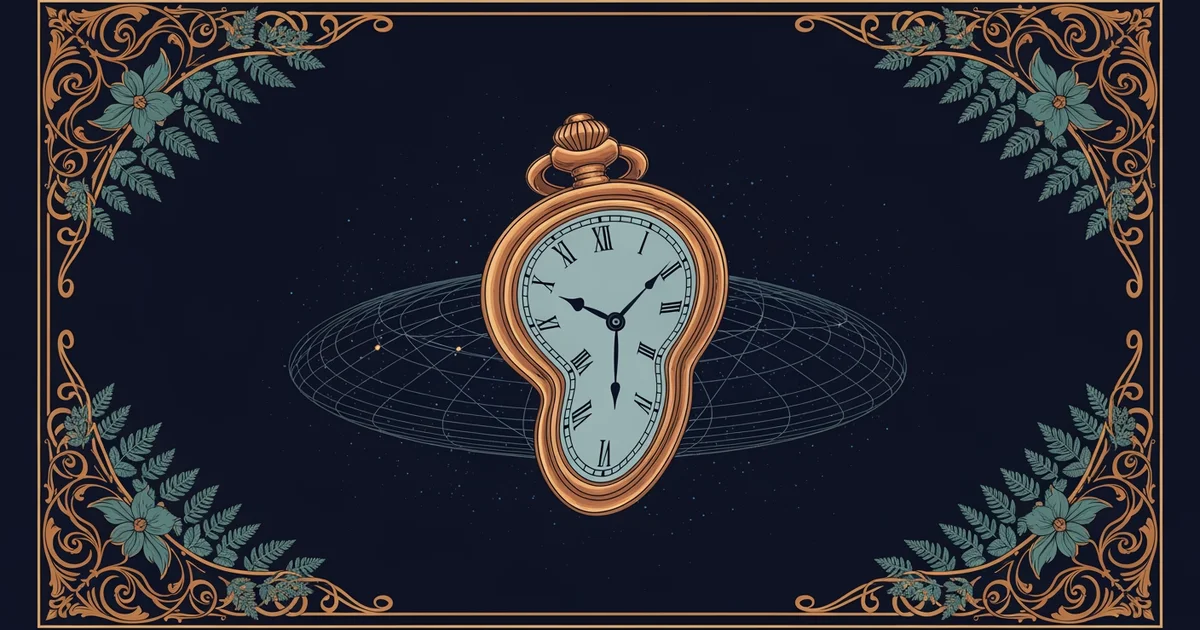
You watch a clock hand tick forward and feel the present moment slipping away into the past. This sensation of a moving now seems like a fundamental law of the physical universe, yet our internal sense of time often mismatches the objective flow of the universe. When we examine the machinery of the mind, we find that the present is not a singular point in time but a construction of our biology. We perceive a continuous stream of events because our brains stitch together snapshots of sensory data into a cohesive narrative. This process creates the illusion that we inhabit a stable and singular moment of experience.
The Neurobiology of Temporal Integration
Our brains require time to process incoming signals from the environment, which creates a necessary delay between an event and our awareness of it. Light and sound must travel to our sensory organs before the brain can interpret these physical inputs as meaningful information. Because different senses require different processing speeds, the brain performs a complex synchronization task to ensure that we perceive events as happening simultaneously. Think of this like a movie editor who cuts together footage from multiple cameras to create one seamless scene for the viewer. Without this editing, our reality would appear as a fragmented mess of sights and sounds that never quite line up correctly.
Key term: Temporal integration — the brain's ability to combine separate sensory inputs into a unified, continuous perception of the present moment.
This integration process relies on the neural latency of our sensory pathways, which acts as a buffer for incoming data. By holding onto these inputs for a fraction of a second, the brain creates a window of time where it can align disparate signals into a coherent experience. This window is what we call our subjective present. It is not an instantaneous slice of reality but a brief period of data collection and refinement. If the brain could not perform this vital task, we would lack the stable environment needed to navigate our daily lives effectively.
Physics and the Constructed Present
When we look at the physical world through the lens of modern science, we find that the present lacks a universal definition. The theory of relativity suggests that time is relative to the observer, meaning that two people moving at different speeds will disagree on the timing of events. This tension between our stable internal experience and the flexible nature of time in the physical universe is a core mystery of science. We previously explored how quantum mechanics suggests that particles exist in states of probability rather than fixed positions. The illusion of the present arises because we must collapse these probabilities into a single, linear story to function within our environment.
We can compare the different ways we experience time to the way a bank manages daily transactions for its customers. The bank must reconcile deposits and withdrawals from many different sources to ensure that every account reflects a clear and accurate balance at the end of the day. Our brains act as the bank, taking scattered sensory deposits and reconciling them into the balance we call our current experience. The following table highlights how different aspects of our perception contribute to this final, constructed view of reality:
| Process | Function | Impact on Perception |
|---|---|---|
| Sensory Buffering | Holds data | Allows for synchronization |
| Neural Filtering | Removes noise | Focuses on relevant events |
| Narrative Binding | Links events | Creates a sense of flow |
This construction is essential for our survival, as it allows us to predict future outcomes based on the patterns we observe in the present. By forcing the chaotic flow of the universe into a structured sequence, our brains provide us with a stable platform for decision-making. We are not experiencing the universe as it truly exists, but rather as our brains have modeled it for our benefit. This model is highly effective for survival, even if it does not accurately reflect the underlying nature of space and time. We must accept that our present is a useful fiction designed to keep us navigating the world successfully.
The present moment is an active cognitive construction that synchronizes sensory data to create a stable, linear experience of reality.
Future research into chronobiology will reveal how these internal clocks adapt to different environmental pressures.