
Attention and Temporal Flow
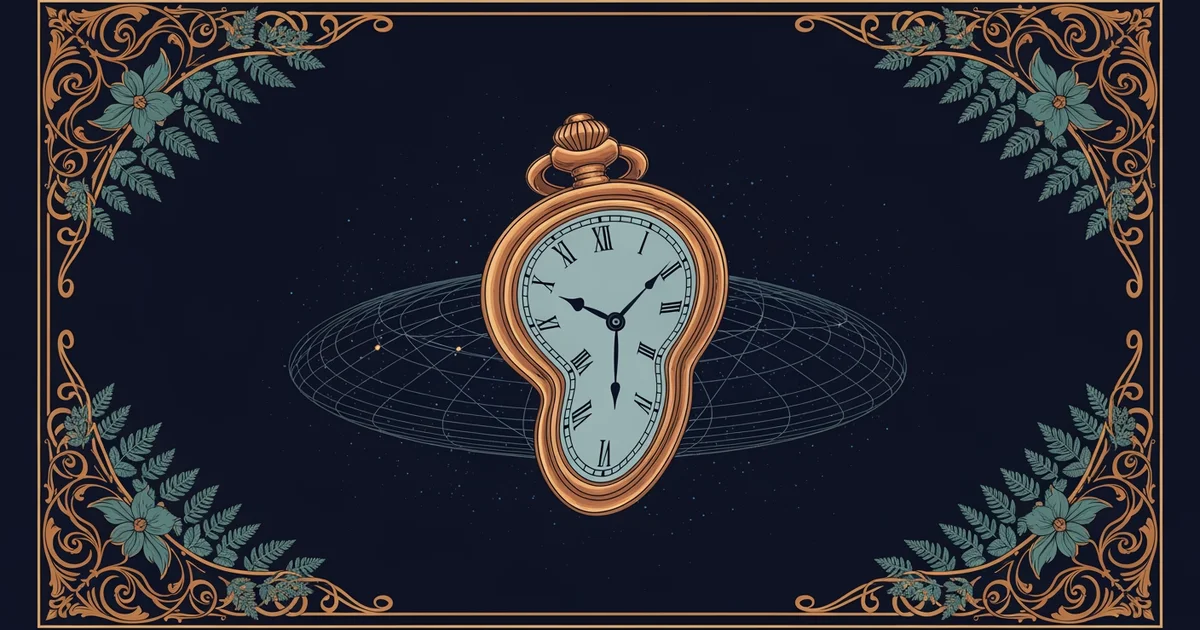
You are staring at a clock while waiting for a train that is running late. The minutes seem to stretch into hours as your eyes track the slow movement of the second hand.
The Mechanism of Temporal Stretching
When you focus intently on the passage of time, your brain creates a subjective experience that feels much longer than the actual duration. This phenomenon occurs because your cognitive resources are fully directed toward monitoring the environment for the expected event. You are essentially spending your mental budget on tracking every tick of the clock, which makes the interval feel bloated and heavy. Think of your mind like a busy office manager who has only one task to complete during the day. When that manager stares at a blank wall waiting for a delivery, every single second feels like a massive project that demands total attention. Because the manager has no other work to do, they notice every tiny shift in the room. This mental hyper-focus on the flow of time actually prevents you from experiencing the natural, fluid rhythm that occurs when you are distracted by other tasks.
Key term: Cognitive load — the total amount of mental effort and information processing power being used in your working memory at one time.
Your brain processes information in chunks, and when those chunks are focused on the concept of time itself, you perceive more detail than usual. This creates the illusion that time is moving slower because your brain is capturing a higher resolution of events. If you were busy reading a book or talking to a friend, your brain would allocate its resources elsewhere, and the clock would seem to speed up. The density of your thoughts determines how you measure the passage of time in any given situation.
The Impact of Attention on Duration
When you increase your focus on a specific task, you effectively reduce the mental bandwidth available for tracking the passage of time. This is why time flies when you are having fun or working on a complex project that requires deep concentration. Your brain is too busy processing the nuances of the task to worry about the steady beat of the physical world.
| Situation Type | Attention Level | Perceived Time Speed |
|---|---|---|
| Boredom / Waiting | High focus on time | Very slow flow |
| Active Engagement | Low focus on time | Fast flow |
| Multi-tasking | Divided focus | Variable / Distorted |
This table illustrates how the distribution of your attention directly changes how you experience the ticking of the clock. When you are engaged in active work, your internal clock loses its priority because your brain is busy solving problems or creating new ideas.
- Attention allocation determines how much brain power goes toward measuring the ticking of the clock.
- Mental saturation occurs when you fill your working memory with complex tasks, causing time to feel like it is moving faster.
- Temporal filtering happens when the brain ignores the passage of time to save energy for more pressing cognitive demands.
By understanding these steps, you can see why your internal sense of time is so flexible. Your brain does not have a single, rigid stopwatch that keeps perfect track of reality. Instead, it uses a dynamic system that changes based on how much work you are doing at any given moment. This explains why an hour of intense study feels different from an hour of sitting in a quiet, empty room. Your awareness of the environment serves as the primary filter for your perception of the physical universe.