
The Biological Clock
You wake up feeling refreshed at the same time every morning without needing an alarm clock. This internal consistency happens because your body tracks the passing of time through a complex, hidden mechanism. While the physical world follows the steady ticking of a clock, your brain operates on a different, flexible schedule. Understanding this difference is essential for grasping why minutes sometimes feel like hours during a boring lecture. Your internal sense of duration relies on biological processes that adjust based on your environment and your focus.
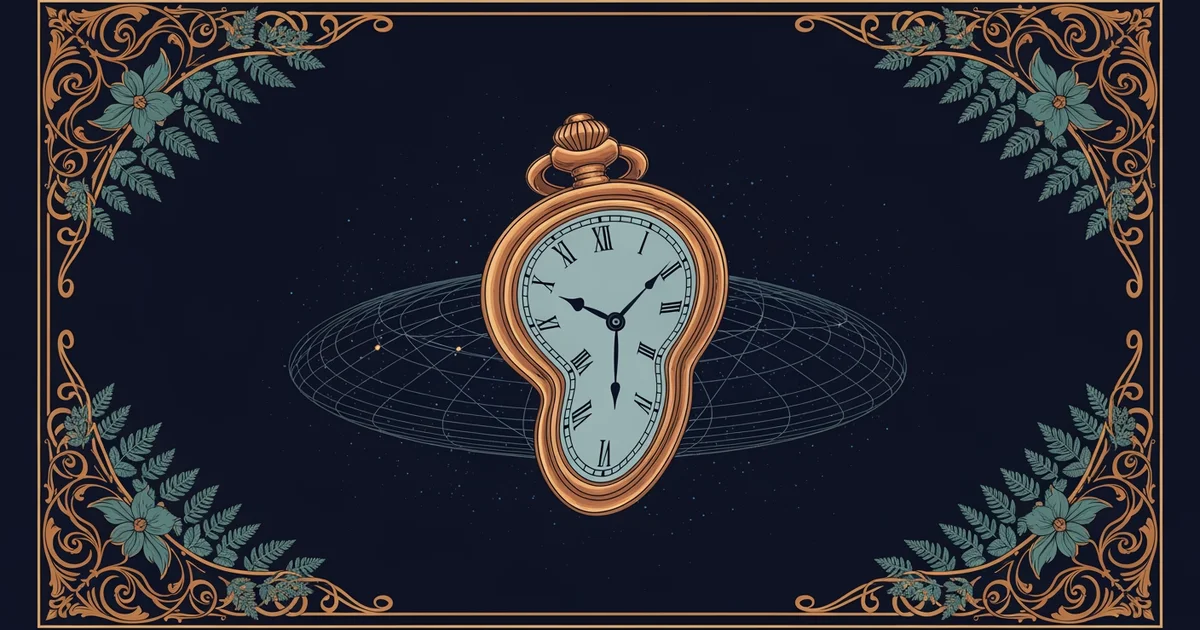
The Internal Timekeeping Mechanism
The brain manages this timing through a system known as circadian rhythms, which function as a master clock. These rhythms respond primarily to light signals from your eyes, helping the body align with the rotation of the planet. Just like a bank manages its daily budget by balancing incoming and outgoing funds, your brain balances biological energy to maintain a steady rhythm. When your internal clock aligns with the natural light cycle, you feel alert during the day and sleepy at night. If you disrupt this cycle, your perception of time duration becomes distorted because the brain struggles to process sensory inputs correctly.
Key term: Circadian rhythms — the internal, twenty-four-hour biological cycles that regulate physiological processes like sleep, hormone release, and body temperature.
This system does not just track the time of day; it also influences how you experience the passage of time. When you are highly engaged in a task, your brain processes more information, which makes the time seem to fly by quickly. Conversely, when you are bored or waiting for something, your brain pays closer attention to the passage of each second. This heightened awareness makes the duration feel significantly longer than it actually is in the physical world.
Factors Influencing Temporal Estimation
Several biological factors change how your brain interprets the flow of time throughout your daily life. The following elements contribute to how you perceive the speed of events:
- Dopamine levels act as a chemical regulator that speeds up your internal clock when you feel excited or rewarded by an activity.
- Body temperature fluctuations can cause the internal clock to run faster or slower, which changes your estimation of how much time has passed.
- Attention density increases when you focus intently on a task, leading the brain to store more memories and perceive the time as longer in retrospect.
These factors ensure that your perception of time is never truly objective or fixed. Because the brain is a biological organ, it is subject to the same physical limitations as the rest of the body. When you feel that time is moving slowly, you are actually experiencing the brain's attempt to process a high volume of sensory data. This biological effort creates a subjective experience that often contradicts the objective measurement provided by a mechanical clock.
| Factor | Biological Effect | Impact on Time Perception |
|---|---|---|
| Light Exposure | Regulates hormones | Stabilizes daily rhythm |
| High Dopamine | Increases processing | Makes time feel faster |
| Low Attention | Reduces memory load | Makes time feel slower |
By comparing these factors, we can see why our internal clock is so sensitive to changes in our environment. If you sit in a dark room without a watch, your body will eventually drift away from the standard twenty-four-hour cycle. This drift happens because the brain lacks the external signals needed to reset its internal rhythm. Our perception of time is therefore a collaborative effort between our internal biology and the external environment. This relationship explains why we often feel out of sync when we travel across different time zones or change our daily routines. We are essentially trying to recalibrate a delicate instrument that was designed for a very specific, consistent environment. As we move forward, we must consider how these biological signals interact with the rigid laws of physics that govern the universe at large.
The biological clock acts as an internal filter that continuously adjusts our perception of time based on environmental cues and personal focus.
Moving from the biological perspective to the physical realm, we will now explore how the laws of entropy dictate the forward movement of time.