
The Nature of Subjective Time
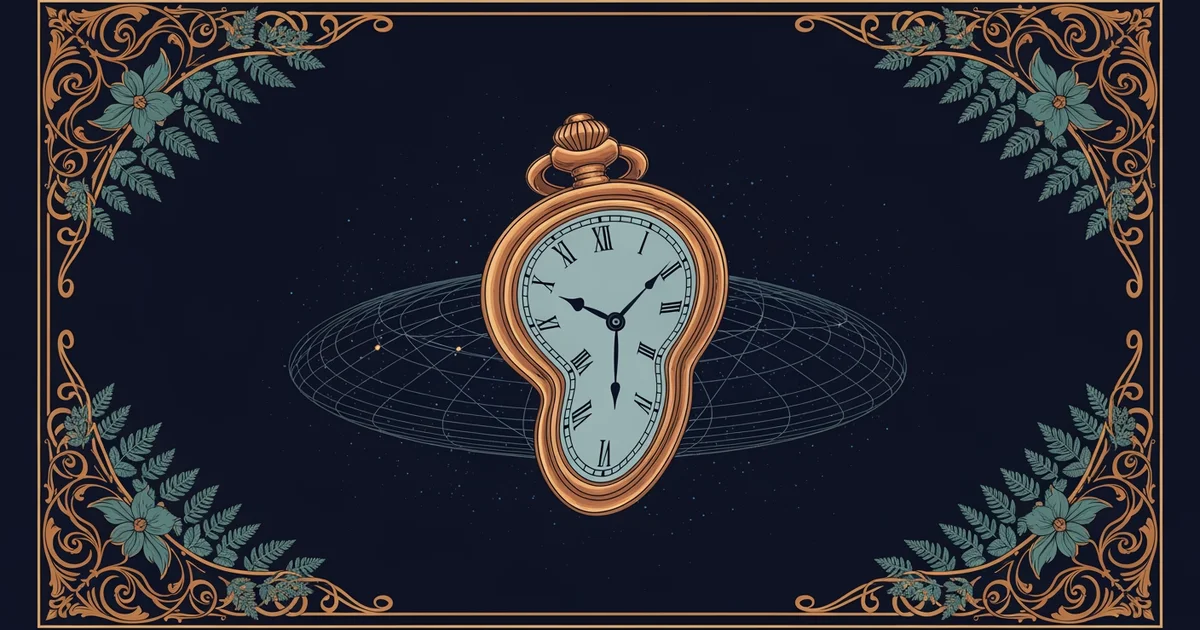
You sit in a dull lecture hall and watch the clock tick for what feels like hours. Then you blink and realize that an entire hour has passed in what felt like just a few minutes. This strange experience shows that your internal clock does not always match the steady rhythm of a wall clock. We often assume that time moves at a constant speed for everyone, but our minds tell a different story. Understanding this gap between physical reality and mental experience is the first step toward mastering your own perception of life.
The Mechanics of Objective Time
Physical time is defined by the universe as a series of events occurring in a sequence. Scientists use highly precise devices like atomic clocks to measure these intervals with perfect accuracy. These devices count the vibrations of atoms to define a single second without any human bias. In this objective view, time is a rigid container where events happen regardless of who is watching them. It is a linear progression that moves forward at one speed for every person in the universe. Imagine a digital counter on a factory floor that clicks forward once every second without fail. This counter does not care if the workers are busy, bored, or asleep because its only job is to track the steady flow of reality.
Key term: Objective time — the measurable and constant flow of time that exists independently of human observation or mental state.
The Construction of Psychological Time
Human perception of time relies on the brain processing information rather than counting mechanical ticks. When you are highly engaged in a task, your brain focuses on the details and ignores the passage of time. This creates a state where you feel like you have been busy for a short period while hours have actually passed. Conversely, when you are bored or waiting for something, your brain pays closer attention to the lack of new information. This focus makes the brain look for every tick of the clock, which makes time feel like it is dragging.
Think of your brain as an internal bank account that manages your limited attention resources throughout the day. When you spend attention on new and exciting experiences, the bank account seems to empty quickly because you are busy investing. When you are waiting for a bus, you are not investing your attention, so the brain keeps a very strict tally of every passing moment. This is why a fun vacation feels short while a long afternoon in a waiting room feels like an eternity.
| Experience Type | Brain Focus | Perception of Duration |
|---|---|---|
| High Engagement | External Tasks | Time feels short |
| Low Engagement | The Clock | Time feels long |
| Novel Events | Memory Coding | Time feels rich |
We can summarize the primary differences between these two ways of experiencing the world:
- Objective seconds function as a universal standard that remains constant for all observers regardless of their current emotional state or level of activity.
- Subjective intervals are created by the brain as it interprets the density of information and the level of focus applied to specific moments.
- Mental processing acts as a filter that can either stretch or compress the perceived length of time based on how much data we store.
By the end of this path, you will understand how to align your internal experience with the physical world to improve your focus and productivity.