
Defensive Look Recognition
During the 2014 Super Bowl, the Seattle defense consistently anticipated Peyton Manning’s passing plays by reading his pre-snap formation. They recognized that his alignment dictated specific routes, allowing them to adjust their coverage before the ball was even snapped. This is the essence of defensive look recognition, a skill that requires players to identify patterns in the alignment of the opposing offense. Just as a shop owner monitors foot traffic to predict busy hours, a defender monitors offensive personnel to predict the upcoming play type.
Identifying Defensive Fronts
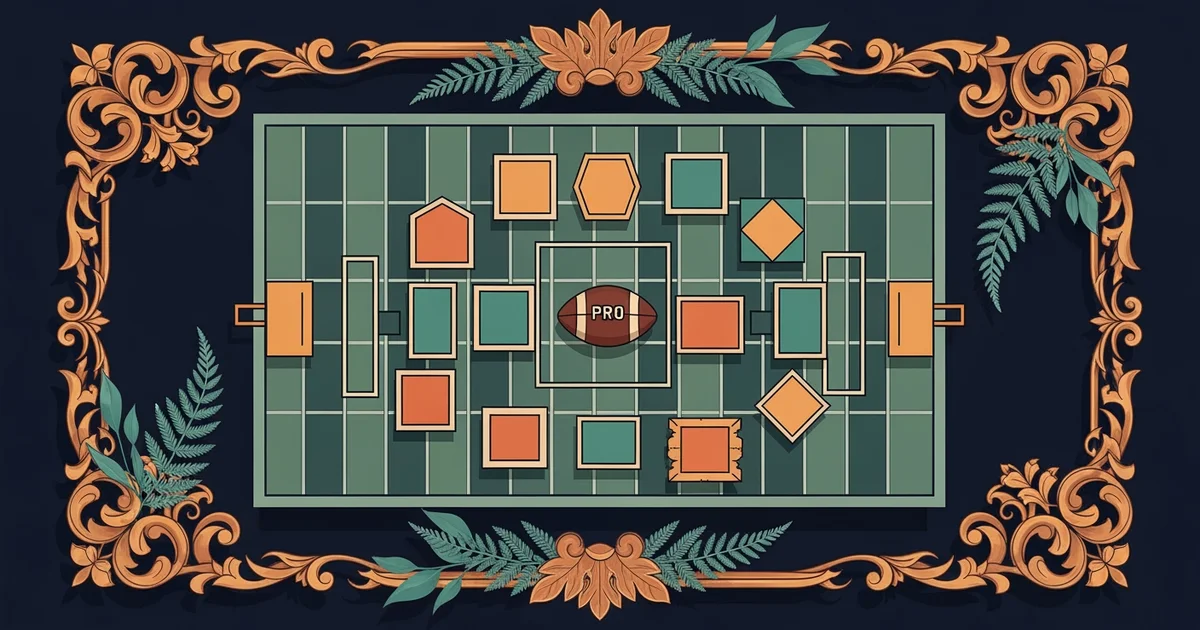
Defensive players must analyze the alignment of the offensive line and the positioning of the skill players. When an offense lines up in a wide formation, the defense often responds by spreading their linebackers to cover the perimeter. This logical adjustment ensures that the defense maintains numerical balance across the entire field. If the offense clusters their players in a tight formation near the center, the defense will likely stack the middle to prevent interior runs. Recognizing these shifts allows the defense to maintain structural integrity against any potential offensive strategy or tactical formation change.
Key term: Defensive front — the specific arrangement of defensive linemen and linebackers designed to counter the offensive formation.
Understanding these fronts requires a player to look for cues like the distance between wide receivers and the positioning of the tight end. If a tight end lines up on the strong side of the formation, the defense must shift their alignment to account for the added blocking power. This reactive process is similar to how a business manager allocates staff based on the volume of customers in different store sections. By observing these small details, the defense can neutralize the intended advantage of the offensive setup through careful, calculated movement and positioning.
Strategic Adjustments and Personnel
Once the defense identifies the formation, they must decide on the appropriate coverage scheme to apply to the field. This decision-making process relies on the relationship between the number of offensive threats and the number of available defenders in specific zones. The following table outlines how defensive units often adjust their personnel based on the observed offensive setup during a standard game scenario:
| Formation Type | Offensive Threat | Defensive Response | Strategic Goal |
|---|---|---|---|
| Spread Set | Four wide receivers | Nickel package | Cover perimeter |
| Power Set | Two tight ends | Base 4-3 front | Stop interior run |
| Empty Set | Five receivers | Dime package | Prevent deep pass |
These adjustments demonstrate the mathematical logic used to maintain parity on the field. If an offense presents five potential pass catchers, the defense must deploy five or more players to cover those specific zones effectively. This creates a balanced equation where the defense attempts to match or exceed the offensive personnel in every critical area of the field. By successfully recognizing these looks, the defense prevents the offense from creating an isolation mismatch against a single defender.
Effective recognition also involves identifying the intent behind the formation, such as whether the offense plans to run or pass the ball. If the running back aligns directly behind the quarterback in a shotgun formation, the defense might anticipate a quick handoff or a draw play. Defenders learn to read these subtle body language cues from the quarterback and the running back to gain a split-second advantage. This mental preparation is vital for reacting to high-speed plays where every millisecond determines the success of the defensive stop. Continuous practice in film study helps players develop the intuition needed to process these complex visual inputs rapidly during live game action.
Defensive success relies on the ability to interpret offensive formations as mathematical variables that require a balanced and reactive structural response.
But this model of defensive recognition becomes significantly harder to manage when the offense uses high-tempo play-calling to prevent the defense from setting their alignment.