
Play Action Setups
A defender charges forward to stop the running back, but the quarterback pulls the ball back to throw a pass. This split-second hesitation by the defender provides the offensive receiver enough space to break free for a long gain. When an offense mimics a running play to set up a passing opportunity, they utilize the core mechanics of deception to manipulate defensive logic. By aligning players in ways that suggest a handoff, the offense forces the defense to commit resources toward the line of scrimmage. This movement creates a temporary void in the secondary that a well-timed pass can exploit.
Aligning for Deceptive Success
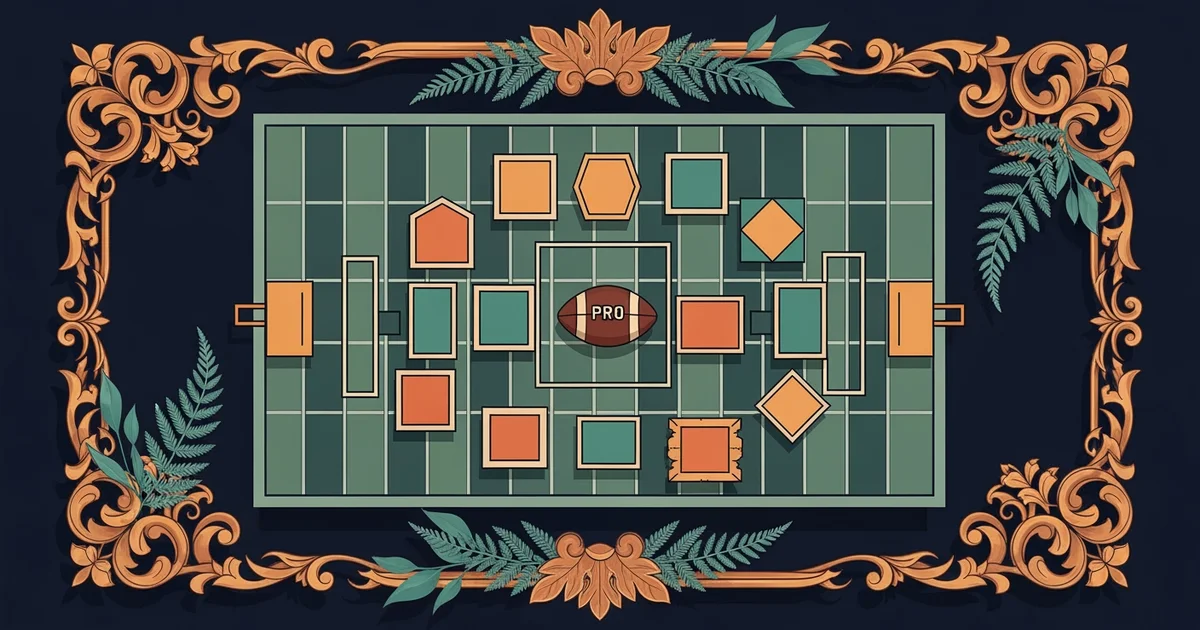
To effectively execute these plays, the offense must use specific formations that look identical for both run and pass designs. When the personnel groupings and alignments remain consistent, the defense cannot easily predict the play type before the snap occurs. This symmetry forces the defenders to rely on their initial keys rather than pre-snap reads. If the offense lines up with a tight end and a fullback, the defense naturally anticipates a ground attack. The quarterback then uses this expectation to draw the linebackers toward the backfield during the initial fake. Because the defense is focused on closing gaps at the line, they often abandon their responsibilities in the deeper zones of the field.
Key term: Play action — a tactical maneuver where the quarterback mimics a handoff to a running back to draw defenders toward the line of scrimmage before passing.
This strategy functions much like a merchant offering a discount on a popular item to draw customers into a store. Once the customers arrive for the sale, the merchant directs them toward higher-priced goods that are placed in the back of the shop. Similarly, the offense lures the defense toward the line of scrimmage with the promise of a run. Once the defenders commit their attention and physical position to stopping the run, the quarterback exploits the space they vacated. The success of this move depends entirely on the initial commitment of the defense to the fake.
Integrating Protection and Timing
Once the offense commits to the fake, the protection scheme must ensure the quarterback has enough time to deliver the ball. Offensive linemen often use aggressive blocking techniques that mirror run plays to sell the deception to the opposing team. This requires precise timing because the linemen must transition from run-blocking to pass-protection in a single fluid motion. If the linemen move too slowly, the pass rush will disrupt the quarterback before he can complete his fake. The following table outlines how the different positions contribute to the overall success of the deception.
| Position | Primary Responsibility | Contribution to Deception |
|---|---|---|
| Quarterback | Ball handling | Sells the handoff motion |
| Running Back | Initial path | Draws defenders to center |
| Offensive Line | Aggressive posture | Mimics run-blocking surge |
| Wide Receiver | Route running | Exploits vacated zones |
Coordinating these movements requires rigorous practice to ensure the timing remains consistent across various game situations. When every player commits to the fake with full intensity, the defense finds it difficult to distinguish between a genuine run and a passing play. A successful sequence relies on the following three components of deception:
- Initial alignment parity, which ensures the formation does not reveal the play intent to the opposing team.
- Synchronized movement, where the quarterback and running back create a believable point of contact at the mesh point.
- Delayed route engagement, allowing receivers to wait until the defenders have fully committed to the run before breaking into open space.
These elements work together to force the defense into a mathematical disadvantage by pulling too many players toward the box. When the defense over-commits to the run, the offensive passing game gains a significant edge in coverage spacing. The offense effectively uses the defense's own aggressive instincts against them to create high-percentage passing windows throughout the game.
Strategic use of deceptive movement forces defenders to abandon their deep coverage responsibilities to address an immediate threat at the line of scrimmage.
But what does it look like in practice when the defense realizes they have been tricked and attempts to recover their positions?