
Synthesis of Writing System Evolution
Imagine a world where your deepest thoughts vanish the moment you stop speaking them aloud. Human history changed forever when we discovered how to trap these fleeting sounds into solid, lasting forms. This transition from memory to permanence allowed societies to grow beyond the limits of a single human lifespan. We moved from simple markings on wet clay to the complex digital codes that power our modern global communication.
The Evolution of Symbolic Representation
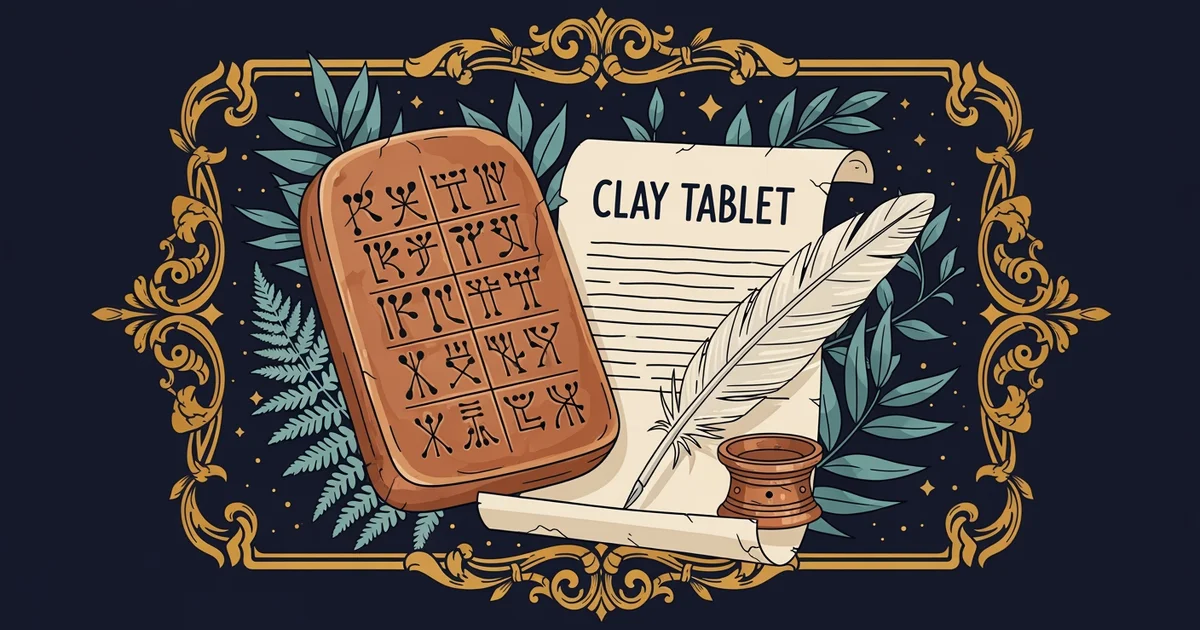
Early writing systems began as simple accounting tools designed to track grain, livestock, and trade goods. These ancient scribes used cuneiform, which relied on wedge-shaped marks pressed into soft clay tablets to represent physical objects. As society grew more complex, these symbols moved away from literal pictures toward abstract sounds. This shift allowed writers to record not just physical items, but also abstract ideas, laws, and epic stories. Think of this process like upgrading from a basic grocery list to a complex financial ledger that records every detail of an economy. The ledger provides a permanent record that remains useful long after the initial transaction has been completed by the buyers.
Key term: Cuneiform — an ancient writing system that used wedge-shaped stylus impressions on clay to represent syllables and words.
As civilizations expanded, the need for efficiency drove the development of the alphabet, which linked individual symbols to specific speech sounds. By reducing thousands of complex signs into a small set of characters, literacy became accessible to more than just the elite ruling class. This transition represents a massive leap in human cognitive development because it allowed for the rapid spread of information across vast geographic distances. When people could finally write down their thoughts, they no longer needed to be in the same room to share knowledge. This created a lasting feedback loop where written records inspired new ideas, which were then written down again for the next generation to study.
From Physical Media to Digital Synthesis
Modern writing has moved from physical surfaces like stone or paper into the invisible realm of binary code. We now use digital systems to store massive amounts of text, images, and data that can be accessed instantly from anywhere on the planet. This transition represents the ultimate synthesis of our history because it combines the permanence of ancient stone with the speed of human speech. We have effectively turned the entire world into a single, interconnected library that never stops growing or changing. The following table highlights the major stages of this evolution as we moved toward our current digital era:
| Stage | Primary Tool | Main Purpose | Reach |
|---|---|---|---|
| Early | Clay tablets | Accounting | Local |
| Middle | Paper/Ink | Storytelling | Regional |
| Modern | Digital Code | Global Data | Instant |
We must consider the impact of these changes on how we perceive the world around us today. Our ability to write has shaped our laws, our religions, and our personal identities in ways we are only beginning to understand. By looking back at the journey from clay to code, we see that writing is the primary technology that allows human culture to persist over time. We have built a framework where knowledge is no longer lost but stored and shared across every border. The future of writing will likely continue this trend of making information even more accessible and interactive for every user.
Humanity transitioned from oral traditions to permanent visual systems to ensure that knowledge survives the limitations of individual human memory.
Writing is the essential technology that allows human societies to build upon the collective wisdom of every generation that came before them.