
Synthesis of Linguistic History
Imagine a vast, ancient tapestry where every single thread represents a unique human language spoken across our globe. These threads constantly weave together, fray, and change colors as they travel through the corridors of human history and migration. Just as a traveler might pick up a new dialect in a foreign city, early human groups blended their speech patterns during trade or conquest. This process creates a complex record of where people lived and how they interacted over thousands of years. By looking at these linguistic shifts, we can map the hidden paths of our ancestors across continents.
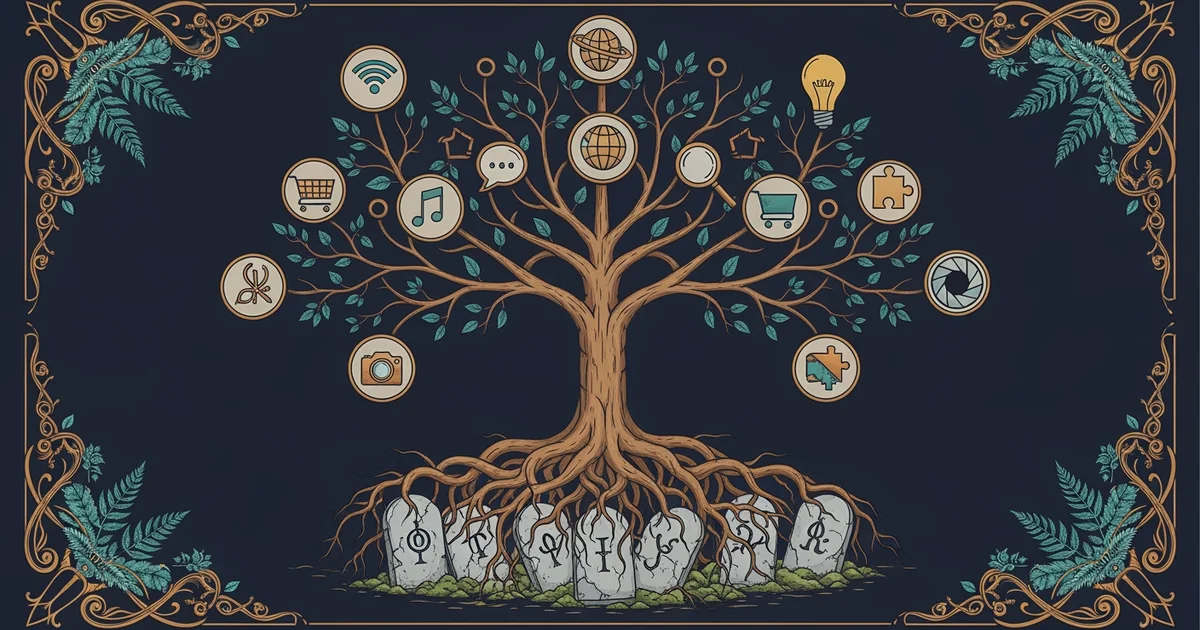
The Architecture of Language Evolution
Language evolution operates much like a complex economic market where words act as currency that changes value over time. When groups of people migrate, their language travels with them, but it inevitably encounters new environments and different social needs. This interaction forces the language to adapt, much like a business must pivot its strategy when entering a new territory to remain relevant. We call this process linguistic drift, where isolated speakers slowly change their vocabulary and grammar until they become distinct from their original source. This drift is not random, but follows clear patterns that researchers can track to find common ancestors between modern languages.
Key term: Linguistic drift — the gradual process by which a language changes its grammar and vocabulary over time due to isolation or external influence.
These changes often happen because language is a tool for survival and social connection rather than a static set of rules. When two cultures meet, they often trade more than just physical goods; they exchange ideas and the words used to describe them. This exchange creates a hybrid environment where new dialects emerge, eventually branching off into entirely new language families. This branching effect is similar to how a single startup company might spin off several independent businesses as it expands into diverse sectors. Each branch retains some core features of the parent language, even as it develops unique sounds and structures to suit its specific local context.
Tracking Human Migration Through Speech
By analyzing these linguistic branches, we can reconstruct the ancient movements of human populations that left no written records behind. We look for cognates, which are words in different languages that share a common origin and sound similar because they evolved from the same root word. If we find a high concentration of cognates across geographically distant regions, we can infer that those groups once shared a common homeland. This method turns the study of language into a detective story, where every shared vowel sound provides a clue about a prehistoric migration route.
To understand how these relationships are mapped, we can look at the common patterns of linguistic development:
- Isolation causes rapid divergence, as small groups cut off from the main population develop unique slang and grammar rules that no one else understands.
- Contact-induced change occurs when trade or war forces two groups to simplify their grammar, often leading to the creation of pidgins that eventually become new languages.
- Systematic sound shifts allow researchers to predict how a word in an ancient language should sound in a modern descendant, proving the genetic link between them.
| Language Feature | Primary Driver | Resulting Effect |
|---|---|---|
| Vocabulary | Trade | Borrowing of new terms |
| Grammar | Isolation | Development of unique rules |
| Phonology | Environment | Changes in sound production |
These factors combine to create the rich diversity we observe today, showing that language is a living reflection of human experience. When we synthesize these data points, we see that language history is actually the history of humanity itself. We are not just studying words; we are uncovering the collective memory of our species. The way we speak today is the direct result of every migration, trade deal, and social shift that occurred since the dawn of human speech. Understanding this history helps us appreciate the deep connections that exist between seemingly unrelated cultures across the planet.
The history of human migration is encoded within the shifting structures of our languages, allowing us to trace our shared origins through the evolution of speech.
Language history serves as a living map of human experience that links our past to the way we communicate today.