
Pattern Recognition
Imagine you are trying to sort a thousand mixed puzzle pieces by looking for tiny, repeating shapes. You would not look at every single piece in isolation to find the matching edge. Instead, you would scan for familiar curves and lines that appear across many different pieces. This process is exactly how computers handle complex data when they look for hidden structures in human speech. By finding these recurring shapes, the computer learns to organize language data without needing a human to label every single sound.
Identifying Language Structures
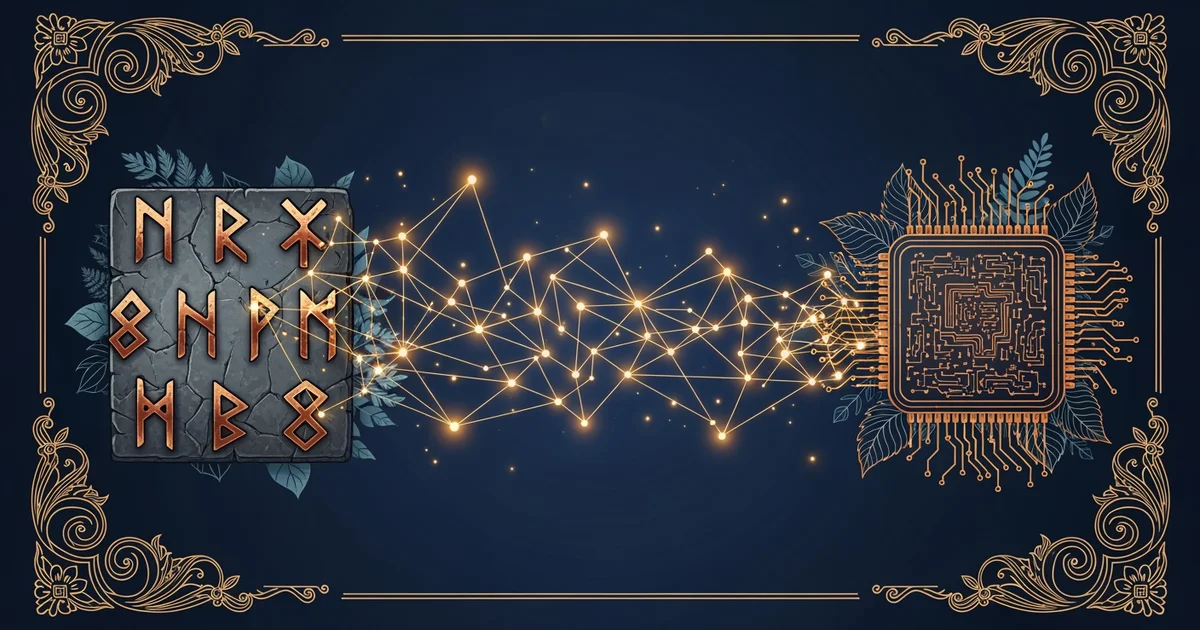
Artificial intelligence uses pattern recognition to identify the underlying rules that govern how people speak a language. When a machine processes hours of recorded audio, it does not hear words like a human listener does. It sees long strings of numerical data that represent sound waves and frequency shifts over time. The system looks for repeated sequences that appear when a specific sound or grammatical marker is used by a speaker. If a certain sound frequency always happens before a specific verb, the system marks that as a potential grammatical rule. This method allows the machine to map out the skeleton of a language that might be poorly documented. By finding these invisible threads, the machine starts to reconstruct the logic of a language that is fading away. It acts like a detective finding clues that humans might miss because they are too familiar with their own speech habits.
The Logic of Linguistic Mapping
Once the system identifies these initial patterns, it refines its understanding by comparing them across different speakers and contexts. Think of this like a person learning to navigate a busy city by watching the flow of traffic during the morning rush. You do not need to know where every car is going to see the patterns of the main roads. The machine observes how different speakers use the same sounds to build their sentences. It looks for consistency in where nouns, verbs, and adjectives usually sit within a spoken phrase.
Key term: Syntax — the set of rules that determines how words and phrases are arranged to create clear, meaningful sentences in any language.
When the system finds that certain markers always appear at the start of a sentence, it begins to understand the basic syntax of the language. This allows the AI to predict what sounds should follow others, which helps fill in gaps in damaged or incomplete recordings. It is a powerful way to turn raw noise into a structured map of human thought. The following table shows how the system categorizes these patterns during the initial analysis phase of language documentation:
| Pattern Type | Observation Focus | Goal of Analysis |
|---|---|---|
| Phonetic | Sound frequency | Mapping basic speech units |
| Syntactic | Word placement | Finding sentence structure rules |
| Morphological | Word endings | Identifying grammatical changes |
Applying Machine Learning to Syntax
As the system matures, it uses these findings to create a model that can predict new, unseen sentences. This is not just about copying what it has heard in the past. It is about understanding the generative nature of language where new thoughts are built from old rules. If the machine recognizes a pattern for forming a past tense, it can apply that rule to new words it has never encountered before. This capability is vital for languages that have very few speakers left and limited written records. By automating the discovery of these rules, we can preserve the core logic of a language for future generations. It ensures that the unique way a culture expresses its reality is not lost to time. The machine becomes a bridge between the oral traditions of the past and the digital archives of the future. It allows us to save the structure, even when the community of speakers is shrinking every single year.
Pattern recognition allows artificial intelligence to extract complex grammatical rules from raw audio data by identifying recurring sequences that define how a language functions.
The next Station introduces data privacy ethics, which determines how we protect the sensitive information of the speakers who provide this data.