
Future Directions in Research
Modern scientists often look at ancient bones and wonder if they can see the full story of human health. We have learned much about past diseases by studying skeletons, but the future of this field holds even greater potential for discovery. New tools allow us to read the history written in our cells and markers that survive across thousands of years. We are moving past simple visual exams toward a deep molecular understanding of how people lived and died in the distant past.
The Power of Digital and Molecular Tools
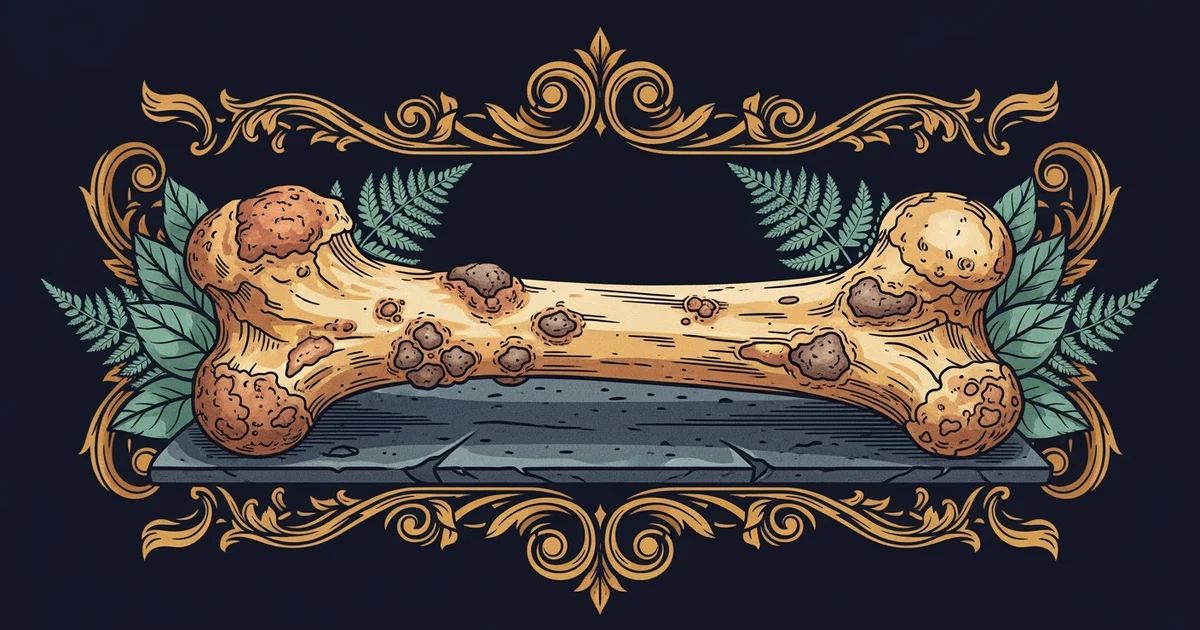
Advanced technology now changes how we study remains by providing a clearer view of the past. Researchers currently use high-resolution scans to look inside bones without breaking them or causing any damage. This digital approach allows us to map internal structures that show signs of long-term stress or chronic illness. Think of this process like using an X-ray to see a hidden fracture in a wall without needing to tear the structure down. This method preserves evidence for future generations while giving us precise data that human eyes might miss during a manual exam.
Key term: Paleopathology — the study of ancient diseases and health conditions found in human remains to understand how past populations survived.
Beyond digital scans, the field is shifting toward the study of ancient genetic material found in teeth and bone fragments. By extracting this material, we can identify specific germs that caused plagues in ancient cities. This process helps us track how diseases traveled across continents through trade routes or human migration. We are essentially building a map of global health history that shows how specific pathogens evolved alongside their human hosts over many centuries.
Future Questions and Emerging Trends
Future research will focus on how environmental changes affected the health of people in the past. We know that climate shifts often forced groups to change their diets or move to new regions. The next step is to measure how these big changes influenced the spread of disease within those communities. We must ask how ancient societies adapted to sudden resource shortages or new threats to their survival. This line of questioning bridges the gap between archaeology and modern medicine by showing us how humanity has always fought to stay healthy.
To organize these future goals, experts are focusing on several key areas of investigation:
- Microbiome Analysis: Scientists study the bacteria living in ancient remains to understand how early diets supported or harmed the human immune system during times of great stress.
- Isotopic Mapping: Researchers measure chemical markers in teeth to track where people traveled and what resources they consumed during their lives in different parts of the world.
- Disease Modeling: Experts use computer simulations to predict how ancient viruses spread through crowded settlements, which helps us understand modern risks of disease transmission in cities.
These methods allow us to see the hidden history of human disease and survival with much higher accuracy than before. We are no longer limited to guessing what caused a person to fall ill in the past. Instead, we can use these tools to confirm the presence of specific illnesses and see how they shaped the lives of our ancestors. This synthesis of biology and history gives us a complete view of how humans adapted to their environments. We now recognize that disease was a constant force that pushed people to innovate and change how they lived together.
Scientific progress in this field relies on combining digital imaging with genetic data to reveal the complex interplay between ancient human health and environmental change.
Understanding how our ancestors survived these challenges provides a vital roadmap for addressing global health issues in our own time.