
Trauma and Violence Patterns
Imagine finding a jagged crack in a ceramic vase that matches the shape of a heavy stone tool nearby. This physical evidence tells a clear story about how the object broke during a moment of intense impact. Ancient human remains often carry similar physical clues that reveal the hidden history of survival and conflict. By studying these marks, researchers can distinguish between accidents that occur during daily life and intentional injuries caused by other people. Understanding these patterns helps us piece together the social environment of ancient communities through the physical evidence left behind on bones.
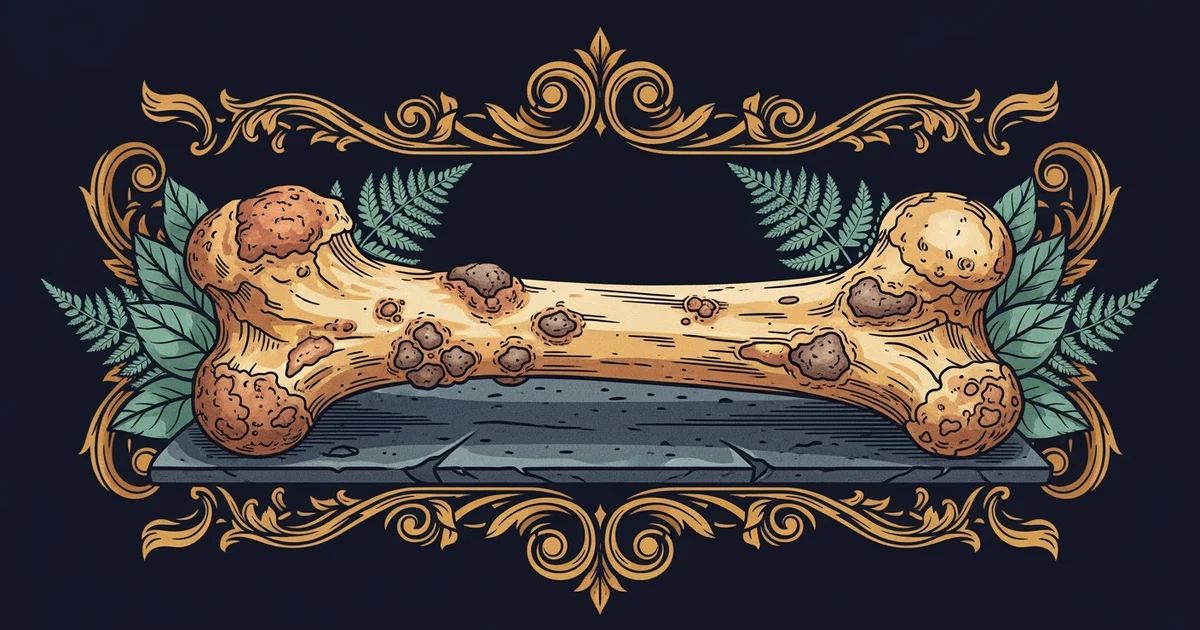
Identifying Patterns of Physical Injury
When a bone sustains an impact, the way it fractures provides vital information about the force involved. Accidental trauma often happens when a person falls or drops a heavy object on themselves during normal tasks. These injuries typically appear on the limbs or the collarbone, reflecting common household or work-related accidents. In contrast, interpersonal violence leaves distinct signatures that suggest a different set of circumstances. These injuries often occur on the skull or the hands, indicating that a person was defending themselves or facing a direct attack. Looking at the location of the break allows us to determine if the trauma was likely an accident or a conflict.
Key term: Paleopathology — the study of ancient diseases and injuries through the analysis of biological remains found in archaeological sites.
Think of your skeleton like a personal financial ledger that records every major event in your life. Just as a bank statement shows where you spent money, your bones record the physical toll of your daily activities. If you have a sudden, expensive emergency, your ledger shows a sharp spike in spending. Similarly, a violent encounter leaves a sharp, distinct mark on the bone that differs from the slow, wearing effect of repetitive labor. This ledger analogy helps us interpret the severity and the timing of the events that impacted the physical health of early humans.
Categorizing Trauma and Violence
Researchers use specific criteria to classify the types of trauma observed in ancient remains. These categories help scientists organize their findings into meaningful groups that explain the cause of the damage. The following table outlines how different types of injuries are classified based on their physical appearance and their location on the skeleton.
| Injury Type | Common Location | Physical Indicators | Likely Cause |
|---|---|---|---|
| Accidental | Limbs or joints | Simple, clean breaks | Falls or slips |
| Interpersonal | Skull or hands | Deep, jagged notches | Blunt force impact |
| Ritualistic | Specific bones | Controlled, precise cuts | Cultural ceremonies |
When we analyze these injuries, we must consider the healing process of the bone. If the edges of a fracture appear smooth and rounded, the person survived the injury for a long time. If the edges are sharp and show no signs of regrowth, the trauma likely occurred at or near the time of death. This distinction is crucial for understanding whether violence was a common occurrence or a rare event in a specific group. By measuring the rate of healing, we can map out the social stability of ancient populations over many generations.
We must also look for patterns that suggest repeated violence rather than isolated incidents. A single broken nose might be an accident, but multiple healed fractures on the same individual suggest a life of consistent conflict. These patterns indicate whether a society had mechanisms for resolving disputes or if physical force was the primary method for handling social tension. By combining data from many individuals, we build a picture of how ancient humans navigated their relationships and their environment. This process requires careful observation and a deep understanding of how human bone tissue reacts to external force over time.
Ancient remains serve as a physical record of human history by preserving evidence of both accidental injury and intentional violence through unique bone fracture patterns.
The next Station introduces Degenerative Joint Disease, which determines how repetitive labor affects the skeletal structure over the course of a lifetime.