
Slag Characterization
When you find a heavy, glassy lump buried in the dirt near an old furnace site, you are holding a record of ancient industrial failure or success. This material is slag, a glassy byproduct that forms when heat melts away impurities from metal ores during the smelting process. Much like a kitchen sponge that absorbs grease while you scrub a dirty pan, slag captures the unwanted minerals and sandy rock debris that separate from the molten metal. Archaeologists study these dense waste piles to understand how efficiently ancient people managed their limited fuel and ore resources. By analyzing the chemistry trapped within these hardened drips and flows, researchers can reconstruct the exact temperatures and techniques used by past metalworkers.
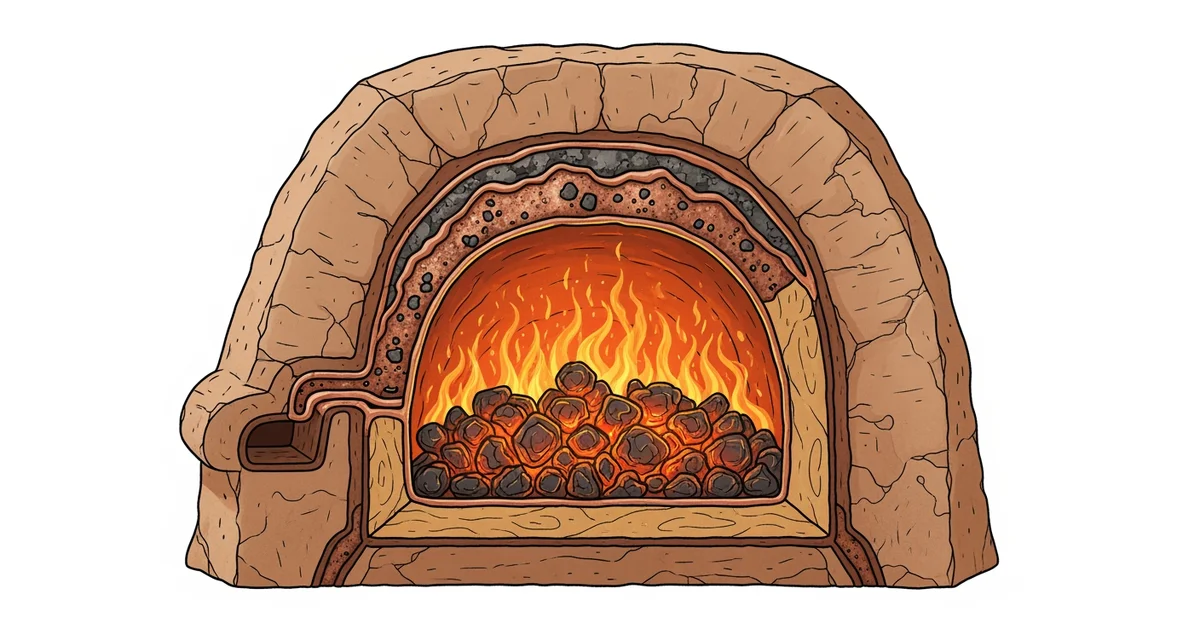
Chemical Signatures of Smelting Efficiency
To determine if a furnace operation was successful, scientists look at the chemical composition of the remaining slag material. If the slag contains high amounts of the target metal, it suggests the ancient furnace did not reach a high enough temperature to fully separate the metal from the rock. This is similar to a chef who accidentally leaves too much usable meat on a discarded bone, showing that the cooking process was quite wasteful. A more efficient operation would leave behind slag that is mostly composed of sand and iron oxides, indicating that almost all the valuable metal was successfully extracted for use in tools or weapons.
Key term: Smelting — the process of applying high heat to ore to extract a base metal from its rocky host.
Beyond just the amount of metal lost, the chemical signature of the slag reveals the specific additives used by the smelters. Ancient workers often added materials like limestone to help the slag flow more easily, which helped the molten metal sink to the bottom of the furnace. By checking for these fluxing agents, researchers can map out the sophisticated technical knowledge possessed by early societies. This practice proves that ancient people were not just guessing, but were actively managing chemical reactions to improve their production yields.
Interpreting Industrial Waste Patterns
When we look at the physical structure of slag, we can categorize the waste by its appearance and density. These patterns help us understand if the furnace was a small, temporary setup or a large, permanent industrial facility. The following table highlights common types of slag found at archaeological sites:
| Slag Type | Physical Appearance | Likely Origin | Efficiency Level |
|---|---|---|---|
| Tap Slag | Smooth, flowing, dark | Large furnaces | High efficiency |
| Bloomery Slag | Porous, heavy, rough | Small hearths | Low efficiency |
| Crucible Slag | Glassy, thin, light | Metal refining | High precision |
These differences in physical form tell a story about the scale of production and the social organization of the labor force. Large, smooth flows of tap slag indicate that a community had the resources to build permanent furnace structures and organize specialized teams to manage the constant flow of molten waste. In contrast, rougher slag indicates smaller, household-level production where the goal was to make just enough metal for local needs. By comparing these waste patterns, we can infer the economic complexity of a region without needing written records from the time.
This flowchart illustrates how the smelting process splits into two distinct paths, leaving behind the evidence we analyze today. The waste is not just trash, but a deliberate record of how the heat was controlled and how the resources were consumed. Every bubble or crystal trapped in the glassy matrix provides a window into the past, proving that even the discarded leftovers of a civilization can tell us about their technological lives and social structures.
Slag characterization acts as a chemical archive that reveals the hidden efficiency and technical expertise behind ancient metal production.
But what does it look like when we move from analyzing waste piles to peering inside the metal itself using advanced imaging?