
Iron Age Innovations
Imagine trying to bake a dense loaf of bread using only a tiny candle for heat. You would quickly find that the heat is too weak to change the dough into a finished meal. Early metal workers faced this exact struggle when they moved from working with copper to working with iron. While copper melts at a relatively low temperature, iron demands extreme heat to reach a liquid state. This shift in raw material changed everything about how ancient societies built their tools and their weapons.
The Challenge of High Temperatures
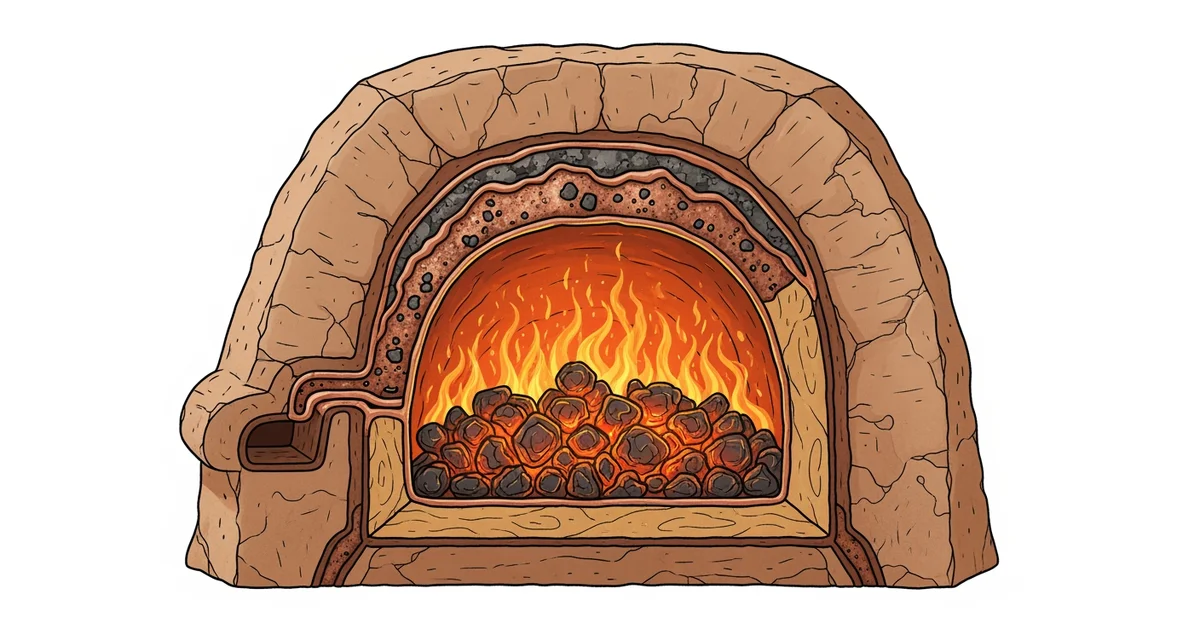
Iron does not behave like copper or bronze during the smelting process. To turn iron ore into a usable metal, workers had to achieve temperatures far beyond what simple open fires could provide. Copper melts at about one thousand degrees Celsius, which is easy to reach with basic charcoal pits. Iron, however, requires temperatures exceeding fifteen hundred degrees Celsius to become truly liquid. This difference acts like the difference between boiling a small pot of water and trying to melt a solid block of steel. Without specialized technology to trap and intensify heat, iron remained locked inside its rocky ore.
Key term: Smelting — the process of applying heat to ore to extract a base metal for crafting tools.
Ancient smiths had to innovate to solve this persistent heat problem. They developed new designs to force air into their fires, which raised the internal temperature significantly. By using bellows, they could pump oxygen directly into the heart of the furnace. This steady stream of air made the charcoal burn much hotter than it could on its own. This technical leap allowed them to soften the iron enough to shape it. It was a massive upgrade from the older casting methods used for softer bronze items.
Innovations in Metal Production
Transitioning to iron required a complete rethink of how workshops were organized and managed. The process was not just about the heat, but also about the chemical reactions happening inside the furnace. Smiths learned that adding certain materials helped pull impurities out of the glowing iron mass. This refined iron was stronger and more durable than the bronze tools of the past. The following table highlights why this transition was so difficult but ultimately necessary for early civilizations:
| Metal Type | Melting Point | Primary Use | Difficulty Level |
|---|---|---|---|
| Copper | Low | Decorative items | Very Easy |
| Bronze | Moderate | Basic tools | Manageable |
| Iron | Extremely High | Heavy weapons | Very Hard |
- Bellows usage: Workers used hand-pumped bags to push air into the furnace to boost heat.
- Charcoal selection: Choosing the right wood for charcoal helped maintain the high heat needed for iron.
- Slag removal: Smiths had to hammer the hot metal to push out waste and impurities from the iron.
Each step in this sequence was vital for producing high-quality metal that would not shatter during use. When the smiths mastered these steps, they could produce tools that lasted for years rather than months. This reliability made iron the preferred material for farming and warfare across the ancient world. The shift was as significant as the move from stone tools to metal ones thousands of years earlier. It fundamentally altered the economic power of any group that could master these complex, high-heat production methods.
Mastering iron production required advanced furnace technology to overcome the extreme heat thresholds that prevented earlier civilizations from processing this abundant metal.
The next Station introduces furnace engineering, which determines how air flow designs improved the efficiency of ancient metal production.