
Furnace Engineering
Imagine trying to light a damp campfire without any way to blow air onto the glowing embers. The fire would struggle to stay alive and eventually fade into cold ash because it lacks the oxygen needed to sustain high heat. Ancient metalworkers faced this exact challenge when they attempted to smelt raw ore into usable metal. They had to master the flow of air to transform their furnaces into powerful tools of production. Without precise control over airflow, the chemical reactions required to separate metal from rock simply cannot occur at the necessary speed or scale.
The Mechanics of Thermal Regulation
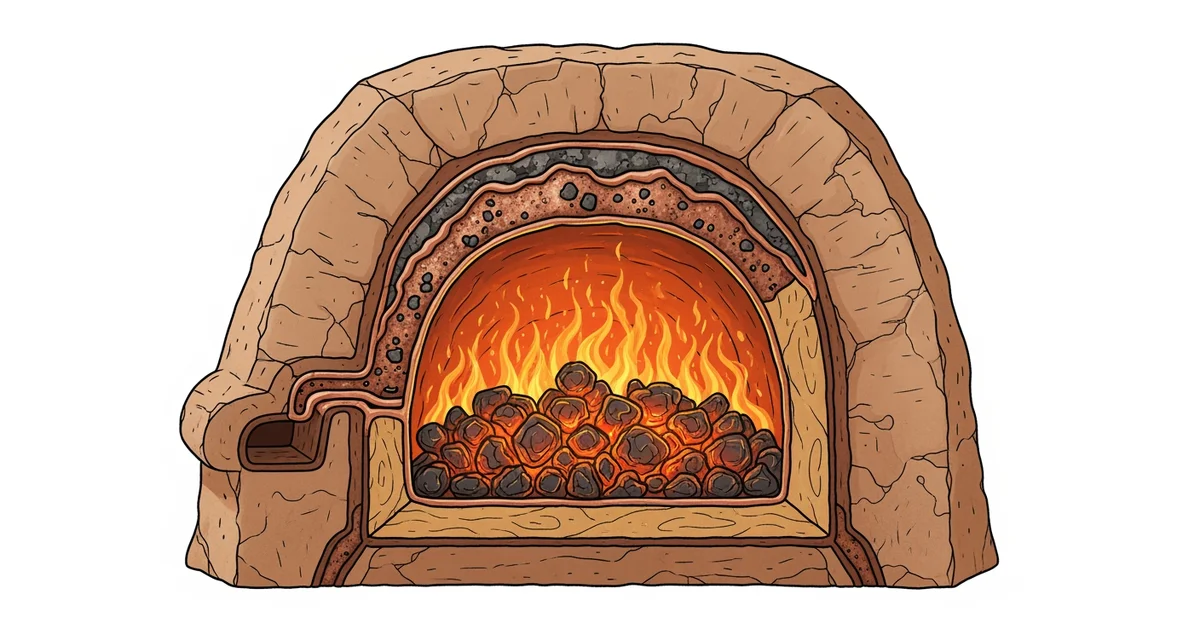
To achieve the high temperatures required for smelting, early engineers designed furnaces that acted like giant stone chimneys. These structures relied on the principle of natural draft, where hot air rises and pulls fresh oxygen in from the bottom. This process is much like how a modern fireplace draws air to keep logs burning brightly throughout the night. If the furnace had too many leaks, the heat would escape before it could melt the ore. If it had too few, the fire would choke on its own smoke. Engineers had to balance the volume of the chamber with the size of the intake vents to maintain a steady, intense burn.
Key term: Smelting — the process of applying heat to ore to extract a base metal through chemical reduction.
Once they mastered the basic shape, metalworkers began using manual tools to force more air into the heart of the furnace. They used bellows, which are flexible bags that push air through a pipe directly into the fuel bed. This innovation allowed them to reach temperatures that natural draft alone could never achieve. By timing their pumping to match the color of the flames, they could keep the furnace at the perfect thermal peak. This level of control represents a shift from passive observation to active engineering of the metallurgical environment.
Optimizing the Smelting Environment
Efficiency in ancient furnaces depended on the placement and size of the tuyere, which is the nozzle that directs air into the fire. A well-placed tuyere ensures that oxygen hits the fuel at the hottest point of the combustion zone. If the tuyere sits too low, it cools the molten metal too quickly as it drips toward the bottom. If it sits too high, the air never reaches the deepest part of the fuel bed. The following list outlines the critical components that ancient engineers had to balance to ensure a successful melt:
- The internal lining must consist of heat-resistant clay to prevent the structure from melting alongside the ore.
- The fuel ratio must provide enough carbon to remove oxygen from the ore while sustaining the required high heat.
- The air intake velocity must remain consistent to prevent the furnace from cooling down during the critical reduction phase.
When we look at the remnants of these furnaces, we see evidence of constant trial and error. Engineers often adjusted the thickness of the furnace walls to retain heat during colder seasons. They also experimented with different types of charcoal to see which burned longest and hottest. This iterative process shows that they understood the relationship between fuel, air, and temperature long before they had modern measuring tools. Their ability to refine these designs demonstrates a sophisticated grasp of thermodynamics that allowed them to produce higher quality metal with less waste.
| Feature | Purpose | Impact on Smelting |
|---|---|---|
| Tuyere | Air Delivery | Controls combustion rate |
| Lining | Insulation | Maintains internal heat |
| Venting | Gas Exhaust | Manages pressure levels |
The data in this table shows that every part of the furnace served a specific mechanical role. By adjusting these variables, ancient workers could compensate for the quality of their raw materials. This engineering mindset turned the furnace from a simple hole in the ground into a reliable machine for industrial creation. They were not just burning wood; they were managing a complex chemical reaction that defined their society.
True mastery of ancient metal production required engineers to balance airflow and thermal insulation to create a consistent environment for chemical change.
But how do we analyze the waste materials left behind to confirm the efficiency of these ancient furnace designs?
Want this with sources you can check?
Premium Learning Paths for History & Archaeology are researched against open-access libraries — PubMed, arXiv, government databases, and more — with their distinctive claims cited to real sources and independently checked.
See what Premium includes