
Smelting Foundations
Imagine you are trying to bake a perfect loaf of bread using only raw wheat seeds found in a field. You cannot just eat the seeds, because your body needs the bread to be processed and transformed into something edible. Ancient metalworkers faced this same challenge when they found heavy, dull rocks that held precious copper or iron trapped inside. They could not simply hammer these rocks into tools or jewelry because the metal was chemically locked away. To unlock the metal, they had to invent a process that could strip away the unwanted rock parts. This transformation process is known as smelting, and it changed how human societies built their world.
The Chemistry of Metal Extraction
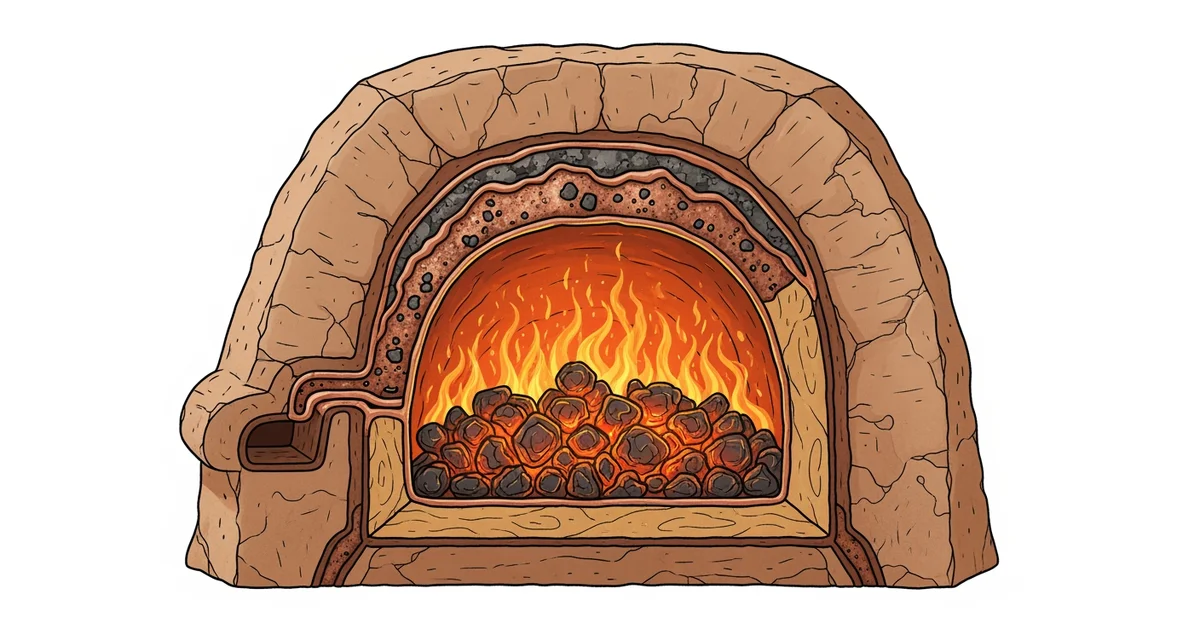
Smelting is a deliberate chemical process that removes oxygen from metal ore to reveal the pure metal. Most metals in the ground exist as oxides, where metal atoms are bonded tightly to oxygen atoms. To separate them, a worker must introduce a chemical agent that wants the oxygen more than the metal does. This agent is usually carbon, provided by burning charcoal inside a controlled furnace environment. When the charcoal burns at high heat, it releases carbon monoxide gas that acts like a chemical magnet. This gas travels through the hot ore and pulls the oxygen atoms away from the metal. The oxygen leaves as a gas, leaving behind the liquid metal that settles at the bottom.
Think of this process like trading items at a busy marketplace where you want a specific rare item. If you hold a ticket that is useless on its own, you must find a trader who values your ticket more than their own goods. The carbon acts as the savvy trader who offers a better deal to the oxygen atoms than the metal can offer. Once the oxygen atoms trade places with the carbon, the metal is finally free to be collected. This exchange is the economic heart of ancient technology, as it turns low-value waste into high-value resources for the entire community.
The Smelting Cycle and Furnace Control
To manage this delicate reaction, ancient smiths relied on a repeating cycle of heating and cooling. This cycle ensures the furnace maintains the correct temperature and chemical balance for the metal to emerge. The process follows several distinct stages that require careful observation and patient manual labor from the workers:
- Preparation of the Charge: Workers mix crushed ore with charcoal in specific ratios to ensure there is enough fuel for the chemical reaction to occur.
- Controlled Thermal Application: The furnace is heated to a precise level where the carbon can successfully bond with oxygen while keeping the metal liquid.
- Slag Separation: The unwanted rock material, known as slag, floats to the top of the molten pool because it is much lighter than metal.
- Collection of Blooms: The solidified metal, often called a bloom, is removed from the furnace base to be hammered into usable shapes later on.
Key term: Slag — the glassy waste material that forms during smelting when impurities from the ore are separated from the molten metal.
This cycle requires deep knowledge of how heat affects different types of earth and stone. If the furnace gets too hot, the metal might burn away or become brittle. If the furnace stays too cool, the chemical reaction will never start, and the metal will remain trapped in the rock. By balancing these factors, ancient societies created a reliable method for mass-producing the materials they needed for survival and trade. This mastery of fire and chemistry allowed civilizations to transition from simple stone tools into the complex metal-based societies that defined the historical record.
Smelting uses the chemical hunger of carbon to strip oxygen from ore, freeing pure metal from its rocky prison.
The next Station introduces Alloy Development, which determines how different metals are combined to create stronger and more durable tools.