
Fundamental Physics of Trains
A heavy freight train sits motionless on a steel track until a massive force pulls it forward. You might think moving thousands of tons requires magic, but it relies on simple push and pull forces.
Mechanics of Train Motion
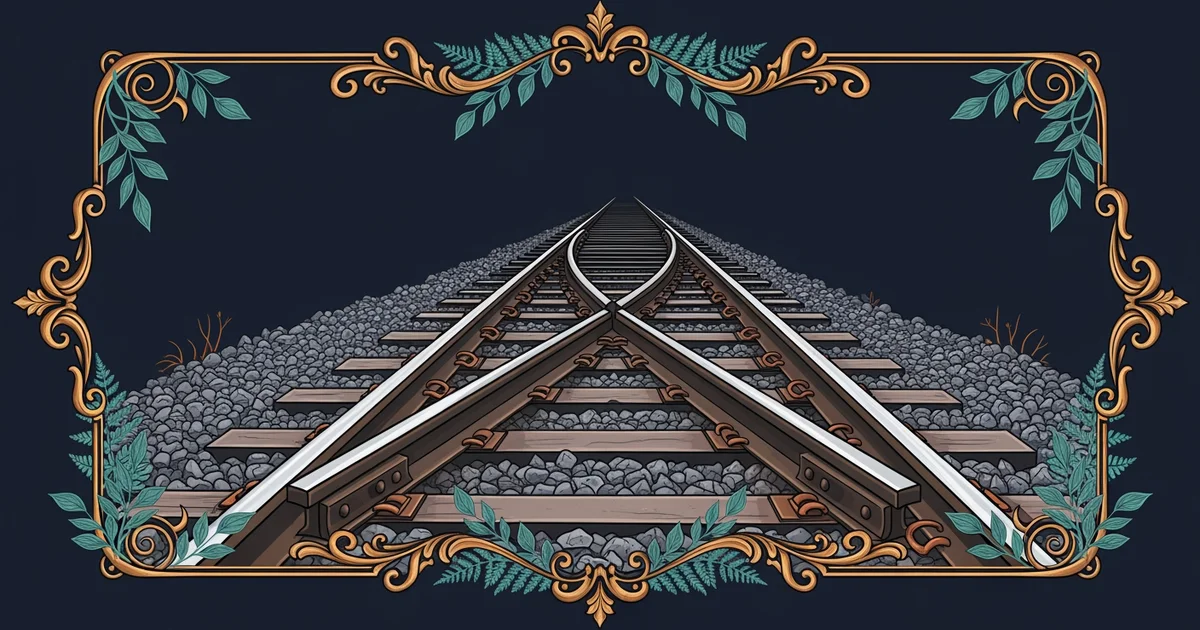
Trains move by using the interaction between metal wheels and steel rails to generate motion. This process begins with traction, which is the grip that allows the wheels to turn without slipping on the track. When a locomotive starts, its engines provide rotational force to the wheels. If the wheels spin too fast without enough grip, the train slips and fails to move forward. Engineers must carefully manage this power to ensure that the heavy load begins to roll smoothly. Think of this like a person trying to walk on a very icy patch of ground. If you push off too hard, your feet slide backward, but a controlled step allows you to move forward safely. The locomotive needs that same delicate balance to convert internal power into forward movement.
Key term: Traction — the physical grip generated between the steel wheels and the rail that allows a train to move forward without slipping.
Once the train is in motion, it faces the challenge of maintaining that speed against various resistance forces. Inertia is the natural tendency of an object to resist changes in its current state of motion. Because a train is extremely heavy, its inertia is massive, meaning it requires significant force to start moving or to come to a stop. Once the train gains momentum, it wants to keep moving at that same speed forever. Engineers must account for this by planning stops long before they reach the station. If a train weighs five thousand tons, the brakes cannot stop it instantly, just as a fully loaded grocery cart is much harder to stop than an empty one.
Managing Energy and Movement
Controlling a train requires a deep understanding of how energy shifts during travel across different types of landscapes. The engine must work harder when the train climbs a steep hill, as it fights against the downward pull of gravity. When the train travels downhill, it gains speed naturally, and the engineer must use the brakes to prevent the train from going too fast. Balancing these forces is essential for keeping the cargo safe and preventing damage to the tracks. The following list explains how these forces influence the daily operation of a railway system:
- Kinetic energy builds up as the train moves, creating a force that the braking system must eventually absorb to bring the massive machine to a complete and safe stop.
- Rolling resistance happens because the metal wheels and steel tracks deform slightly under pressure, which creates a constant drag that the locomotive must constantly overcome to maintain speed.
- Air resistance becomes a significant factor at higher speeds, requiring the engine to use more fuel to push the air aside so the train can keep moving forward efficiently.
Engineers design the track layout to minimize these forces by avoiding sharp curves or steep climbs whenever possible. By smoothing out the path, they allow the train to maintain a steady pace with less fuel consumption. This design strategy is similar to how a cyclist chooses a flatter route to avoid burning too much energy on a long trip. Every decision made during the construction of the track directly affects how much power the locomotive must produce to keep the heavy load moving. Constant monitoring of these physical principles ensures that trains can travel across vast distances while keeping both passengers and freight secure.
Moving heavy trains requires balancing traction to start, inertia to maintain speed, and braking systems to manage the massive energy stored in a rolling load.
Next, we will examine how the specific materials used in track construction withstand the intense physical forces described in this foundation.