
The Geography of Resources
Imagine you are building a new city from scratch and need to choose the perfect location to ensure your survival. You would likely search for a spot that offers easy access to fresh water and fertile ground for growing food. This basic need for survival dictates where humans choose to settle and build their homes. People rarely build large cities in places where they must struggle to find clean water or transport heavy goods. Instead, they seek out sites that provide natural advantages to make daily life easier and more productive. By examining these choices, we uncover the hidden logic behind the maps of our modern world.
The Influence of Natural Assets
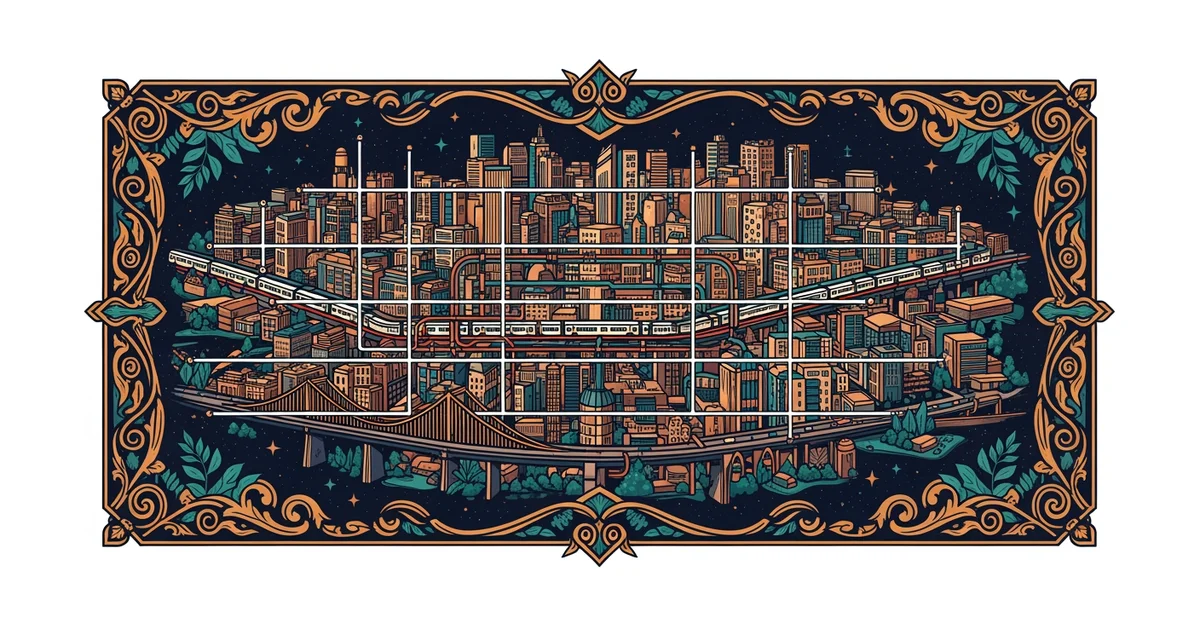
Cities act like giant sponges that soak up resources from their surroundings to keep their populations healthy and active. When a city sits near a river or a bay, it gains a massive advantage in trade and movement. Water acts as a natural highway that allows heavy goods to travel with very little effort or cost. Think of a city as a household budget where water access represents a high-interest savings account. Just as you prioritize putting money into an account that grows, early settlers prioritized building near water. This decision provided a steady stream of trade, travel, and energy that landlocked areas simply could not match. Over time, these small settlements grew into massive hubs because their resource access remained consistent and reliable.
Key term: Resource endowment — the specific collection of natural materials and geographic features available in a region that supports human growth.
Beyond water, the availability of raw materials like wood, stone, or metal often determined the path of urban growth. Cities that emerged near rich coal fields or iron deposits during the industrial era saw rapid expansion. These resources provided the fuel and building blocks necessary for constructing factories and homes on a large scale. When a city controls a local resource, it gains a unique status in the regional economy. This advantage allows the city to trade its surplus with neighbors who lack those specific items. This exchange creates a web of connections that links cities together into a larger, functional network.
Geographic Patterns of Settlement
Geography acts as a filter that determines which settlements thrive and which ones fade away over time. Cities often emerge in clusters because they share access to the same regional bounty of natural wealth. For example, a river valley might support a chain of towns that all rely on the same fertile soil. We can categorize these geographic influences by looking at how they shape the physical layout of a city.
| Resource Type | Primary Benefit | Urban Impact |
|---|---|---|
| Water Bodies | Easy transport | High density |
| Fertile Soil | Food security | Expansion |
| Mineral Veins | Industrial base | Job growth |
These factors combine to create a distinct shape for every urban center we see on a map. A coastal city will naturally spread along the shoreline to maximize its access to maritime trade routes. In contrast, a city built near a mountain pass might be long and narrow to fit the terrain. The following list explains how these natural features dictate the specific ways that cities grow and change over time:
• Coastal access allows for international trade, which forces the city to build docks and warehouses along the edge.
• Flat terrain provides room for easy road building, which encourages the city to spread out in every direction.
• Mountain barriers limit growth in certain ways, which forces the city to build upward instead of outward.
Understanding these patterns helps us see why some areas become crowded hubs while others remain quiet and small. The environment sets the stage, but human choices about how to use those resources determine the final act. We see this play out every day when we look at the location of shipping ports or major industrial districts. Every building and road is a testament to the original decision to settle near a specific natural advantage. By studying these choices, we gain a better understanding of why our own cities look the way they do today.
Cities grow in specific patterns because they are strategically placed to exploit nearby natural resources for trade and survival.
Next, we will explore how these resource-driven locations influence the way cities organize their services and social structures.