
Defining the Urban Landscape
Imagine standing on a busy street corner where the noise of traffic creates a constant hum. You see tall buildings rising toward the sky while thousands of people move with purpose. This scene represents the heart of an urban landscape, a place defined by high density and complex human activity. You might wonder why people choose to live in such crowded spaces instead of quiet rural areas. The answer lies in the way cities provide access to jobs, services, and social connections. Understanding these patterns helps us see how our daily choices shape the world around us.
Characteristics of Modern Cities
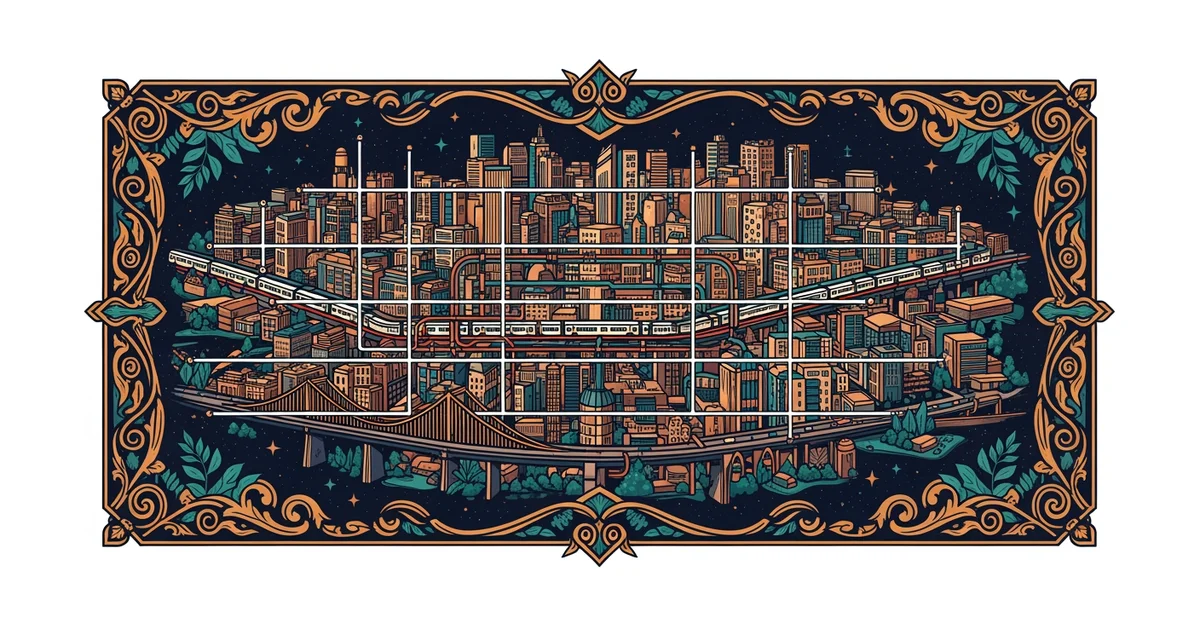
Cities function much like a massive, complex machine where every gear depends on the others to move. If one part of the machine stops working, the entire system feels the impact immediately. In an urban area, this machine consists of infrastructure like roads, power grids, and water systems. These systems support large groups of people living in close proximity to one another. Unlike rural regions, urban spaces rely on organized planning to manage the high demand for resources. Without these systems, the density of a city would quickly lead to total chaos.
Key term: Infrastructure — the physical and organizational structures like buildings, roads, and power supplies needed for a city to operate.
Urban environments are distinguished by several core features that set them apart from the countryside. These features dictate how we travel, work, and spend our free time each day. When we look at these traits, we can better understand why cities grow the way they do:
- High population density requires efficient public transit systems to move thousands of people across short distances every single hour.
- Specialized land use zones separate residential homes from industrial factories to maintain safety and improve the quality of daily life.
- Concentrated economic activity creates a hub where businesses, banks, and markets thrive by being close to their primary customers.
The Geographic Impact of Urban Growth
Geography plays a major role in how cities expand and how they arrange their internal neighborhoods. You can see this influence by comparing how different cities use their available space for growth. Some cities grow upward with skyscrapers, while others expand outward into the surrounding natural landscape. This growth pattern is influenced by physical features like rivers, mountains, or flat plains. The way a city occupies its land determines how long it takes you to reach school or work. We often take these patterns for granted, yet they are the result of deliberate geographic decisions.
| Feature | Urban Impact | Rural Comparison |
|---|---|---|
| Density | Very high | Very low |
| Transit | Public focus | Private focus |
| Economy | Services | Agriculture |
This table highlights why urban areas feel so different from the places where farming is the primary activity. In an urban setting, the focus shifts toward providing services to a massive number of residents. This shift creates a unique environment where human interaction is the most important resource. By studying these geographic criteria, you gain a clearer picture of how cities evolve over time. This knowledge allows you to observe your own neighborhood with a more critical and informed perspective. You will soon be able to identify the hidden forces that make your city function every day.
Urban landscapes are defined by high population density and complex infrastructure systems that enable millions of people to live and work together in a shared space.
By exploring how these modern cities function, you will soon discover the historical events that shaped their unique growth patterns and geographic layouts.