
Aurora Borealis Phenomena
Imagine standing in a dark field when the night sky suddenly erupts in dancing ribbons of bright green and violet light. This natural light show occurs because our planet interacts with high-energy particles traveling across the vast vacuum of space. While these displays seem like magic, they are actually the result of complex physical processes happening high above our heads. Understanding how these lights form reveals how the sun constantly shapes our environment through invisible streams of energy and magnetic fields.
The Mechanics of Solar Interaction
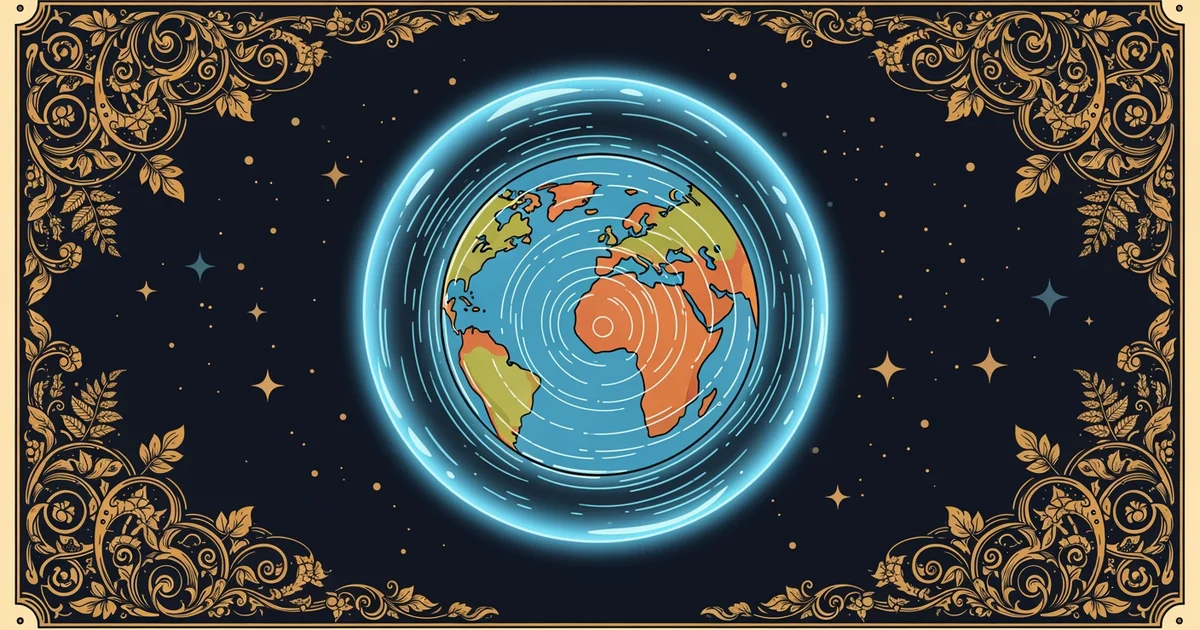
When the sun releases a steady stream of charged particles, this flow is known as the solar wind. These particles travel across the solar system until they encounter the protective magnetic field surrounding our home planet. This magnetic shield, called the magnetosphere, acts like a giant umbrella that deflects most of the incoming solar energy away from the surface. However, some particles manage to slip through at the polar regions where the magnetic field lines dip toward the ground. These trapped particles then accelerate toward the upper atmosphere, where they begin to collide with the gases that make up our air. Think of this process like a neon sign, where electricity excites gas inside a glass tube to create a glow. In the case of the aurora, the solar particles provide the energy that causes the atmospheric gases to emit light.
Key term: Solar wind — the continuous stream of charged particles released from the upper atmosphere of the sun.
Atmospheric Gases and Color Emission
The specific colors we see in an aurora depend entirely on which gas atoms get struck by solar particles. As these high-energy particles crash into the atmosphere, they transfer energy to oxygen and nitrogen molecules at different altitudes. When these molecules return to their normal state, they release the excess energy as visible light. The altitude of the collision determines the specific hue that observers see from the ground. Oxygen is the most common source of color, often producing the vibrant greens and occasional deep reds that define the classic polar display. Nitrogen, on the other hand, typically contributes shades of blue or purple to the lower edges of the glowing curtains. The interaction process is summarized in the following table to show how altitude influences the final visual result:
| Gas Type | Altitude Range | Primary Color | Energy Level |
|---|---|---|---|
| Oxygen | High altitude | Deep red | Very low |
| Oxygen | Mid altitude | Bright green | Moderate |
| Nitrogen | Low altitude | Blue/Purple | High |
This color variety creates the complex, layered appearance of the lights as they shift and ripple across the horizon. The intensity of the solar wind dictates how far these colors spread toward the equator, which explains why displays are usually confined to high latitudes. When solar activity increases, the atmosphere receives more energy, which pushes the light displays to lower latitudes than normal. This expansion shows that the aurora is not just a static image but a dynamic response to the sun's current mood. Because the atmosphere is always changing, the light patterns never repeat the exact same shape twice, making every viewing experience unique for the observer.
The relationship between the sun and our atmosphere functions much like a massive electrical circuit. The sun acts as the battery, the solar wind serves as the current, and the atmosphere acts as the bulb that illuminates the sky. Just as a battery eventually drains or fluctuates, the solar output varies over time, leading to changes in the brightness and frequency of the auroras. Scientists track these interactions to predict when the sky will glow, helping us understand the health of our planetary shield. This constant bombardment reminds us that the Earth exists within a busy and active solar neighborhood that never truly sleeps.
The aurora borealis is a visible manifestation of energy transfer occurring when solar particles collide with atmospheric gases trapped by the Earth's magnetic field.
But what happens when these powerful space-based energy interactions interfere with our global technology and communication infrastructure?