
Earth System Integration
Imagine the entire planet as a massive, complex clock where every gear depends on the others to keep time perfectly. If one tiny cog slows down or shifts its position, the entire mechanism feels the strain and begins to move in new ways. Our Earth functions just like this clock, as the movement of giant plates beneath our feet forces changes across the surface, the oceans, and even the atmosphere. This deep connection between the solid ground and the living world explains why our home remains a habitable place for us today.
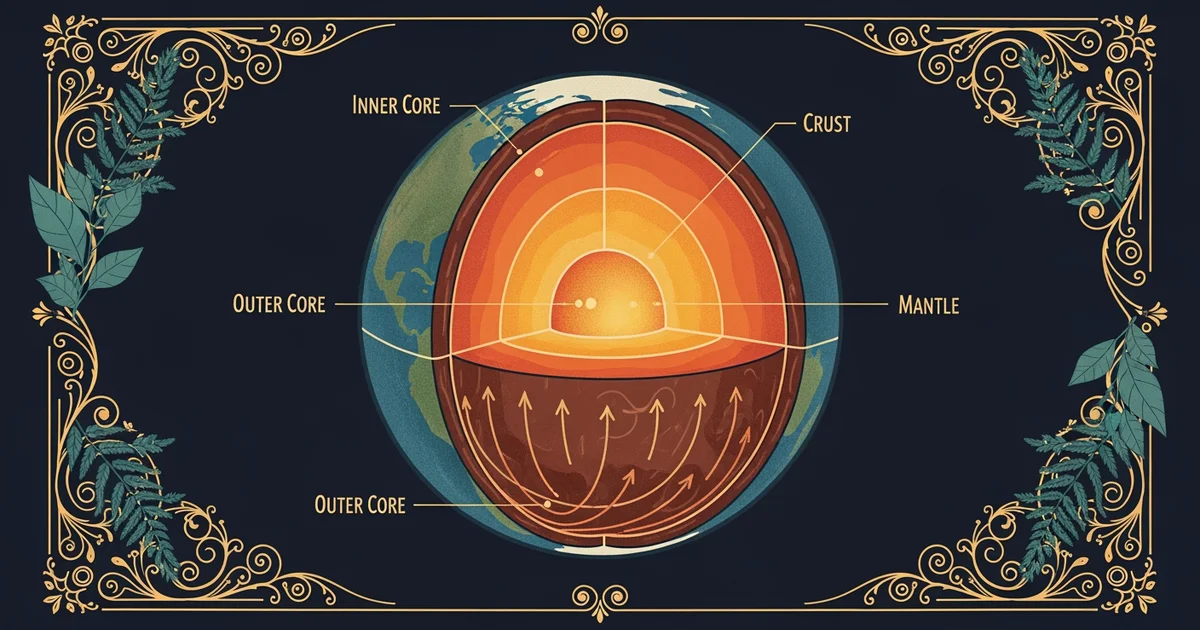
The Engine of Global Change
When we look at plate tectonics, we see the primary engine that drives the recycling of materials across the globe. These massive plates float on a semi-liquid layer, constantly colliding or pulling apart to reshape the continents over millions of years. This process acts like a global conveyor belt that moves carbon, heat, and minerals from the deep interior of the planet toward the surface. Without this constant motion, the Earth would eventually become a stagnant rock with no way to regulate its internal temperature or chemical balance.
Key term: Plate tectonics — the scientific theory describing the large-scale motion of the plates making up Earth's outer shell.
Consider the way a large city manages its traffic flow to prevent gridlock and ensure that resources reach every neighborhood. If the roads never changed or expanded, the city would quickly fail because it could not adapt to growth or shifting needs. Tectonic plates function as these essential roads, allowing the planet to move heat away from its core and release gases that help maintain our atmosphere. This movement is not just about changing maps, but about keeping the Earth's biological and chemical systems running smoothly for all living things.
Interconnected Earth Systems
Beyond the movement of land, the interaction between the crust and the ocean creates a delicate balance for life. When plates shift, they create deep trenches or massive mountain ranges that dictate how water moves around the globe. These physical barriers force ocean currents to change their paths, which directly controls the climate of entire continents. A mountain range might block rain from reaching a desert, while an opening sea lane could allow warm water to reach colder regions, keeping them habitable.
| System Component | Role in Earth Habitability | Impact of Plate Motion |
|---|---|---|
| Atmosphere | Regulates global temperatures | Controls volcanic gas release |
| Hydrosphere | Distributes heat via currents | Changes ocean basin shapes |
| Lithosphere | Provides stable land surface | Creates mountains and valleys |
The following items highlight how tectonics influences the wider environment through its constant, slow-motion activity:
- The release of carbon dioxide from volcanoes helps keep the planet warm enough to support life by trapping heat within our atmosphere.
- The formation of new mountain chains forces air currents upward, which triggers rainfall and shapes the local weather patterns for nearby regions.
- The recycling of crustal material back into the mantle ensures that essential minerals are returned to the surface over long geological time periods.
By connecting the supercontinent cycle to the current state of our planet, we can see that our world is always in a state of transition. Previous stations explored how landmasses gather and break apart, but the most important lesson is that this cycle never stops. Even today, the Atlantic Ocean continues to widen while other regions shrink, proving that the surface of our world is a living, breathing entity. Our existence depends on these slow but powerful forces that have sculpted the environment over billions of years.
The constant movement of tectonic plates acts as a global recycling system that regulates the climate and supports the conditions necessary for life to thrive.
Understanding how these geological forces shape our environment provides a clear picture of why our planet remains a dynamic and hospitable home for all living species.