
Lithosphere Plate Dynamics
Imagine you are standing on a giant puzzle piece that is slowly drifting across a hot, liquid ocean. The ground beneath your feet feels solid, yet it is actually part of a massive, moving shell that covers our entire planet. This shell is not one single piece but a collection of distinct sections that constantly shift and grind against each other. Understanding how these pieces move helps us see why mountains rise, why volcanoes erupt, and why the earth shakes without any warning.
Understanding the Rigid Shell
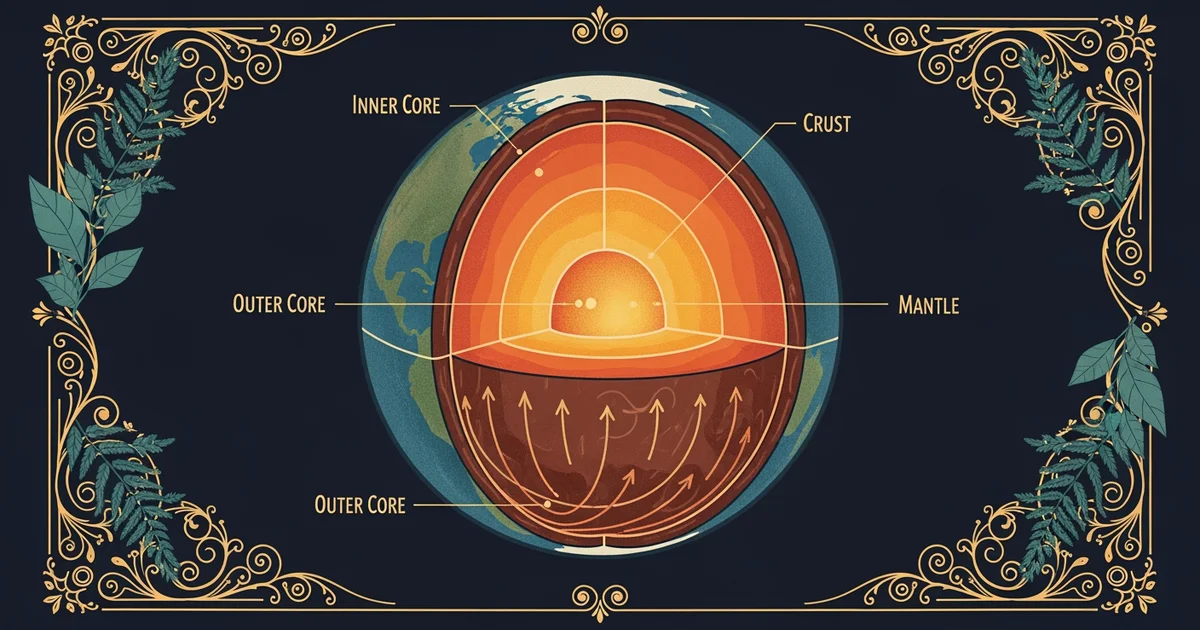
The outer layer of our planet is called the lithosphere, which acts like a tough, brittle skin. This layer is broken into several large and small slabs known as tectonic plates that float on the softer mantle below. Think of these plates like large, broken pieces of eggshell floating on top of a thick, gooey liquid inside a boiling pot. While the mantle moves slowly due to extreme heat, the plates above it are pushed and pulled across the surface. These plates are rigid, meaning they do not bend easily, so they must crash or slide past each other when they collide. Because they are so large, the energy released when they move can change the shape of entire continents over millions of years.
Key term: Tectonic plates — the massive, rigid slabs of rock that make up the outer surface of the Earth.
How Plates Interact
Since these plates are always in motion, they interact in ways that create the major features of our world. When two plates move away from each other, hot material rises to fill the gap and creates new surface area. When two plates move toward each other, one usually slides underneath the other in a process that consumes the older rock. Sometimes, plates simply slide horizontally past one another, which creates immense friction and causes frequent tremors. This constant movement behaves much like a busy intersection where cars are merging, stopping, or crashing into each other. If you watch the traffic, you can predict where the accidents will happen, just as geologists predict where earthquakes will likely strike.
| Plate Interaction | Movement Direction | Resulting Feature |
|---|---|---|
| Divergent | Moving apart | New ocean floor |
| Convergent | Moving together | Mountain ranges |
| Transform | Sliding sideways | Earthquakes |
These interactions define the borders of the plates and show us how the surface is shaped over time. By looking at these boundaries, we can identify exactly where the most intense geological activity occurs on our globe. The following list highlights why these plates remain in constant motion:
- Convection currents within the mantle act as a conveyor belt that physically drags the heavy plates across the surface.
- Gravity pulls the older, colder parts of a plate downward, which helps to suck the rest of the plate along behind it.
- Heat from the core creates a temperature difference that keeps the underlying material moving in a circular, flowing pattern.
Each of these forces works together to ensure that the surface of our planet is never truly still or permanent. As these plates drift, they carry entire landmasses with them, which slowly changes the geography of our world. This process is slow, but it has been happening for billions of years and continues to shape the ground we walk on today. By studying these dynamics, we learn how the planet recycles its own crust to maintain a balanced and changing environment.
The lithosphere is composed of shifting tectonic plates that constantly reshape the surface of our planet through their slow, persistent interactions.
The next Station introduces fossil record patterns, which provides the evidence for how these plates moved across the globe in the past.