
Convection Current Engines
Imagine a pot of thick soup simmering on a hot kitchen stove for hours. As the burner heats the bottom, the warm liquid rises while the cooler surface layers sink down. This constant circular motion happens deep inside our planet every single day without pause. Our world functions like a massive engine fueled by extreme heat from the core. This internal energy creates a cycle that shapes the crust we walk upon.
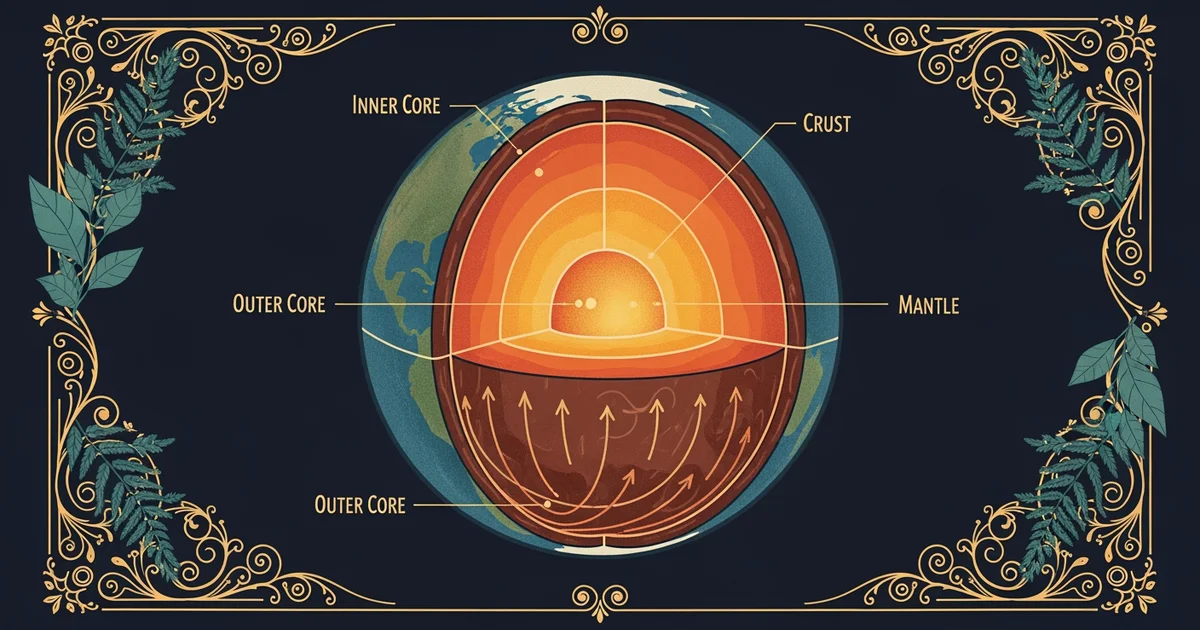
The Engine Beneath Our Feet
Deep inside the Earth, the mantle acts like a slow-moving fluid under immense pressure. Heat from the core warms the lower mantle, making that rock less dense than the surrounding material. Because hot things rise, this buoyant rock begins a slow journey toward the surface crust. As it reaches the top, it cools down and loses that upward momentum. This cooling makes the rock denser, causing it to sink back down toward the core. This repeating process is called convection currents, and it acts as the primary engine for our planet. Much like a conveyor belt in a busy factory, this flow moves solid objects placed on top of it. The rigid plates of the Earth ride these currents just like items moving along an assembly line. Without this constant internal circulation, our planet would be a static, cold rock with no shifting surface.
Key term: Convection currents — the circular movement of mantle material caused by temperature differences between the hot core and the cooler crust.
Mechanics of Plate Movement
When these currents move, they exert a powerful force on the massive tectonic plates above. The plates are essentially rafts floating on the semi-solid mantle layer beneath them. As the mantle flows, it drags the plates along through friction at the base of the crust. This drag does not happen instantly, as the movement is incredibly slow and measured in centimeters per year. Scientists track these motions to understand how continents drift across the globe over millions of years. The process relies on a delicate balance of heat, density, and physical resistance between the layers. If the mantle stops moving, the plates above will eventually lock into place and cease their journey.
| Process Stage | Physical Action | Resulting Effect |
|---|---|---|
| Heating | Core warms rock | Material rises |
| Cooling | Surface loses heat | Material sinks |
| Dragging | Mantle moves | Plates shift |
This table illustrates how the cycle maintains its momentum through continuous thermal changes. The movement remains consistent because the core provides a steady supply of heat from radioactive decay. If the core were to cool down, the engine would eventually stall, ending all active plate motion. This would stop the recycling of Earth's crust, which is essential for maintaining a stable environment for life. The interaction between the hot core and the cold crust creates the conditions necessary for our dynamic planet. We see the results of this engine in the creation of mountains and the opening of vast oceans. Every earthquake or volcanic eruption serves as a reminder of this deep, powerful engine working below us.
The constant cycle of rising heat and sinking cool material in the mantle acts as a massive engine that drives the movement of tectonic plates across the surface of the Earth.
But what does it look like in practice when these plates actually meet at their edges?
Want this with sources you can check?
Premium Learning Paths for Earth Sciences & Geography are researched against open-access libraries — PubMed, arXiv, government databases, and more — with their distinctive claims cited to real sources and independently checked.
See what Premium includes