
Supercontinent Cycle Theory
Imagine the continents as giant puzzle pieces that drift across a massive, fluid ocean floor. If you look at a map today, you see a snapshot of a process that never truly stops. The Supercontinent Cycle Theory suggests that our planet periodically gathers its landmasses into one giant cluster before breaking them apart again. This rhythm of assembly and dispersal has happened many times throughout the long, complex history of Earth. We are currently living in a phase where the pieces are scattered, but the forces beneath our feet continue to pull them toward a future collision.
The Mechanics of Planetary Motion
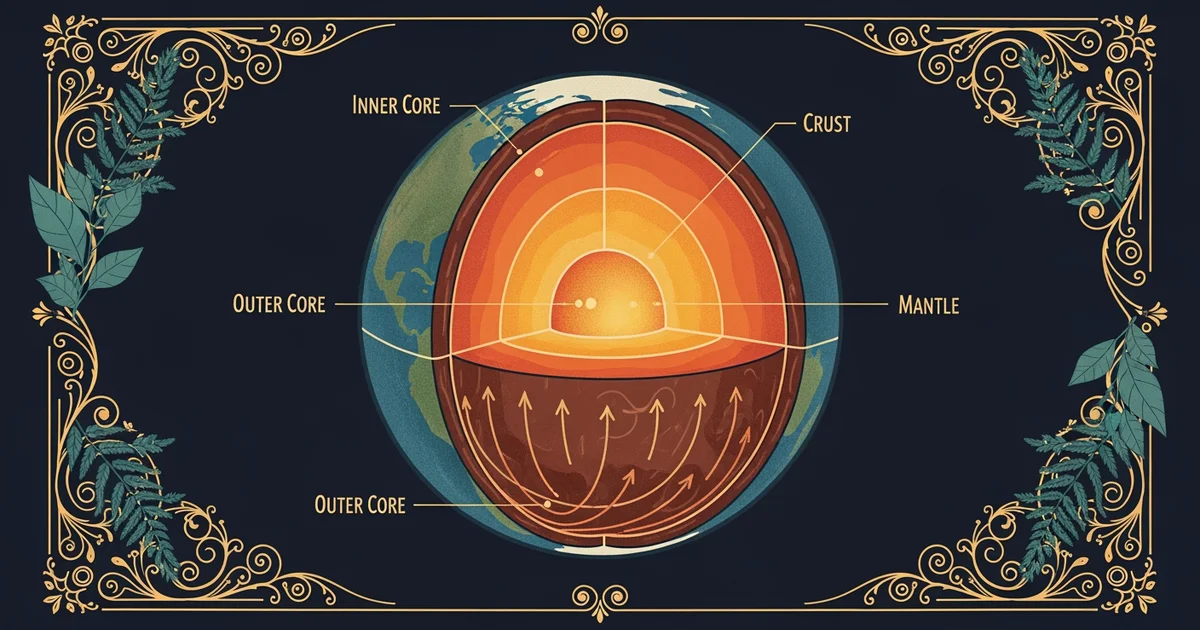
To understand this cycle, we must look at how the interior heat of the planet drives movement. Just as a pot of thick soup bubbles and churns on a hot stove, the mantle beneath the crust moves in slow, circular patterns. These currents drag the heavy tectonic plates along the surface like rafts on a conveyor belt. This movement connects back to our previous look at earthquake energy, where the friction between these plates creates massive stress. When plates collide, they build mountain ranges, but when they pull apart, they create new ocean basins that widen over millions of years.
Key term: Supercontinent — a massive landmass formed when nearly all of Earth's continental blocks collide and merge into one single unit.
Think of this cycle like a slow-motion economic boom and bust cycle for the planet's surface area. During the assembly phase, the world experiences a period of consolidation where coastlines vanish and interior deserts expand across the joined land. Once the supercontinent becomes too large, it traps heat underneath its thick crust like a heavy blanket. This trapped heat eventually weakens the foundation, causing the land to rift and tear apart once more. This cycle repeats on a massive timeline that spans hundreds of millions of years, far beyond the reach of human observation.
Predicting Future Configurations
Scientists use current data to project where these landmasses might end up in the distant future. By measuring the speed and direction of plate motion today, we can map out potential paths for the continents. Some models suggest that the Atlantic Ocean will eventually close as the Americas move toward Asia and Africa. Others predict that the Pacific Ocean will vanish, forcing all continents to gather around the North Pole. These speculative maps help us understand the long-term patterns of Earth, even if we cannot see the final result in our lifetime.
| Future Scenario | Primary Movement | Expected Result |
|---|---|---|
| Pangea Proxima | Atlantic closes | Americas join Europe |
| Amasia | Northward drift | Continents cluster near pole |
| Novopangea | Pacific closes | Americas meet Antarctica |
This table highlights the three most common theories regarding the next major assembly of landmasses. Each prediction relies on the current speed of plate movement, which serves as our best guide for the future. The following factors influence these predictions:
- The current rate of seafloor spreading determines how fast oceans widen or shrink over time.
- Existing subduction zones act as the primary engines that pull oceanic crust down into the mantle.
- Mantle convection currents dictate the overall direction that major continental plates will travel across the globe.
These factors ensure that the surface of our planet remains in a state of constant, slow change. By integrating the concepts of earthquake energy and plate motion, we can see how the world we inhabit is merely a temporary arrangement. The shifting surface of our planet shapes the world by creating diverse climates and habitats through this endless cycle of assembly and separation.
The supercontinent cycle acts as a planetary reset button that continuously recycles Earth's crust through periods of massive collision and eventual continental breakup.
After understanding how the continents move, we will explore how these physical shifts integrate with the atmosphere and oceans to maintain the Earth system.