
Future Projections
Rising sea levels and shifting weather patterns create a world where people must constantly rethink their home. If you look at a map of historical migration, you see paths worn deep by trade and necessity, but the future map looks like a blank canvas waiting for new ink. Environmental pressures act like a heavy tide, pushing populations away from flooded coasts toward higher ground or more stable climates. Social tensions often act as the wind that steers these currents, forcing families to choose between staying in familiar territory or seeking safety elsewhere. How do we predict where these millions will go when the very ground beneath them is changing?
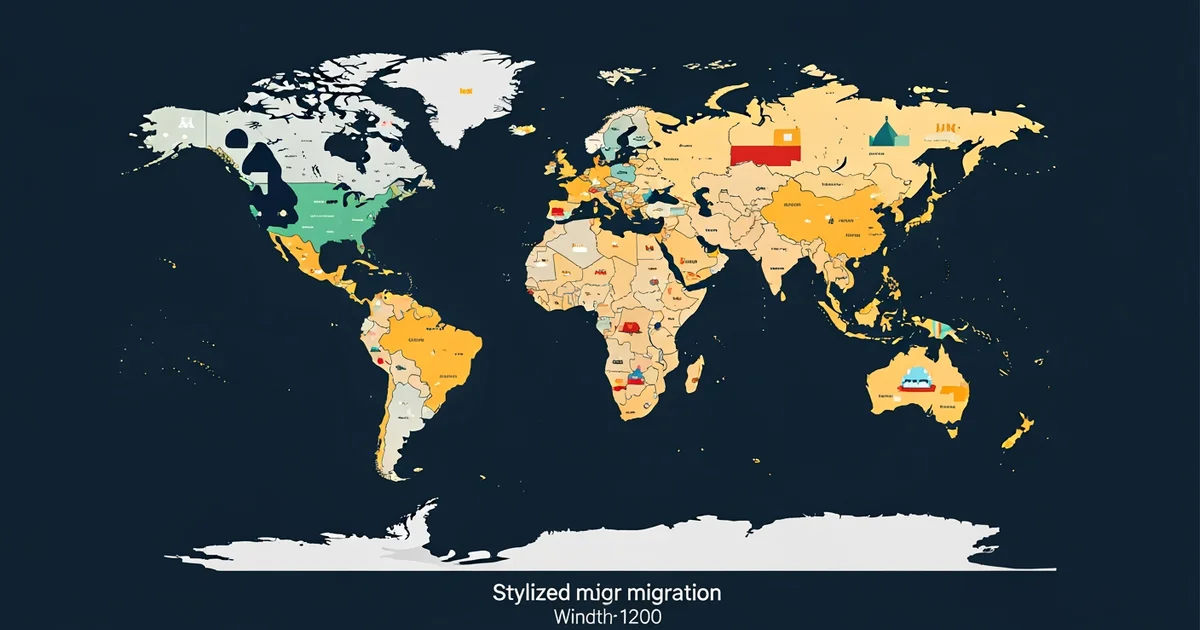
Forecasting Future Movement
Predicting human movement requires looking at how environmental and economic factors overlap in complex ways. We often see climate displacement as a primary driver for people moving across borders in the next few decades. This happens when land becomes too dry to farm or too wet to build, forcing entire communities to seek new livelihoods. Think of it like a massive game of musical chairs where the number of safe seats is shrinking while the number of players continues to grow. Governments must decide how to manage this space, but they often struggle because the pace of change is faster than the speed of policy. We must understand that migration is not just a reaction to disaster but a long-term strategy for survival.
Key term: Climate displacement — the forced movement of people from their homes due to sudden or gradual environmental changes that make their original location uninhabitable.
To understand the scale of these future flows, researchers look at specific categories that push people toward new regions:
- Resource scarcity forces people to move because they can no longer access water or fertile soil to grow food for their families.
- Infrastructure failure happens when roads, power grids, or housing cannot withstand extreme weather events, making daily life impossible for the local population.
- Economic instability occurs when local industries collapse due to climate factors, leaving workers with no way to earn money or support their household needs.
Integrating Past and Future Trends
These future projections build directly upon the remittance flows discussed in earlier lessons, as money sent home remains a vital lifeline for those left behind. When a family member moves to a new region, they send back funds that help their relatives adapt to changing conditions or prepare for their own eventual departure. This creates a cycle where migration becomes a shared family project rather than an individual choice. We must ask if this cycle can sustain itself when the global economy faces its own set of unpredictable pressures. The tension between needing to move for safety and wanting to stay for community is the central conflict of our century.
| Factor | Impact on Migration | Predictability Level |
|---|---|---|
| Sea Level Rise | High | Very High |
| Crop Failure | Medium | Moderate |
| Political Unrest | High | Low |
This table shows how different pressures influence the likelihood of population shifts. While we can predict where the water will rise, we cannot easily predict how governments will respond to those shifts. This uncertainty creates a gap in our knowledge that researchers are working hard to fill. The future of global movement depends on our ability to build systems that support both the people who move and the regions that receive them. We are not just moving across a map; we are building a new way to live on a planet that is constantly shifting its own boundaries.
Future migration depends on how well we balance environmental survival needs with the economic realities of global labor and community support systems.
Now that we understand how environmental pressures shape future movement, we can explore how all these pieces fit into a global synthesis.