
Defining Migration Types
Imagine you are standing at a busy train station during the morning rush hour. Some people board trains for work, while others leave the city to visit family in the countryside. Just like these commuters, human populations move across the globe for many different reasons. Understanding why people move helps us see the patterns behind our shared history and future survival.
Categorizing Human Movement
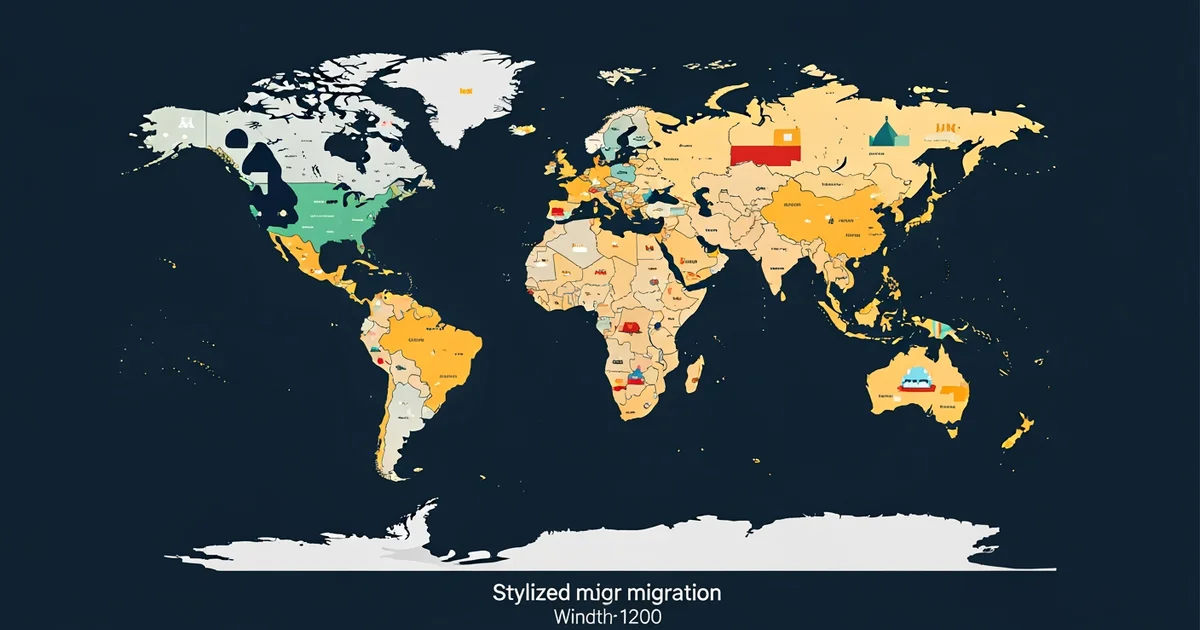
When we look at human movement, we start by identifying the primary motivations behind the decision to relocate. Most experts categorize these flows into distinct types based on the choice of the individual versus the necessity of the situation. Voluntary movement occurs when a person chooses to seek a better job or a warmer climate for personal comfort. In contrast, forced movement happens when external pressures like conflict or natural disasters leave individuals with no other safe option. Think of this like choosing to move to a new house because you want a bigger backyard versus being forced to relocate because your current home is no longer structurally safe.
Key term: Migration — the movement of people from one geographic location to another for the purpose of establishing a new permanent or semi-permanent residence.
These categories help geographers track how populations shift over long periods. By grouping moves into specific types, we can predict how resources might need to be distributed in the future. If a large group moves for economic reasons, the destination city often needs more infrastructure like schools and roads. If the movement is forced, the focus often shifts toward immediate humanitarian aid and shelter. This distinction is vital for planning because it highlights whether the movement is a long-term economic trend or a sudden response to a crisis.
Analyzing Migration Patterns
To better understand how these movements function, we can look at the scale and duration of the travel. Some people move across international borders, while others relocate within the same country to find better work. We can organize these common movement patterns based on their scope and primary purpose:
- Internal migration involves people moving within their own country to seek better living conditions or new employment opportunities in different regions.
- International migration occurs when individuals cross national borders to settle in a new country, often seeking long-term stability or professional growth.
- Seasonal migration describes the temporary movement of people who travel to specific areas for limited times, usually to perform work in agriculture or tourism.
These patterns provide a framework for observing how humans interact with their environment. When we compare these types, we see that the motivation often dictates the distance and the permanence of the move. For example, a seasonal worker might travel long distances but expects to return home after the harvest. An international migrant might move a similar distance but intends to stay indefinitely. This table helps clarify how these different types of movement interact with the needs of the individual and the host society.
| Type | Distance | Duration | Primary Driver |
|---|---|---|---|
| Internal | Short to medium | Permanent | Economic gain |
| International | Long | Permanent | Stability or growth |
| Seasonal | Variable | Temporary | Labor demand |
By studying these tables, we see that geography is not just a map of places but a record of human decisions. Every move reflects a balance between the resources available at home and the potential rewards found elsewhere. Whether the move is forced by a changing climate or chosen for a career change, the impact on both the origin and destination remains significant. As we move forward, we must consider how these patterns change when physical barriers like mountains or oceans stand in the way of human goals.
Understanding the distinction between voluntary and forced migration allows us to map the complex relationship between human needs and global movement.
Next, we will explore how geographic barriers shape the paths that people take during their journeys across the planet.