
Origins of Human Movement
Imagine you are standing in a vast, empty field with no food or water left nearby. You must decide whether to stay and face hunger or walk toward the distant horizon where resources might exist. Early humans faced this exact dilemma every single day as they navigated a changing world. Their survival depended entirely on their ability to move when the environment no longer supported their basic needs. This constant movement shaped the history of our species in ways we still see today.
Drivers of Early Human Movement
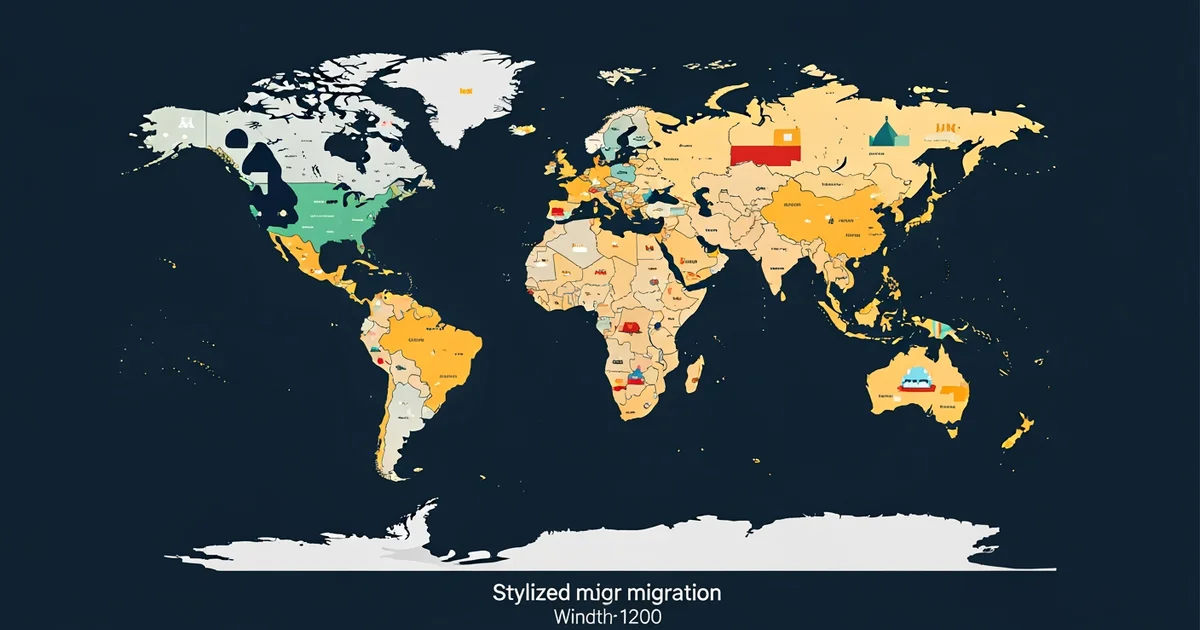
Early groups moved primarily because they needed to secure reliable access to vital survival resources. When local patches of edible plants ran out or herds of animals migrated away, the group had to follow the trail. Think of this process like a business owner moving a shop to a new location because the neighborhood no longer has enough customers to support the store. If the customers disappear, the business cannot survive unless it shifts to a place where people are active. Similarly, ancient groups tracked seasonal changes in weather to find the best spots for hunting and gathering.
Key term: Migration — the seasonal or permanent movement of individuals from one geographic region to another for survival.
Environmental shifts often forced these groups to leave their homes even when they preferred to stay. A sudden drought could turn a lush forest into a dusty plain in just a few short years. These changes made it impossible for early humans to maintain their established way of life in one place. They did not move because they wanted to explore, but because they had to adapt to survive. Moving became a strategy to avoid the risks of starvation and thirst during lean seasons.
The Geography of Human Expansion
Geography acted as both a barrier and a bridge for these early groups as they expanded across the globe. Mountains and vast oceans often blocked their path, forcing them to find narrow passes or wait for lower sea levels. These physical features dictated the speed and direction of their movement over many centuries. Some areas offered rich valleys that allowed groups to stay longer, while harsh deserts forced them to keep moving quickly. The following table shows how different environmental conditions influenced the decision to remain or relocate.
| Environment Type | Resource Availability | Movement Strategy | Duration of Stay |
|---|---|---|---|
| Fertile Valley | High and consistent | Settle in one area | Long-term stay |
| Seasonal Plains | Variable and shifting | Follow the cycle | Medium-term stay |
| Arid Desert | Extremely low | Constant movement | Short-term stay |
Human groups learned to read the signs of the land to predict where they should go next. They watched the birds for clues about water and observed plant growth to find food sources. This deep connection to their surroundings allowed them to traverse massive distances across different continents. They were not wandering aimlessly, but were instead following a complex map of resources etched into their collective memory. By moving in response to these pressures, humans successfully spread into almost every corner of the planet.
- First, they observed the local patterns of animal behavior to predict hunting success.
- Next, they identified the seasonal availability of plants to ensure a steady food supply.
- Finally, they coordinated group travel to move safely between these known resource hubs.
This cycle of movement was essential for the growth and spread of early populations. It allowed them to occupy diverse climates, from freezing northern regions to humid tropical forests. Through this process, humans developed the skills needed to survive in almost any environment they encountered on their journey. Understanding these origins helps us see why modern populations still move in response to changing economic or environmental conditions. By the end of this path, you will understand how these ancient patterns influence the way we view global movement today.
Human migration is fundamentally a survival strategy driven by the need to align population location with available environmental resources.
Next, we will explore how we define and categorize these different types of human movement.