
Climate Migration
Rising sea levels and persistent droughts force families to leave their homes every single year. You might imagine that people only move for work, but the changing climate acts as a powerful invisible hand pushing populations toward new lands.
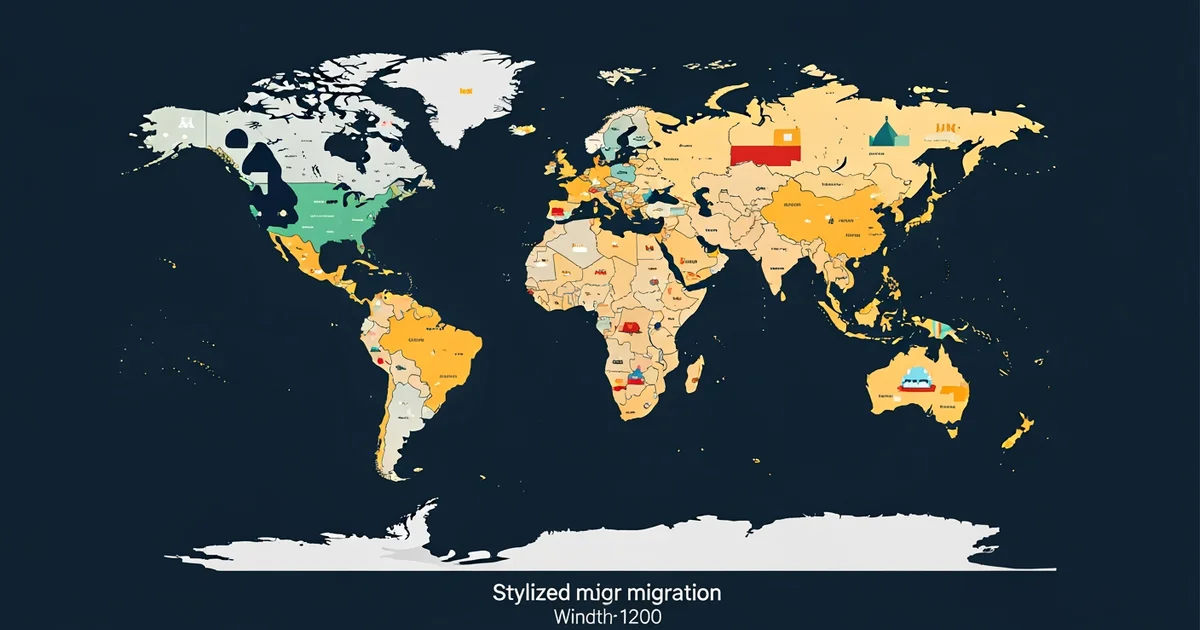
The Drivers of Environmental Relocation
When we discuss human movement, we often focus on jobs or safety from conflict. However, the environment itself serves as a fundamental factor in deciding where people live and thrive. Climate migration represents the process where individuals move because their local environment no longer supports their basic needs. Think of this like a household budget that suddenly loses its primary income source. When the land stops providing food or water, the family must move to a new location to survive. This movement happens because the natural resources people rely on for daily life are shifting or disappearing entirely.
Environmental changes create a ripple effect that touches every part of a community. If a farmer cannot grow crops due to a lack of rain, they lose their income and their food supply. This situation forces them to seek opportunities elsewhere to provide for their loved ones. The decision to leave is rarely sudden because people prefer to stay where their roots are deep. Instead, the process is often a slow realization that the environment has reached a breaking point. Once the land can no longer sustain a family, the pressure to relocate becomes an urgent necessity for survival.
Patterns of Movement and Adaptation
As these environmental pressures mount, we see distinct patterns emerge in how populations respond to their changing surroundings. Some people move to nearby areas to maintain their social ties while others travel across vast distances to find stability. This movement is similar to water flowing down a mountain path. The water follows the easiest route until it finds a place to settle where the conditions are better for growth. People do the same thing by choosing destinations that offer the best chance for a stable life and reliable resources.
To understand how these factors compare, we can look at the primary environmental triggers that lead to relocation:
| Trigger | Impact on Population | Typical Response |
|---|---|---|
| Drought | Loss of agriculture | Migration to cities |
| Sea Rise | Loss of housing | Moving to higher ground |
| Heat | Health risks | Seeking cooler climates |
These triggers demonstrate that climate change is not just a distant event but a direct influence on daily human choices. When crops fail, the farmer moves to the city to find work in a factory. When the coast floods, the coastal resident moves inland to find safer housing. Each movement is a rational response to a changing landscape that no longer offers the security it once provided. By observing these patterns, we can better predict where populations might move as the world continues to change.
Key term: Climate migration — the forced or voluntary movement of people caused by significant environmental changes that threaten their survival or livelihood.
We must recognize that this process is not just about the weather. It is about how the weather changes the way we live our lives. When the environment shifts, the map of human settlement shifts right along with it. This creates a constant cycle of movement that defines our global history and our future path. By studying these trends, we can better prepare for a world where the land itself is in motion.
Environmental shifts act as a primary catalyst for human relocation by altering the fundamental resources required for community stability and survival.
The next Station introduces the Gravity Model Theory, which determines how distance and population size influence the direction of these human movements.