
Archaeological Artifact Sourcing
When archaeologists discovered a cluster of broken pottery in a remote island cave, they faced a mystery about the origin of the materials. The clay used to craft these vessels did not match any local soil samples, suggesting that ancient sailors transported these heavy goods across vast distances. This scenario demonstrates the core concept of geochemical fingerprinting from Station 11, which allows researchers to link ancient artifacts to their specific geological birthplaces.
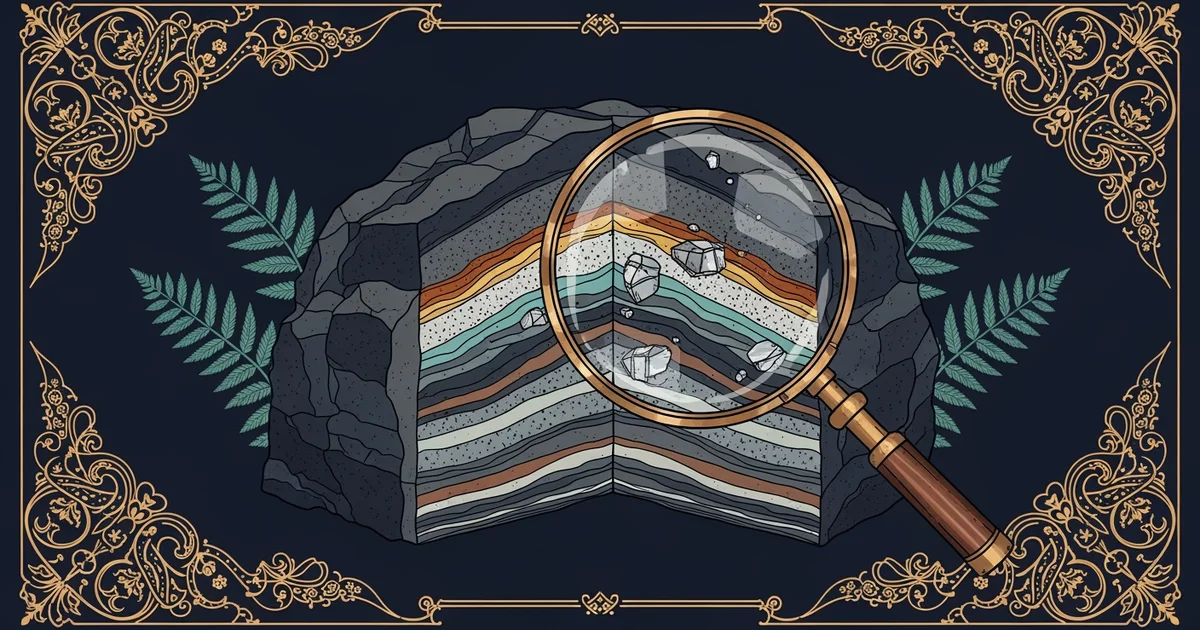
Unlocking the Chemical Secrets of Ancient Clay
Every piece of earth contains a unique blend of minerals that acts like a chemical identity card for that location. When a potter gathers clay from a riverbank, they unknowingly include trace elements like rubidium, strontium, or zirconium within the mixture. These elements remain locked inside the clay even after the intense heat of a kiln transforms the soft mud into a durable ceramic pot. By using advanced laboratory tools, scientists measure these exact ratios to create a profile that is as distinct as a human thumbprint. This process allows researchers to determine if a pot was crafted in a nearby village or imported from a distant trade partner across the sea.
Key term: Provenance — the process of determining the original geographical source or the historical ownership history of an ancient artifact.
Understanding the chemical makeup of an object requires looking at the specific elemental composition of the raw materials involved. Think of this process like identifying the source of a specific brand of bottled water by testing the unique mineral content of the liquid. Just as the water from a mountain spring has a different mineral profile than water from a city well, clay from one valley carries a different chemical signature than clay from another region. Scientists map these regional signatures across a wide area to build a database of geological sources. When they find a new artifact, they compare its chemical profile against the database to find the closest match.
Mapping Ancient Networks Through Material Science
Building a map of trade routes depends on the ability to connect multiple artifacts to the same distant clay deposit. If several pots found in a single city all share the same chemical fingerprint, it suggests a centralized production center or a consistent trade route. This data helps archaeologists visualize how ancient people moved resources, luxury items, and essential tools throughout their daily lives. The following table highlights how different chemical markers help distinguish between various clay sources found in the same archaeological site.
| Marker Element | Typical Concentration | Regional Indicator |
|---|---|---|
| Strontium | High | Coastal Deposits |
| Rubidium | Moderate | Volcanic Regions |
| Zirconium | Low | Riverine Silt |
These markers provide the evidence needed to confirm if a culture was self-sufficient or reliant on external networks for their goods. The distribution of these artifacts across different sites reveals the intensity and frequency of interactions between ancient groups. By tracking the movement of these materials, historians can reconstruct the economic scale of past civilizations without needing written records or maps. This method turns silent, broken shards of pottery into loud witnesses of human history and global interaction.
- The chemical composition of clay remains stable through firing, which ensures that the original fingerprint of the source material is preserved for thousands of years.
- Geochemical databases allow researchers to compare unknown artifacts against thousands of known geological samples to pinpoint the exact location of the raw material harvest.
- Trade route identification relies on finding a cluster of artifacts that all share the same chemical profile, which indicates a shared origin point and a common distribution path.
Geochemical fingerprinting transforms inert archaeological fragments into evidence of ancient trade by matching the unique elemental signature of clay to its original geological deposit.
But this model breaks down when ancient potters blend clay from multiple sources to improve the durability of their finished products.