
Trace Element Behavior
Imagine you are sorting a massive pile of mixed coins at a busy bank teller window. Some coins are small and light, while others are heavy and wide, making them fit into specific slots in your sorting tray. Trace elements behave much like these coins when they move through molten rock deep inside the Earth. They do not distribute themselves randomly, but instead follow strict rules based on their size and electrical charge. Understanding these patterns allows scientists to track how rocks melt and move over millions of years.
The Logic of Crystal Compatibility
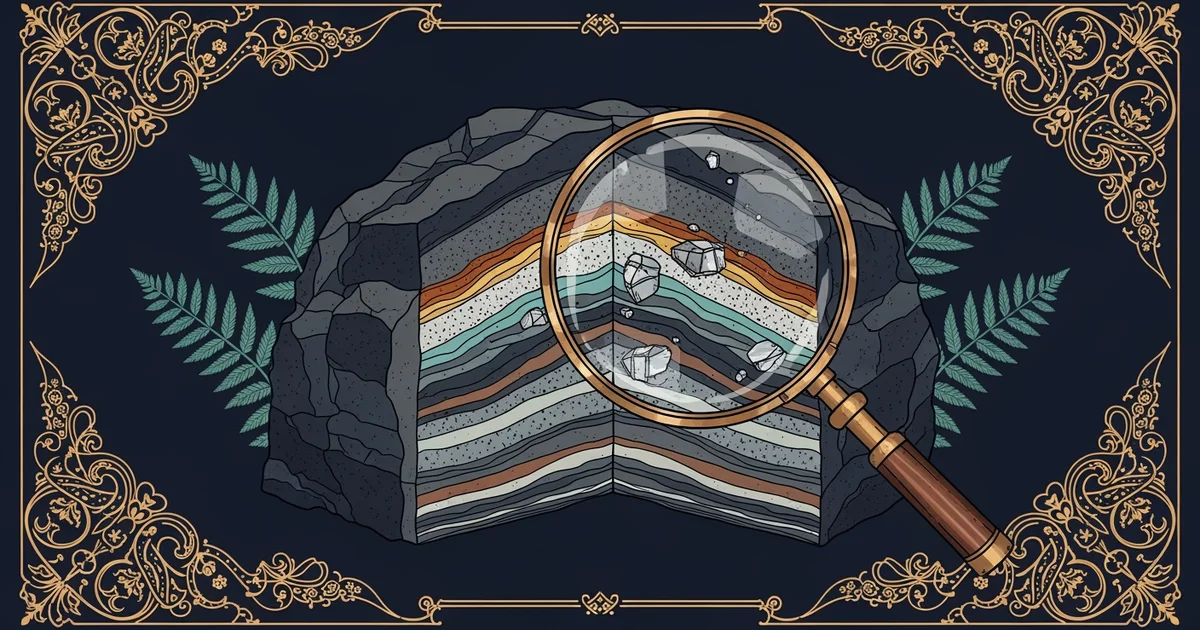
When liquid rock begins to cool and turn into solid crystals, it must incorporate various chemical elements into its new structure. This process is highly selective, acting like a strict gatekeeper at a private event. An element can only enter the crystal lattice if its size and charge match the spaces available within the mineral. If an element is too large or its electrical charge is too intense, the crystal will reject it entirely. This rejection forces the element to remain in the remaining liquid portion of the magma. Geologists track these movements to understand the history of the cooling melt.
Key term: Compatibility — the ability of a chemical element to fit into the crystal structure of a forming mineral based on its size and charge.
Think of this process like trying to pack a suitcase for a long trip abroad. You have limited space and specific shapes that must fit together to close the lid properly. If you try to force a bulky winter coat into a tiny corner meant for socks, it simply will not fit. In the same way, minerals have specific slots that only accept certain elements. Elements that fit well are called compatible, while those that are rejected are called incompatible. These rejected elements end up concentrated in the final bits of liquid, which eventually harden into unique rock types.
Measuring Elemental Movement
Scientists use these patterns to map the journey of geological materials through the crust. By measuring the concentrations of specific elements, they can determine if a rock formed from a large pool of magma or a small, late-stage melt. This provides a chemical fingerprint that reveals the hidden history of the sample. We can compare the distribution of these elements across different mineral types to see which ones formed first. This comparison helps us reconstruct the cooling sequence of ancient volcanic systems that are now buried deep underground.
| Element Type | Behavior | Location | Effect on Melt |
|---|---|---|---|
| Compatible | Enters crystal | Inside solid mineral | Depletes the liquid |
| Incompatible | Stays in liquid | Remaining melt pool | Enriches the melt |
| Neutral | Varies widely | Randomly distributed | No major change |
This table illustrates how the classification of an element dictates its final destination within a cooling system. When an element is compatible, it quickly leaves the liquid phase to become part of the solid rock. Conversely, incompatible elements stay behind, becoming more concentrated as the liquid volume shrinks. This simple rule explains why certain rare minerals appear only in the very last stages of magma cooling. By observing these concentrations, we can accurately predict the environmental conditions that existed during the formation of the rock.
We must remember that these chemical signals are permanent records of past physical events. Even after the rock has been sitting on the surface for ages, the internal arrangement of these trace elements remains unchanged. This stability makes them perfect tools for identifying the origins of volcanic rocks and other geological artifacts. We essentially look at the leftovers of the cooling process to determine what happened at the start. Every rock tells a story, and trace elements are the words that make up that narrative.
Trace elements reveal the history of geological processes by tracking how specific atoms are either accepted into or rejected by forming crystal structures.
The next Station introduces Rare Earth Element Patterns, which determines how specific groups of elements act as chemical tracers for mantle melting.
Go Deeper · Amazon
Keep going with Geology Rock Identification
Browse Geology Rock Identification on Amazon ↗As an Amazon Associate we earn from qualifying purchases. #ad