
Principles of Isotopic Variation
Imagine you are holding two identical coins, but one coin is slightly heavier than the other due to a hidden metal core. Geologists use a similar logic when they study the building blocks of rocks to reveal their hidden history and origin. By examining tiny variations in the weight of atoms, scientists can track where a rock formed or how long it has existed on our planet. These subtle differences act like a secret code that tells the story of Earth’s deep past.
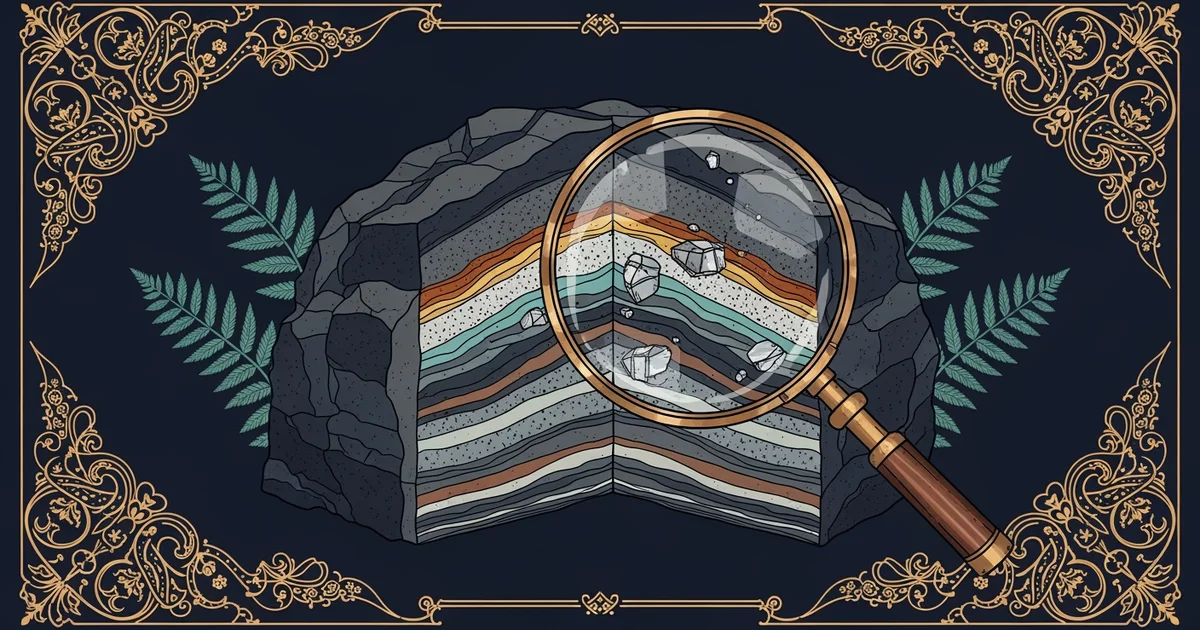
Understanding Atomic Weights and Variations
Every element in a rock consists of atoms that share the same number of protons but differ in their number of neutrons. These variations are known as isotopes, which function as the unique markers that geochemists use to fingerprint geological materials. While protons define the identity of an element, neutrons change the mass of the atom without altering its chemical behavior in most reactions. Think of these isotopes like different versions of the same car model that have varying engine weights. They look identical on the outside, but their internal mass differences allow experts to measure them with extreme precision. This mass difference is the primary tool used to differentiate between rocks that might otherwise appear identical to the naked eye.
Key term: Isotopes — different forms of the same chemical element that contain the same number of protons but a different number of neutrons.
When geologists analyze these atomic markers, they categorize them into two main groups based on their stability over time. Stable isotopes do not change into other elements, remaining in their original state for billions of years. Radioactive isotopes, however, are inherently unstable and slowly decay into different elements at a predictable rate. This process of decay acts like a natural clock ticking away inside the rock. By measuring the ratio of the original isotope to the decayed product, scientists can calculate the exact age of a geological sample. This dual approach provides both a signature of origin and a precise timeline for the formation of the material.
Comparing Stable and Radioactive Markers
To better understand how these markers function, we can look at the specific roles they play in identifying rock sources. Stable isotopes often reflect the environment where the rock formed, such as the temperature of the water or the presence of organic life. Radioactive isotopes, on the other hand, provide the chronological data necessary to place that formation within Earth's history. The following table highlights the distinct characteristics of these two types of atomic markers used in geochemical fingerprinting.
| Marker Type | Primary Function | Behavioral Change | Key Application |
|---|---|---|---|
| Stable | Environmental trace | Remains constant | Identifying source area |
| Radioactive | Chronological clock | Decays into others | Measuring rock age |
| Both | Unique signature | Mass variation | Mapping geological history |
By combining these two datasets, geologists create a comprehensive profile of any rock or artifact they encounter. This process requires advanced equipment to detect the tiny mass differences between individual atoms. The precision of this method is what allows researchers to distinguish between two rocks that were mined in different regions of the world. Even when the chemical composition seems to match perfectly, the isotopic ratio serves as a definitive identifier that cannot be faked or altered by surface conditions. This level of detail is essential for understanding how our planet has shifted and changed throughout its long existence.
Ultimately, these tiny variations in atomic weight allow us to bridge the gap between simple chemistry and complex geological history. Every sample carries a record of its journey from deep within the mantle to the surface of the crust. By learning to read these signals, we unlock the ability to trace the movement of materials across vast distances and time scales. This foundation of isotopic knowledge sets the stage for identifying the specific sources of volcanic rocks and other complex geological structures found in our current research.
Isotopic variation provides a permanent, measurable record of a rock's origin and age that persists despite external environmental changes.
Next, we will apply these principles to identify the specific magma sources that create distinct igneous formations across the globe.