
The Periodic Table of Earth
Imagine you are holding a handful of sand from two different beaches miles apart. While they might look identical to the naked eye, a scientist sees a unique chemical map within each grain. Just like a signature on a document, every rock contains a specific mix of elements that tells the story of its origin. Understanding how these elements distribute themselves is the key to unlocking the hidden history of our planet.
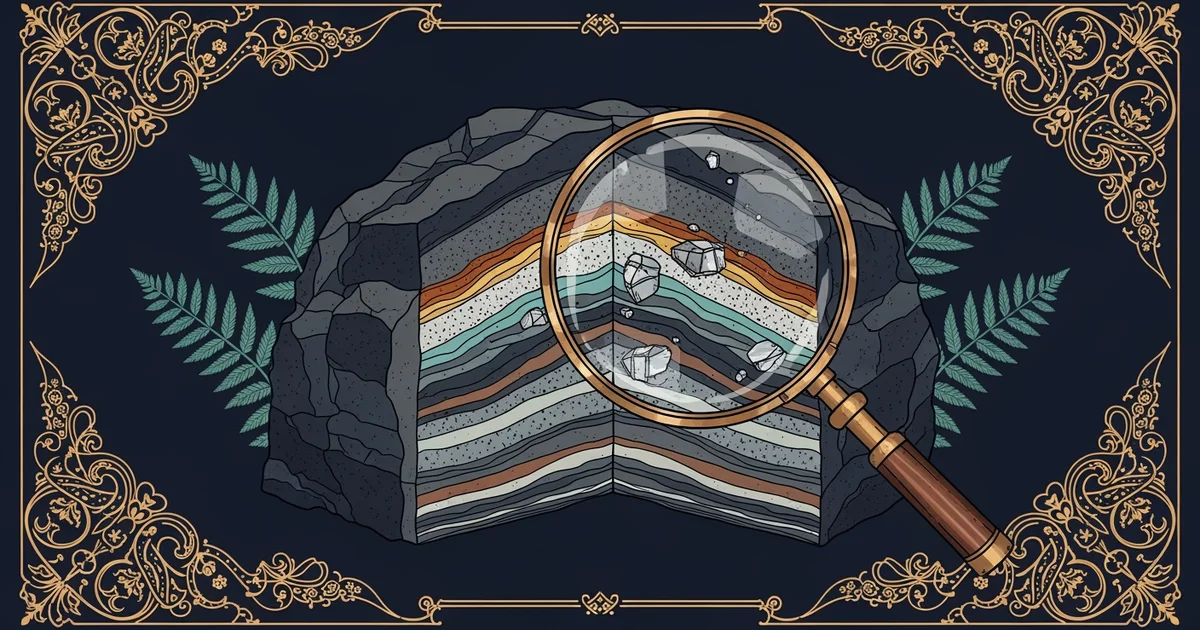
The Building Blocks of Planetary Matter
Earth functions like a massive chemical factory where heat and pressure sort materials by their weight and reactivity. When the planet was forming, heavier elements sank toward the center while lighter materials floated to the outer crust. This process, known as elemental fractionation, acts like a giant centrifuge that separates ingredients based on their physical properties. Imagine trying to mix oil and water in a jar; eventually, they separate into distinct layers because they do not share the same density. Similarly, the rocks we find on the surface consist of elements that preferred to stay near the top during the cooling of the early Earth. By studying these patterns, geologists can determine if a rock formed deep within the mantle or near the surface.
Key term: Elemental fractionation — the process where chemical elements separate into different geological layers based on their specific atomic weight and density.
We can categorize these elements by how they behave when molten rock begins to cool into solid minerals. Some elements, known as lithophile elements, love to bond with oxygen and form the silicate structures that make up most of our crust. Other elements, called siderophile elements, prefer to bond with iron and often get pulled down into the metallic core. This chemical preference means that certain rare metals are incredibly scarce in the crust because they are locked away deep beneath our feet. Understanding this distribution helps us predict where we might find valuable minerals. If we know an element is a siderophile, we know not to waste time searching for it in surface volcanic rocks.
Mapping Geological Signatures
Geologists use the specific ratio of elements within a sample to create a fingerprint for that location. Because different geological environments have unique heat and pressure levels, they produce distinct chemical signatures in the minerals that crystallize there. These signatures act as a permanent record of the conditions present during the rock's birth. If you find a rock with a specific chemical ratio, you can often trace it back to a particular mountain range or volcanic region. This is exactly how we track the movement of ancient trade goods or the migration of early human groups. By comparing the fingerprint of an artifact to known geological sites, we can determine the original source of the materials.
| Element Type | Preferred Bonding | Likely Location |
|---|---|---|
| Lithophile | Oxygen | Earth Crust |
| Siderophile | Iron | Metallic Core |
| Chalcophile | Sulfur | Sulfide Deposits |
To better understand how these elements move, we look at how they behave during the crystallization process. As liquid magma cools, the first minerals to form pull specific elements out of the melt. This leaves the remaining liquid enriched in whatever elements were not used. This process creates a chemical sequence that is predictable and measurable across many different environments. We can track this transition by looking at the following factors:
- Atomic radius size determines how easily an element can fit into the crystal lattice of a growing mineral.
- Electrical charge influences how strongly an element bonds with the surrounding atoms during the cooling process.
- Melting point temperatures dictate which elements solidify first as the environment loses heat over time.
These factors ensure that every mineral provides a snapshot of the chemical environment at the exact moment of its formation. By analyzing these tiny details, we can reconstruct the history of the Earth's crust with high precision. This method allows us to see beyond the surface and understand the deep processes that shaped our world. Every rock is a witness to the intense forces that created the ground beneath us.
The unique chemical fingerprint of a rock is determined by how its constituent elements sorted themselves during the cooling of the Earth.
Next, we will explore how slight variations in atomic mass, known as isotopes, provide even more precise details about geological history.