
Climate Change Impacts
When the 2021 heat dome settled over the Pacific Northwest, power grids struggled to manage the sudden, massive demand for cooling equipment across entire cities. This extreme weather event serves as a stark example of how shifting global temperatures force our established infrastructure to operate far beyond its original design limits. We observe here the direct consequences of climate change impacts, which represent the long-term alteration of temperature and typical weather patterns across the entire planet. These changes influence how energy moves through our atmosphere, effectively turning up the heat on the natural systems that regulate our daily weather cycles.
The Mechanics of Warming Circulation
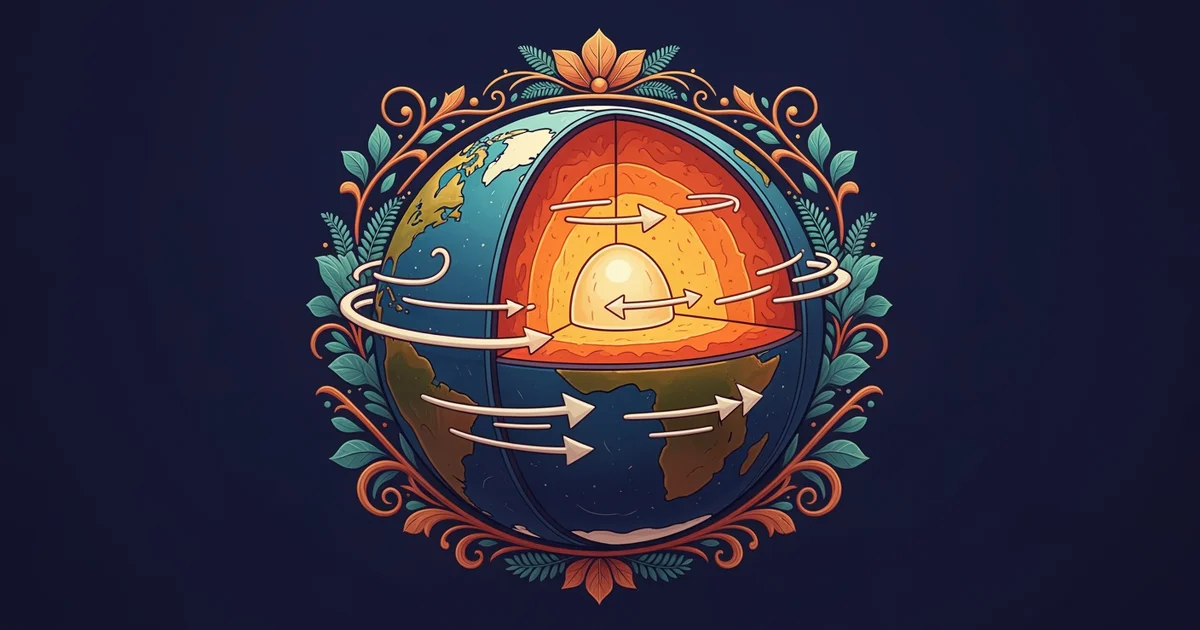
As global temperatures rise, the fundamental energy balance that drives wind and ocean currents begins to shift in unpredictable ways. Think of the atmosphere like a massive, complex global budget where heat energy acts as the primary currency that dictates all movement. When the total amount of heat in this system increases, the standard pathways for moving that energy from the tropics toward the poles become disrupted. This disruption leads to stationary weather systems, such as the heat dome, which trap hot air over specific regions for days or weeks at a time. This is a direct extension of the circulation patterns we explored back in Station 12 regarding regional climate zones, but now those zones are experiencing unprecedented stress.
Key term: Climate change impacts — the lasting shifts in weather patterns and environmental stability caused by the accumulation of greenhouse gases in the atmosphere.
These shifts do not occur uniformly across the globe, as different regions respond to heat in very distinct ways based on their geography. Coastal areas might see more intense storms due to warmer ocean waters, while inland areas often face prolonged periods of drought or extreme heat. The following table summarizes how these changes manifest across different environmental sectors:
| Sector | Primary Impact | Resulting Weather Shift |
|---|---|---|
| Oceans | Increased heat | Stronger hurricane cycles |
| Land | Surface drying | Longer wildfire seasons |
| Poles | Ice melting | Altered jet stream paths |
Predicting Future Weather Patterns
Predicting how these patterns will evolve requires us to understand the delicate feedback loops within our climate system. A feedback loop functions like a household thermostat that reacts to the room temperature, but in this case, the thermostat is stuck in the on position. As ice sheets melt, the earth reflects less sunlight, which causes more heat to be absorbed by the dark ocean water. This additional heat further accelerates the melting process, creating a cycle that is difficult to reverse once it gains significant momentum. We must view these changes not as isolated incidents, but as a connected chain reaction that influences everything from agriculture to urban safety.
Beyond the immediate physical changes, we must also consider the economic and social costs of these shifting circulation pathways. When weather patterns move away from their historical norms, farmers struggle to predict planting seasons and cities face challenges with water resource management. The stability of our global food supply relies on the predictability of these climate zones, which are currently undergoing a period of rapid and volatile transition. By studying these shifts, we gain the ability to prepare for a future where the weather behaves differently than it has for the past several centuries. Adapting to this new reality requires us to rethink how we build our cities and manage our natural resources on a global scale.
Human activities that increase heat energy in the atmosphere fundamentally disrupt the established circulation pathways that define our predictable climate zones.
But this model of shifting energy pathways becomes significantly more complex when we try to integrate the influence of human-made aerosols on cloud formation.