
Jet Stream Dynamics
Imagine you are flying in a plane across the ocean at night. You suddenly feel the plane speed up as if a giant hand is pushing it forward from behind. This invisible force is a high-altitude river of air that shapes weather patterns across our entire globe. Pilots use these currents to save fuel and time while traveling between distant continents. Understanding these currents helps us see how heat energy moves around our planet to create our daily weather.
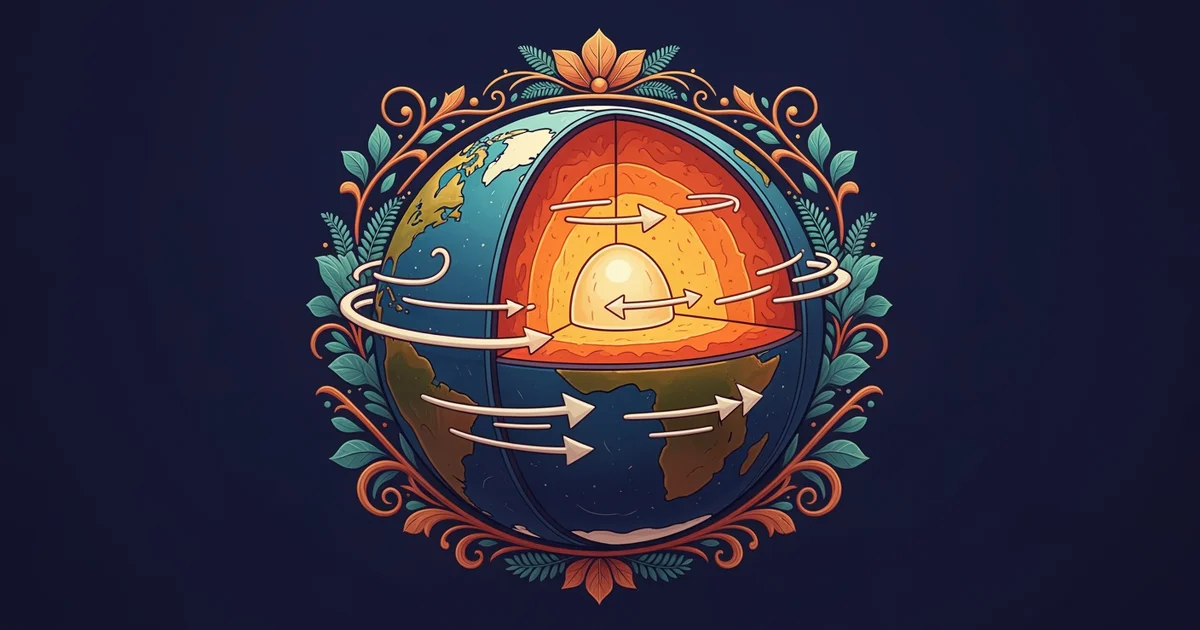
The Formation of High Altitude Currents
When the sun warms the Earth, it heats the equator much more than the poles. This temperature difference forces the atmosphere to move air toward the cooler regions to find balance. As warm air rises near the equator, it moves toward the poles and cools down significantly. The Earth rotates beneath this moving air, which causes the currents to twist and turn into narrow paths. These paths are known as the jet stream, which acts like a fast-moving highway for clouds. Without these shifts in heat, the atmosphere would remain stagnant and unable to distribute energy across different latitudes.
Key term: Jet stream — a narrow band of strong wind in the upper atmosphere that steers weather systems.
Think of the atmosphere like a massive bank account where heat is the currency being traded. The equator has a huge surplus of heat, while the poles represent a deficit that needs filling. These winds act like high-speed armored trucks that transport heat energy from the surplus zones to the deficit zones. If the transfer process stops, the equator would become far too hot while the poles would freeze solid. This constant movement ensures that the climate remains stable enough for life to thrive across diverse regions.
Influences on Wind Speed and Direction
Since the Earth is constantly spinning, the air does not flow in a straight line. The Coriolis effect causes these winds to curve as they travel toward the north or south. This rotation creates different bands of air that move at varying speeds and directions around the globe. You can see how these factors change the behavior of the currents by looking at the following list of influences:
- The temperature gradient between cold polar air and warm tropical air dictates the total wind speed.
- The rotation of the Earth forces the moving air to bend into large, swirling patterns across hemispheres.
- The presence of mountain ranges or land masses can disrupt the flow of air near the ground.
- High-pressure systems often push the currents toward the north while low-pressure systems pull them south.
These factors work together to ensure that no part of the planet stays too hot or too cold. When these currents become wavy, they can trap cold air in one spot for several weeks. This leads to extreme weather events like heat waves or deep freezes in areas that are usually mild. By tracking these waves, scientists can predict how weather will change over the coming weeks and months.
Predicting Shifts in Global Weather
Because these currents are so sensitive, even small changes in temperature can cause them to shift paths. Meteorologists watch these shifts closely because they dictate where storms will travel during the winter months. If the current moves further north, it brings warmer air to regions that usually experience heavy snow. If it dips south, it can bring arctic conditions to areas that rarely see freezing temperatures during winter. This movement is the primary reason why weather forecasts are so difficult to predict more than two weeks ahead.
| Feature | Polar Current | Subtropical Current |
|---|---|---|
| Location | Near the poles | Near the tropics |
| Strength | Very powerful | Moderate speed |
| Impact | Winter storms | Seasonal rain |
By comparing these two types of currents, we can understand why different regions have unique climate zones. The polar current is much more intense because the temperature contrast at the poles is very sharp. The subtropical current is steadier and influences the movement of dry air and desert zones. Both systems work in tandem to keep the global climate in a state of constant, healthy motion.
The jet stream acts as a global conveyor belt that balances heat energy by steering weather systems across the surface of the Earth.
But what does it look like in practice when these massive wind currents begin to shift with the changing seasons?
Want this with sources you can check?
Premium Learning Paths for Earth Sciences & Geography are researched against open-access libraries — PubMed, arXiv, government databases, and more — with their distinctive claims cited to real sources and independently checked.
See what Premium includes