
Hadley Cell Circulation
Imagine standing on a beach where the sun warms the sand and the water feels cool. This simple difference in temperature drives the massive air movements that shape our global weather patterns every single day.
The Engine of Tropical Air
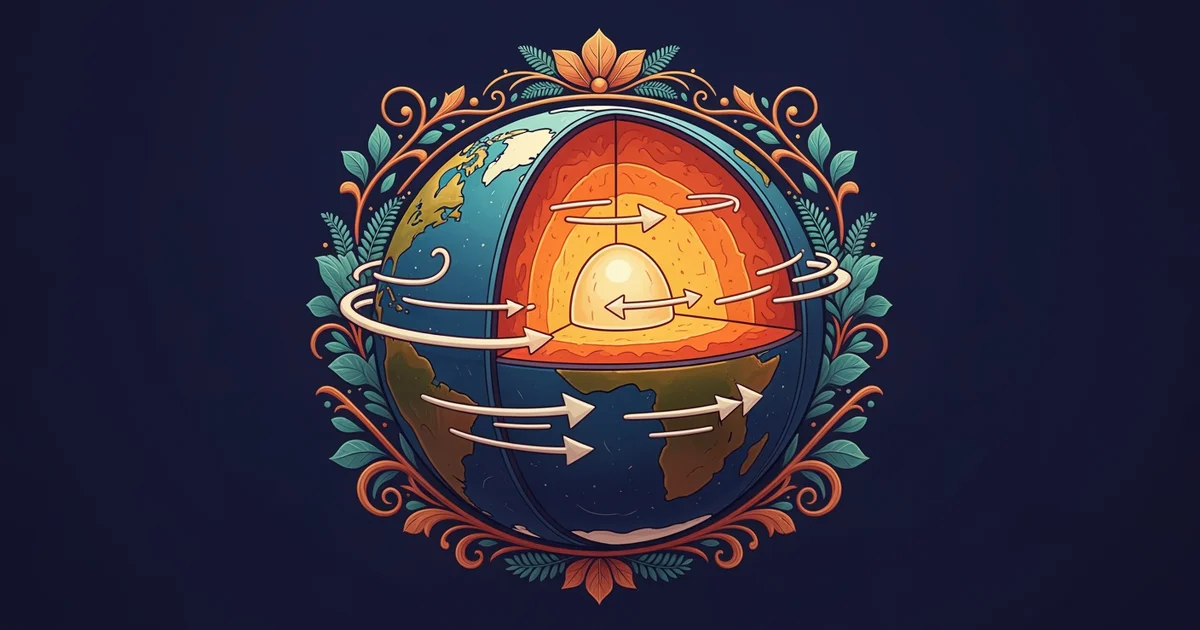
When sunlight hits the equator directly, it warms the surface air and causes it to rise upward. This rising air creates a zone of low pressure near the equator that acts like a giant vacuum cleaner. As the air rises higher into the atmosphere, it cools down and begins to spread toward the north and south. This process creates a continuous loop of movement known as the Hadley Cell. Think of this cycle like a massive conveyer belt in a factory that moves heat away from the hot equator. This belt keeps the tropical regions from becoming too hot while distributing energy toward the cooler middle latitudes. Without this constant circulation, the areas near the equator would become uninhabitable due to extreme heat buildup. The rising air also carries moisture, which leads to the frequent rain seen in tropical rainforests near the center of the planet.
Key term: Hadley Cell — a large-scale atmospheric convection pattern in which air rises at the equator and sinks at subtropical latitudes.
After the air moves away from the equator at high altitudes, it gradually loses its heat to space. As it cools, the air becomes denser and begins to sink back toward the surface of the Earth. This sinking motion typically happens around thirty degrees latitude in both the northern and southern hemispheres. Because the air is sinking, it creates a high-pressure zone that keeps the sky clear and dry. Many of the world's largest deserts are located in these specific regions because the sinking air prevents clouds from forming. This dry air then flows back toward the equator along the surface to replace the air that rose earlier. This return flow completes the loop and ensures that the cycle continues without stopping. The movement of this surface air is what we often recognize as the steady trade winds.
Mapping the Circulation Loop
To visualize how this system functions, we can look at the specific stages of the air movement cycle. The cycle works like an economic supply chain where resources move from a surplus area to a deficit area. The equator serves as the production hub where heat energy is gathered and sent outward to other regions. The following table outlines the distinct phases of this circulation pattern as it moves around the globe.
| Stage | Movement | Atmospheric State | Resulting Climate |
|---|---|---|---|
| Ascent | Upward | Low Pressure | Heavy Rainfall |
| Poleward | Outward | Cooling Air | Energy Transport |
| Descent | Downward | High Pressure | Arid Conditions |
| Return | Surface | Trade Winds | Moisture Pickup |
This circulation loop is essential for maintaining the balance of heat across the entire planet. The constant motion ensures that the energy from the sun does not stay trapped in one single location. By moving air through these cells, the Earth effectively manages its internal temperature and prevents runaway warming in the tropics. Understanding this movement helps us predict how weather patterns shift when global temperatures rise or fall over long periods. The trade winds created by this cell have guided sailors across the oceans for centuries by providing reliable paths for travel. These winds remain a vital part of how our atmosphere regulates the temperature and moisture levels that support life on Earth.
The Hadley Cell functions as a global heat distribution system that uses rising and sinking air to regulate tropical temperatures.
The next Station introduces the Ferrel and Polar Cells, which determine how the remaining latitudes experience their specific weather patterns.