
Ocean-Atmosphere Coupling
Imagine you are stirring a thick pot of soup while a strong fan blows air across the surface. The swirling motion of the liquid beneath the surface mimics how the vast oceans respond to the powerful winds blowing above them. This constant dance between the air and the water creates a massive engine that moves heat around our planet. Without this interaction, the temperature differences between the equator and the poles would become far too extreme for life to thrive.
The Engine of Surface Currents
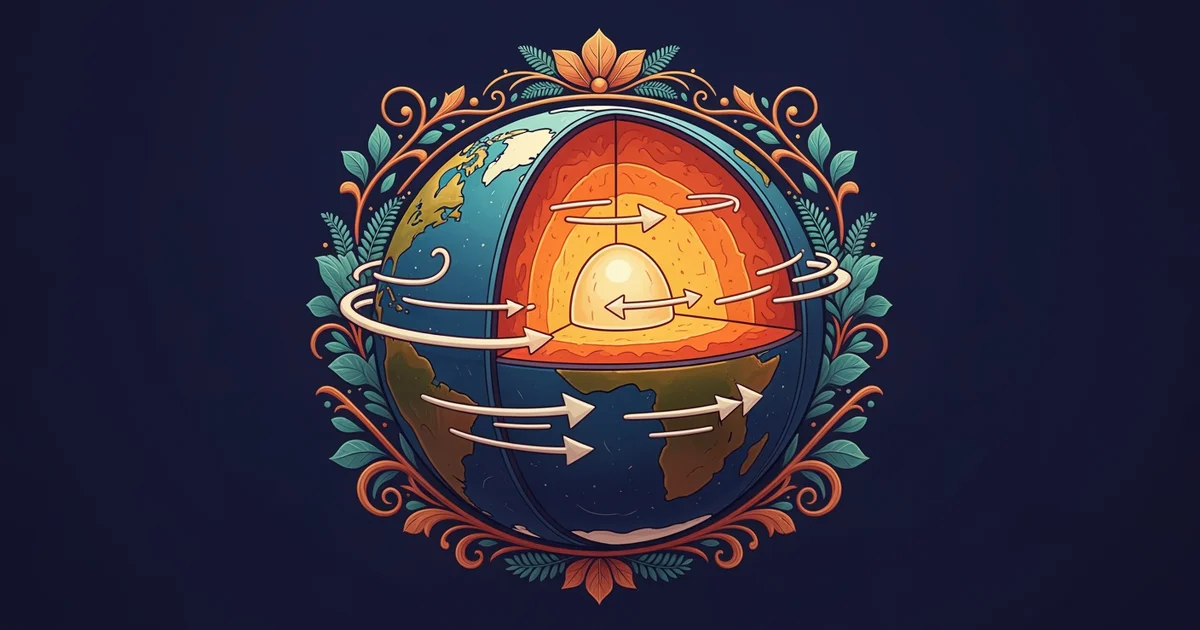
When global wind belts push against the surface of the ocean, they create friction that drags the water along with them. This process is known as wind-driven circulation, which acts like a giant conveyor belt moving heat from warm tropical regions toward colder latitudes. Just as a spoon moves soup in a circular pattern, the prevailing winds force surface waters into large, rotating loops called gyres. Because the Earth spins on its axis, these currents do not move in straight lines but instead curve across the basins. This curvature is essential because it helps distribute solar energy across the entire globe.
Key term: Wind-driven circulation — the process where surface winds transfer energy to the ocean through friction, creating large-scale, predictable current patterns.
Think of the ocean surface like a massive, liquid bank account where energy is the currency being deposited by the wind. When the wind blows harder, the deposit of kinetic energy into the water increases, causing the currents to speed up and move more heat. This relationship is not just about movement; it is about how the atmosphere manages the global budget of heat energy. If the wind stops, the bank account of heat remains stagnant, leading to local climate imbalances that disrupt weather patterns.
Interaction and Feedback Loops
Beyond simple movement, the ocean and atmosphere share a deep connection through the exchange of heat and moisture. When warm water travels into cooler regions, it releases heat into the air, which then influences the path of future winds. This creates a cycle where the ocean changes the atmosphere, and the atmosphere then shifts the ocean currents in response. This feedback loop ensures that the climate remains relatively stable over long periods, even as individual weather events change. Understanding this coupling allows scientists to predict how shifts in wind might change the way heat is distributed across different continents.
There are three primary ways this coupling affects our daily environment:
- Surface currents redistribute solar heat from the equator toward the poles, which prevents tropical areas from becoming dangerously hot while warming up the colder northern regions.
- The temperature of the ocean surface directly dictates how much moisture enters the air, which determines the amount of rainfall that coastal regions receive during the year.
- Coastal upwelling brings cold, nutrient-rich water to the surface when winds push surface water away, which supports diverse marine life and stabilizes local air temperatures.
| Process | Interaction | Climatological Result |
|---|---|---|
| Friction | Wind to Water | Surface Current Flow |
| Evaporation | Water to Air | Cloud Formation |
| Upwelling | Deep to Surface | Cooler Coastal Air |
This table illustrates how the physical contact between these two spheres creates distinct climate outcomes. The movement of water is not random but follows the path set by the atmosphere, and the atmosphere relies on the ocean to act as a massive heat sink. By studying these interactions, we can see how the planet maintains a delicate balance of energy. Every shift in the wind leaves a mark on the ocean, and every change in the ocean temperature alters the way the atmosphere behaves above it.
The constant exchange of energy between wind and water creates a global system that regulates heat distribution and stabilizes the climates of our planet.
But what does it look like in practice when these systems fail to sync properly?