
Future of Decision Science
Imagine you are standing at a busy intersection where every path leads to a different version of your future. You rely on your past habits to choose which way to turn, but the world changes faster than your instincts can adapt. This tension between old survival habits and new digital realities defines the modern struggle of human decision-making. We often act based on mental shortcuts that served us well in the past, yet these same shortcuts frequently lead us astray in a complex, data-driven environment. Understanding how we choose is the first step toward reclaiming our agency in an age of automated influence.
The Evolution of Choice Architecture
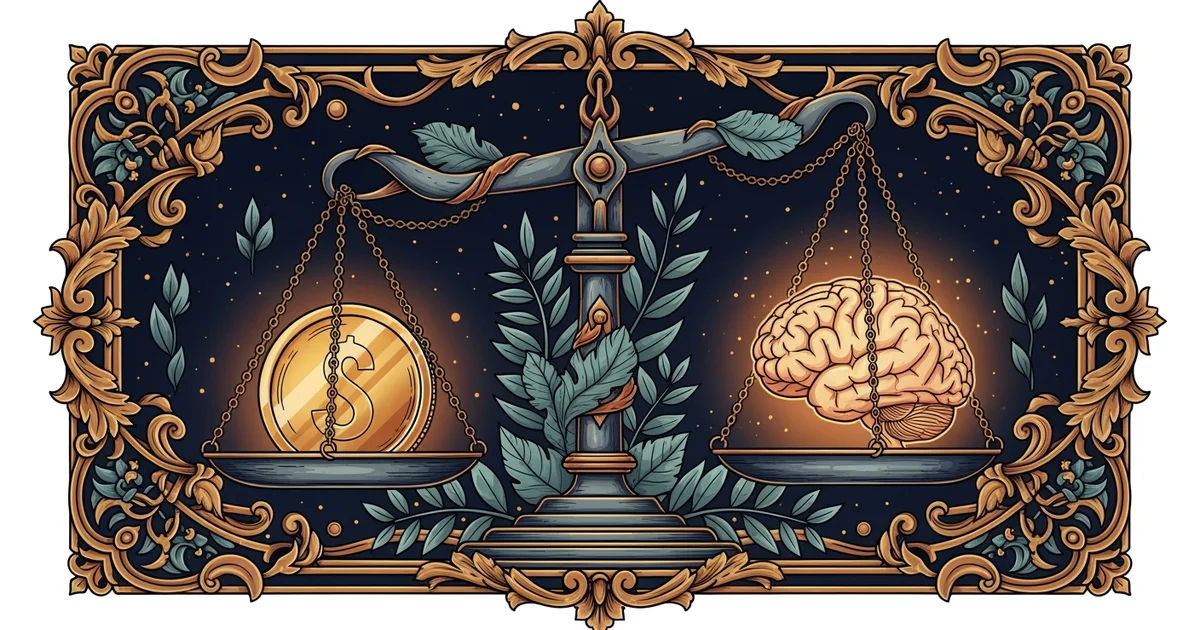
Behavioral science has moved from simple lab experiments to the massive, real-time application of data in our daily lives. We previously explored concepts like the choice architecture, which refers to the design of environments where people make decisions. By changing how options are presented, companies can subtly guide our behaviors without us even realizing the nudge. This practice creates a significant ethical tension between helping people make better choices and manipulating them for profit. As we integrate more artificial intelligence into our lives, these nudges become personalized to our specific psychological triggers. The future of this field lies in balancing the convenience of automated guidance with the preservation of individual autonomy.
Key term: Choice architecture — the deliberate design of the environment where people make decisions to influence the final outcome.
We must consider how these systems interact with our natural cognitive biases. For example, we often prefer the status quo even when a better option exists, which is a classic bias that digital platforms exploit to keep us scrolling. Think of your brain like a busy city traffic controller that relies on pre-set signals to manage flow. If a hacker changes those signals to prioritize certain routes, the traffic follows the new path automatically because the drivers trust the system. In the future, decision science will likely focus on creating transparency tools that allow us to see these hidden signals. These tools could act as a digital dashboard, alerting us when our biases are being targeted by an algorithm.
Integrating Data and Human Insight
Looking ahead, the field will move toward a model of collaborative intelligence where machines and humans share the burden of choice. We have previously discussed the ethics of manipulation, noting that powerful tools can be used to either improve health or exploit vulnerabilities. The next phase involves creating systems that are designed for human flourishing rather than just engagement metrics. By combining large-scale behavioral data with individual values, we can build decision support systems that reflect our long-term goals instead of our short-term impulses. This shift requires a deep understanding of how our biological drives interact with the digital environments we inhabit.
| Trend | Current Application | Future Potential |
|---|---|---|
| Personalization | Targeted advertising | Life-path guidance |
| Data Usage | Engagement metrics | Well-being tracking |
| Automation | Passive nudging | Active collaboration |
This table highlights how we can transition from tools that exploit our attention toward systems that support our long-term growth. As we move forward, the focus will likely shift toward the following areas:
- Cognitive Transparency involves developing software that explains why a specific choice is being recommended to the user, effectively peeling back the curtain on algorithmic influence.
- Bias Mitigation focuses on creating digital interfaces that intentionally introduce friction, allowing users to pause and reflect before making high-stakes financial or social commitments.
- Values Alignment ensures that the goals programmed into our decision-making assistants match the personal priorities of the individual user, rather than the profit goals of a platform.
These developments address the foundational question of why we make irrational choices by providing the external support we lack. By recognizing our own tendencies toward irrationality, we can build better systems that act as a safety net for our judgment. The ultimate goal of decision science is not to replace human thought, but to enhance our ability to choose wisely in a world of infinite options. We are moving toward a future where our tools help us overcome our own biological limitations rather than exploiting them for external gain.
The future of decision science relies on creating transparent systems that align digital design with human well-being rather than just engagement.
Understanding these trends allows you to navigate the modern digital landscape with greater awareness and intentional control over your own future choices.