
Confirmation Bias Traps
You notice that your favorite news source always seems to agree with your personal political views. This pattern might feel like a sign of intelligence, but it is actually a mental trap.
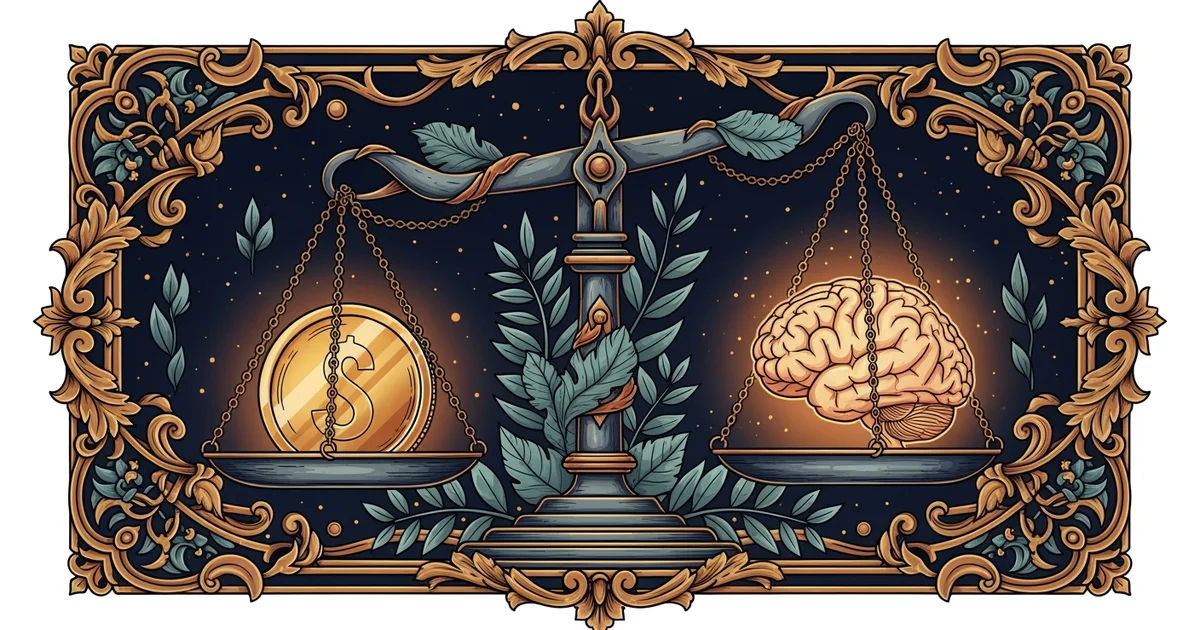
The Mechanism of Selective Perception
When we process information, our brains naturally prefer data that matches our existing beliefs. This mental shortcut is known as confirmation bias, and it functions like a filter that blocks out conflicting evidence. Imagine you are wearing a pair of tinted glasses that change the color of everything you see. If the lenses are red, every object appears to have a red hue, regardless of its true color. In the same way, your brain highlights facts that support your current ideas while ignoring data that challenges them. This process happens automatically, often without you realizing that you are choosing to ignore reality. By favoring familiar information, the brain conserves energy because it does not have to rethink its position. This tendency makes it difficult to change your mind, even when you are presented with clear evidence that you are wrong.
Key term: Confirmation bias — the human tendency to search for, interpret, and recall information in a way that supports one's existing beliefs.
This behavior is not a sign of poor character, but rather a standard feature of human cognition. Because the world provides an overwhelming amount of data every single day, the brain must decide what is worth noticing. It uses your past experiences as a guide to prioritize information that feels safe and consistent. When you encounter a new idea, your brain quickly checks it against your internal database of beliefs. If the new idea fits, it is accepted immediately as truth. If the idea contradicts your views, your brain often labels it as incorrect or irrelevant. This sorting process ensures that your internal world remains stable and predictable. However, this stability comes at the cost of accuracy, as you might miss important details that could lead to better decisions.
The Economic Impact of Filtered Data
In the world of business, these mental filters can lead to costly mistakes for entrepreneurs and investors. If a business owner only listens to customers who praise their product, they will never hear the feedback necessary to improve. This creates a dangerous echo chamber where the owner remains convinced of their success while the market slowly moves in a different direction. To avoid this trap, successful people actively seek out voices that disagree with their current plans. They understand that their own perspective is limited by their personal history and preferences. By inviting criticism, they gain a more complete picture of the landscape before they commit their resources to a risky project.
| Strategy | Goal | Result |
|---|---|---|
| Seeking feedback | Finding flaws | Better product |
| Ignoring dissent | Maintaining comfort | Missed market shift |
| Testing assumptions | Finding truth | Stronger strategy |
This table shows how different approaches to information affect business outcomes. Choosing to ignore dissent might feel comfortable in the short term, but it limits your ability to adapt to changes. The most effective way to counter this bias is to treat every opinion as a hypothesis that requires testing. Instead of asking if an idea is right, ask what information would prove it wrong. This simple shift in perspective forces the brain to look for evidence outside of its usual comfort zone. By doing this, you can build a more objective view of your business environment. This practice requires discipline, as it is often uncomfortable to challenge your own deeply held convictions. However, the result is a more resilient strategy that can survive the unpredictable nature of the modern economy.
Confirmation bias traps the mind by prioritizing familiar information over accurate evidence, which leads to distorted decision-making and missed opportunities for growth.
The next Station introduces choice architecture design, which determines how the environment influences the decisions we make.