
The Rational Actor Myth
Imagine you are standing in a grocery store aisle staring at two identical boxes of cereal. One box costs five dollars while the other costs four dollars but claims to be a better value. You likely choose the cheaper option because you assume your brain is calculating the best deal for your wallet. This belief assumes that human beings always act as a Rational Actor who makes choices to maximize personal benefits. In reality, our brains often bypass logic to take mental shortcuts that lead us toward surprising and inconsistent financial decisions. We tend to believe we are masters of our own logic, yet we frequently ignore facts that stare us right in the face.
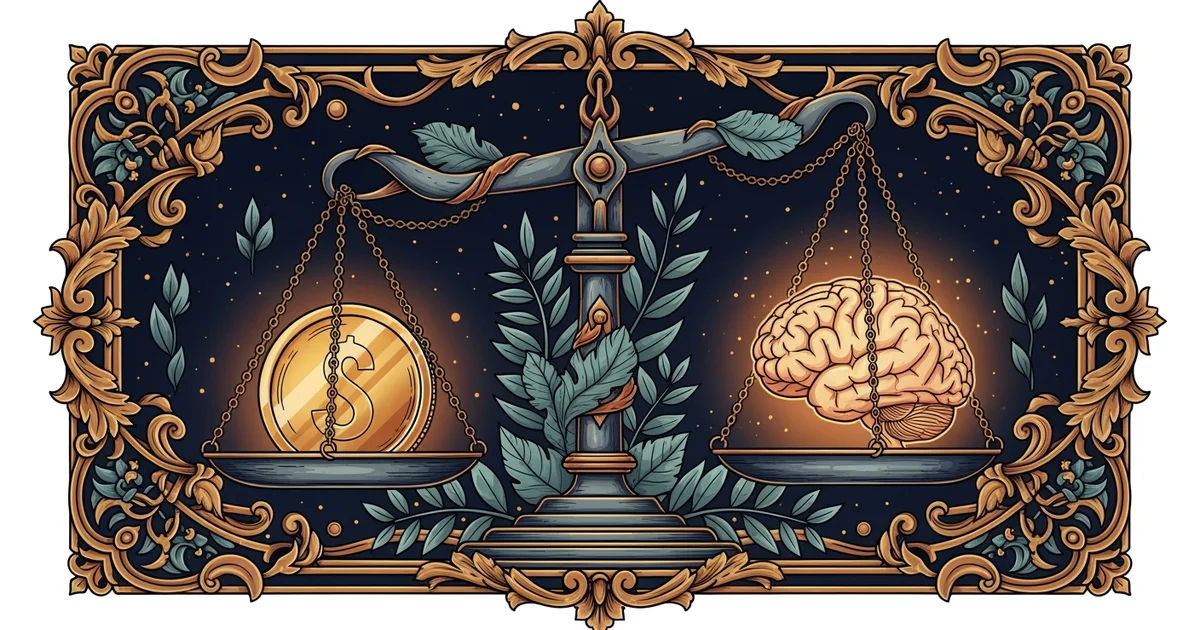
The Flaws of Traditional Logic
Traditional economic models rely on the idea that people are perfectly logical machines who process every piece of available data. These models suggest that if you have enough information, you will always pick the option that provides the most utility or happiness. This view treats humans like a computer program that simply runs a calculation to find the highest number. However, this perspective ignores the messy reality of human emotions and the way our brains function under pressure. When we are tired, stressed, or distracted, we stop acting like perfect calculators and start relying on quick habits. These habits often override the cold, hard facts that should guide our long-term financial success.
Key term: Rational Actor — a theoretical person who always makes logical decisions to gain the most benefit while using all available information.
We can compare this to a driver who insists on using a paper map from twenty years ago instead of a modern GPS. Even when the driver sees a new highway sign pointing toward a faster route, they might stick to the old road because it feels familiar. The old map represents our ingrained biases, while the new sign represents the objective facts we choose to ignore. Just like the driver, we often cling to outdated mental patterns because they require less energy than updating our entire belief system. This resistance to change is a primary reason why even the smartest people make decisions that seem to defy basic logic.
Comparing Economic Perspectives
To understand why these errors happen, we must look at how different schools of thought view the human decision-making process. Classical economics assumes that markets work because everyone acts in their own best interest with perfect self-control. Behavioral economics, by contrast, studies how real people actually behave in settings where they are prone to mistakes and emotional influence. The following table highlights the major differences between these two ways of viewing human behavior in the marketplace:
| Feature | Classical Economics | Behavioral Economics |
|---|---|---|
| Decision Basis | Pure logic and facts | Emotions and habits |
| Goal | Maximize personal gain | Seek comfort and ease |
| Self-Control | Always perfect | Often quite limited |
| Information | Used perfectly | Frequently ignored |
These differences show that the way we study money must change if we want to understand real human choices. By acknowledging that we are not perfect, we gain the ability to spot our own patterns of irrationality before they impact our bank accounts. When we stop pretending to be flawless, we can finally start building systems that protect us from our own impulsive tendencies. This shift in thinking is the first step toward becoming more effective at managing resources and planning for a stable future.
Human beings frequently deviate from logical choices because their brains prioritize mental comfort and familiar habits over the objective processing of complex financial data.
By understanding why we struggle to act rationally, we can begin to explore the two distinct systems of thought that govern our daily decision-making process.