
Neural Integration Processes
Your gut functions like a massive, busy stock exchange where billions of tiny traders constantly swap information. When these microscopic traders send messages, your brain must quickly interpret the data to maintain your daily physical balance.
The Pathways of Neural Communication
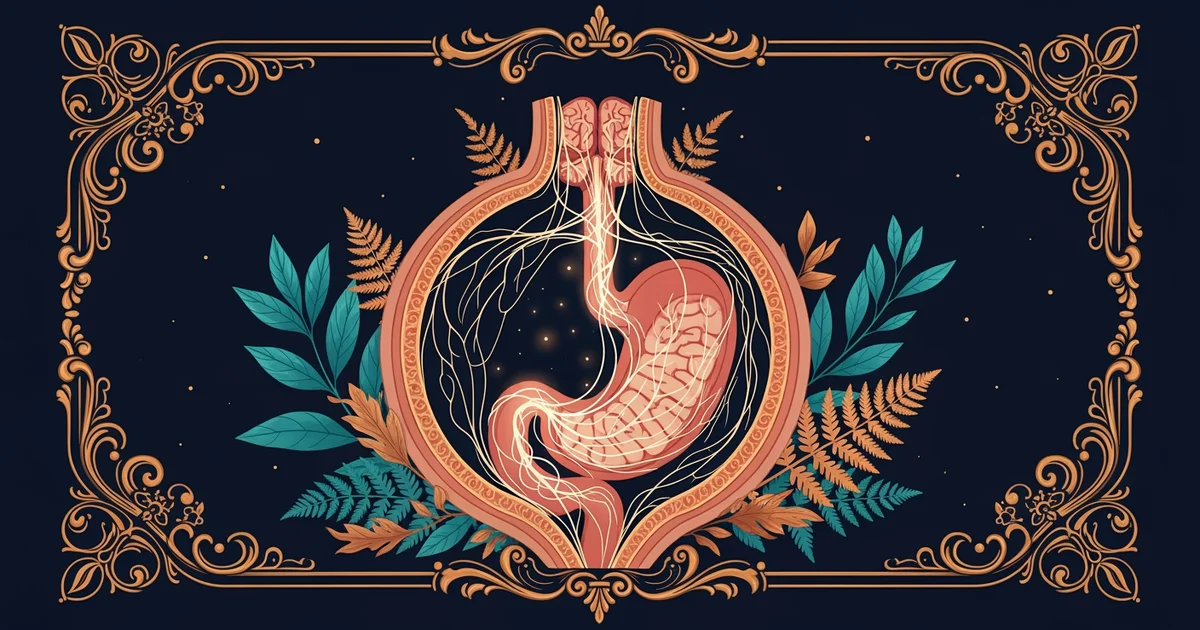
Communication between your digestive system and your brain happens through a complex, multi-layered highway called the gut-brain axis. The most important road on this highway is the vagus nerve, which acts as a direct, high-speed fiber optic cable. This nerve carries signals from your stomach and intestines straight to the brain stem. When your gut senses specific nutrients or harmful invaders, it triggers electrical impulses that travel along this nerve. The brain receives these signals instantly, allowing it to adjust your heart rate or breathing in response to digestion. Think of this process like a restaurant manager receiving a sudden, urgent order from the kitchen staff. The manager must immediately change the dining room plan to handle the new request from the cooks. Without this constant flow of data, your brain would remain unaware of the metabolic state of your body.
Key term: Vagus nerve — the primary physical connection that transmits electrical signals between the digestive system and the brain.
Beyond the vagus nerve, your body uses chemical messengers to relay information across the bloodstream to the brain. These chemicals act like specialized delivery trucks that carry packages containing vital status updates from your gut cells. When these trucks reach the brain, they dock at specific receptors to deliver their cargo of information. This chemical signaling is slower than the electrical pulses of the vagus nerve, but it provides a more sustained, long-term update on your body's energy levels. If you ignore the signals from these delivery trucks, your brain might struggle to regulate your hunger or your emotional responses effectively. The brain must balance these two types of input to ensure that your internal systems stay synchronized throughout the day.
Integrating Diverse Biological Signals
Integrating these signals requires your brain to perform a complex calculation every single second. The brain must weigh the fast electrical messages against the slower chemical reports to decide on a proper action. This process of neural integration allows your body to respond to both immediate needs and long-term storage requirements. If your gut reports a high intake of sugar, the brain triggers a release of insulin to manage the spike in your blood. At the same time, the brain might lower your desire for more food to prevent an energy overload. This balance ensures that your metabolism remains stable even when your eating habits change throughout the day.
| Signal Type | Speed of Delivery | Primary Goal |
|---|---|---|
| Electrical | Very Fast | Immediate reaction |
| Chemical | Moderate | Sustained regulation |
| Hormonal | Slow | Long-term adjustment |
When we look at how these signals influence your mood, we see that the integration process is quite sensitive. A healthy gut environment produces chemical signals that promote feelings of calm and focus in the brain. If the gut environment becomes unbalanced, the signals sent to the brain can shift toward stress or irritation. Your brain interprets these signals as a reflection of your overall health, which directly shapes your daily mood. By maintaining a diverse gut population, you provide your brain with the most accurate and positive data possible. This connection proves that your mental state is deeply linked to the physical processes happening deep inside your digestive tract.
Neural integration processes allow your brain to synthesize rapid electrical signals and steady chemical messages into a single, cohesive response that regulates your mood and physical health.
But what does this integration look like when your body starts producing its own internal chemical feedback loops?
Want this with sources you can check?
Premium Learning Paths for Biological Sciences are researched against open-access libraries — PubMed, arXiv, government databases, and more — with their distinctive claims cited to real sources and independently checked.
See what Premium includes