
Systemic Interdependence
Imagine you are running a fast race through a park on a sunny afternoon. Your muscles demand energy while your lungs struggle to pull in more oxygen from the air. Your heart beats faster to deliver blood to your working limbs while your skin works to cool you down. This complex process shows how your body functions as a single unit rather than separate parts. Every system relies on the others to keep you moving and safe during this intense physical challenge.
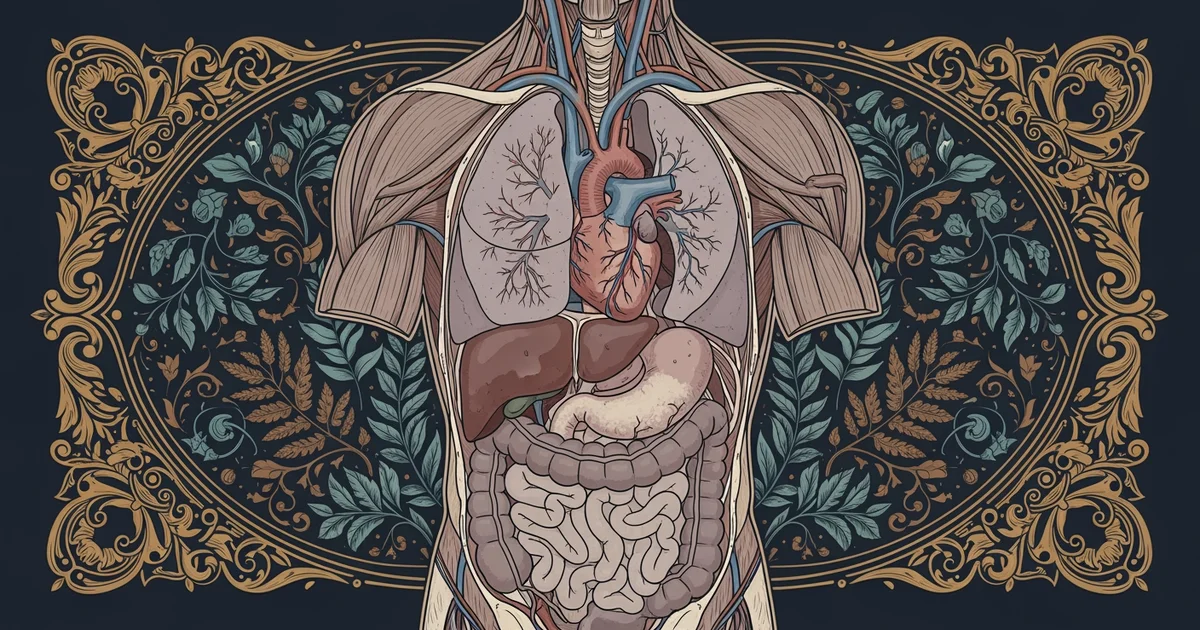
The Integrated Response to Physical Stress
When you start to exercise, your brain sends signals that trigger a cascade of changes across multiple systems. The nervous system acts like a central command center that coordinates these rapid shifts in your body. It tells the heart to speed up and instructs the lungs to breathe deeper to handle the increased demand. This coordination ensures that your muscles receive the fuel they need to keep performing at a high level. Without this constant communication, your body would fail to adapt to the sudden change in your activity levels.
Key term: Homeostasis — the process by which biological systems maintain a stable internal environment despite external changes or stresses.
Think of your body like a large, busy city that manages its own power grid and water supply. When the city hosts a massive event, the power company must increase output to keep the lights on everywhere. If the water department does not also increase the flow, the city cannot function during the peak demand. Your body works the same way because every organ system must adjust its output to match the needs of the whole organism. This balance is the core of how you survive and thrive in a changing world.
Systemic Collaboration During Intense Activity
Collaboration between systems allows your body to process nutrients and remove waste products during strenuous movement. The digestive system breaks down food into glucose, which the cardiovascular system then transports to your active muscle cells. As those cells burn glucose for energy, they produce waste products like carbon dioxide that must be removed quickly. Your respiratory system takes over this task by exhaling the gas to prevent a dangerous buildup in your blood. This cycle demonstrates how the body maintains balance through constant interaction.
| System | Primary Role During Exercise | Interaction Partner |
|---|---|---|
| Nervous | Coordinates rapid responses | All body systems |
| Heart | Pumps oxygenated blood | Lungs and muscles |
| Lungs | Exchanges gases with air | Bloodstream |
The following steps show how these systems work together to manage the heat generated by your muscles:
- Muscles generate excess heat as they burn fuel for energy during your workout.
- The nervous system detects this rise in temperature and sends signals to your skin.
- Blood vessels near the skin widen to release heat and cool the circulating blood.
- Sweat glands produce moisture to pull heat away from your body as it evaporates.
This sequence highlights how the integumentary system, which includes your skin, works with the nervous and cardiovascular systems to protect you. If your skin could not release this heat, your core temperature would rise to a dangerous level very quickly. Your body prevents this by shifting resources to ensure you remain within a safe range. This shows that no system can act alone because each one depends on the others for survival.
How do these systems know when to stop adjusting their activity levels once you finish your race? They use feedback loops that monitor internal conditions and signal when the body returns to its normal resting state. This ability to self-regulate is what makes human anatomy so effective at handling stress. By synthesizing these responses, we see that health is not just the absence of disease but the successful integration of all body functions. Your survival depends on this seamless cooperation every single day.
Systemic interdependence ensures that the human body maintains a stable internal environment by coordinating the activities of all organ systems to meet changing metabolic demands.
Now that we understand how systems work together to maintain balance, we can examine how doctors identify when these complex interactions begin to fail.