
Nervous System Signaling
A sudden touch on a hot stove causes your hand to pull back instantly before you even feel the pain. This lightning speed reaction illustrates the complex communication network that allows your body to sense its surroundings and respond to threats. Your nervous system functions like a massive, high-speed information network that connects every single part of your body to your brain. Without this constant flow of data, your muscles would not know when to move and your senses would not register the world around you.
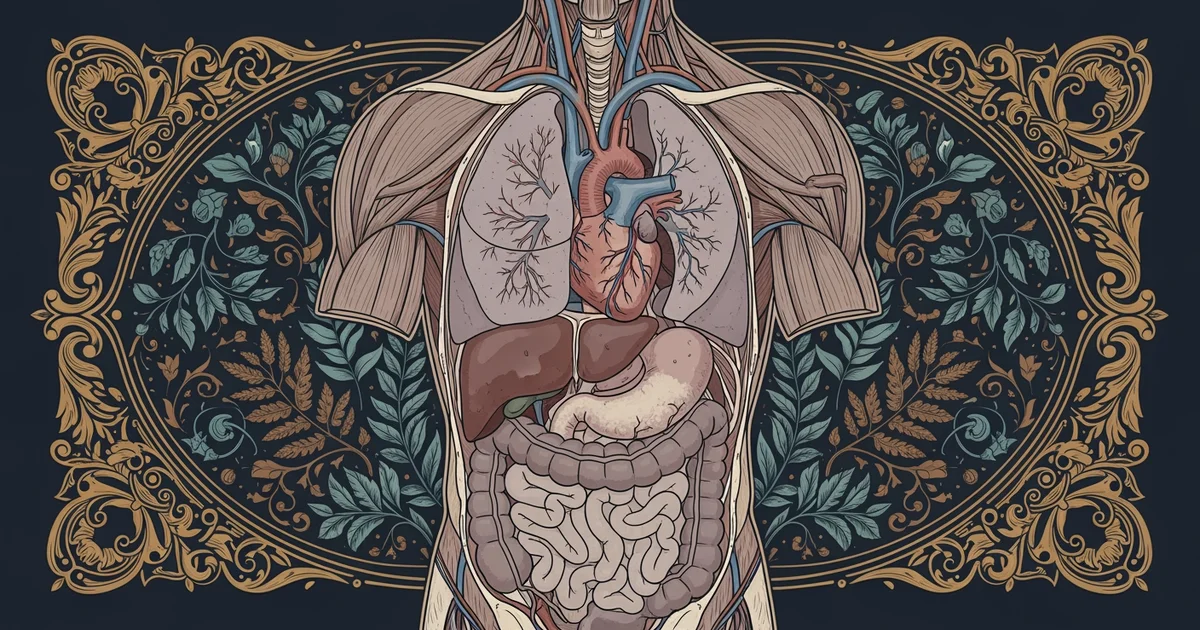
The Central Nervous System Structure
The central nervous system serves as the main command center for the entire human body. It consists of the brain and the spinal cord, which work together to process incoming data and send out necessary commands. Think of this system like the main office in a large shipping company that receives orders and dispatches trucks to specific locations. The brain acts as the chief executive who makes final decisions, while the spinal cord functions as the main highway for all incoming and outgoing messages. This structure ensures that vital information travels quickly between your organs and the control center without any unnecessary delays or confusion.
Key term: Central nervous system — the primary control center of the body comprising the brain and the spinal cord that processes sensory information and coordinates responses.
Every signal must travel through this network to reach its intended destination within the body. When your fingers touch a surface, sensory receptors send electrical impulses along long nerve fibers toward the spinal cord. These impulses represent raw data about temperature, pressure, or potential injury that the brain must interpret. If the signal remains in the spinal cord, the body can perform a basic action without waiting for the brain to process the complex details. This efficient layout allows the body to prioritize speed when immediate danger is detected by the senses.
The Reflex Arc Mechanism
A reflex arc provides a simple pathway that allows for rapid, involuntary responses to harmful stimuli. This process bypasses the higher thinking centers of the brain to ensure your safety during an emergency. The pathway follows a specific sequence of events that keeps your body functioning smoothly without conscious effort from your mind. You can visualize this like a pre-approved emergency protocol that automatically triggers a fire alarm when heat reaches a certain level. This protocol prevents the need for a manager to manually approve the alarm, saving precious seconds when time is limited.
To understand how this reflex arc functions in real time, consider the following steps that occur during a physical reaction:
- Sensory receptors detect a stimulus like heat or pain and convert that energy into an electrical signal.
- Sensory neurons carry this signal from the skin or muscle toward the spinal cord for quick evaluation.
- Interneurons inside the spinal cord receive the signal and immediately pass it to the motor neurons.
- Motor neurons send a command to the muscles to contract, which causes the body part to move.
This sequence happens in a fraction of a second, which is why you move away from danger before you feel pain. By keeping the processing local to the spinal cord, the body saves energy and time during critical situations. The brain receives a notification about the event only after the muscles have already responded to the threat. This division of labor allows the brain to focus on complex thoughts while the spinal cord manages routine safety tasks.
| Component | Primary Function | Role in Reflex Arc |
|---|---|---|
| Receptor | Detects stimulus | Initiates the signal |
| Neuron | Transmits data | Carries the impulse |
| Interneuron | Relays message | Connects sensory to motor |
| Muscle | Executes action | Creates physical movement |
This table shows how each part of the reflex arc serves a unique purpose during the signaling process. Each component must work in perfect harmony to ensure that the body reacts correctly when it encounters a new stimulus. If one part of this chain fails to transmit the signal, the reflex will not occur, leaving the body vulnerable to harm. Understanding this pathway helps explain why our bodies react so quickly to unexpected changes in our immediate environment.
The nervous system maintains life by using specialized pathways to prioritize rapid, automatic responses over slower, conscious processing.
The next Station introduces cardiovascular integration, which determines how blood flow supports the energy demands of these nervous signals.